I went to the bathroom and threw some water on my face, combed my hair. If I could only comb that face, I thought. I snorted, better still comb the tangles from my life, but no, things don’t work like that do they, no easy fixes. I paused before opening the bathroom door, tried to give myself a pep talk, but it didn’t work. So instead, I just forged ahead.
There was more smoke in the corridor now. Not really a surprise. The sprinkler system was doing its best, but it was older than The Bonnie Lass, having been stripped from a drifting trawler twelve years hence. I held my hand out, let the smoke-stained water fall upon my palm. What does it taste like I wondered, sea water mixed with smoke, there had been whiskies like that. I licked my palm, the coarse skin tickled my tongue, but the water tasted nothing like my memories of whisky, it was bitter, with a hint of engine oil.
We had sealed the balk heads. The fire should have been contained. The plan had been to let it burn itself out. The Bonnie Lass is a big ship, one of the largest still out on the waters, a fire in the crew quarters was manageable.
I climbed up to the bridge. William and Fritz were arguing in low voices but fell silent as I approached. William seldom lost his temper, and Fritz whilst impetuous didn’t often challenge the captain.
‘Elizabeth,’ William smiled. But I know the man well enough to see beyond the curve of his lips, ‘How fare the rest of the crew?’
How does he think they are doing? Does he imagine their making the best of the situation? Should I tell him that as I passed the crew galley I saw Francis and Juno twisted together in the pursuit of carnal needs they hadn’t explored before. What about poor Jenny who had hung herself. Could I explain Turk’s painting, how he was throwing colour as if to create a universe into which he could flee. Did I need to say that Jack was sitting out on the bow humming a piece of music I dimly recalled from my childhood, ‘My bonnie lies over the ocean, my bonnie lies over the sea, hmmm hmm, hmm hmm.’ What did William want me to say.
Fritz did the talking for me, with his fists. His huge right paw slammed into William’s face, swiftly followed by his left. William blinked, his face paled, and he crumpled to the floor. Fritz turned to me, waiting for my reaction, but I gave him none. I said nothing and I did nothing as he hoisted William’s feet and dragged the fallen captain from the wheelhouse. I crossed the boards and stood at the helm, took in the view from the bridge’s windows. Smoke billowed from the ship; the fire had not been contained. The Bonnie Lass shuddered as a blast rolled through her, the engine rooms had succumbed. The lights flickered, the engines stalled and just before the power went out, I set a course.
Twenty-eight years I had been aboard The Bonnie Lass, most of them hard, but we’d made a living. We’d trawled for salvage, we harvested drifting vessels, we’d once seen a floating house with a family of cats living aboard it. I patted the helm, the ship owed us nothing, we were good.
I passed Fritz as I climbed to Monkey Island, he was fishing, though no line fed his rod. I watched as he reeled in his imagined thread, checked a hook that didn’t exist, rebaited it, then cast for the horizon. I didn’t ask where William was.
I settled against the radar mast, which had been stripped of its paint by harsh winds, biting waves and time. The Bonnie Lass had navigated it all, but this was her final whorl. From up here the smoke that belched from her ravaged body seemed a shroud. The ocean was a stilled stage, not a wave washed its boards, no wind pulled at the smoke, even the cries and groans of the dying ship were muted.
It was slow. Drawn out. Deliberate. Water began to boil at the stern, the hungry bite of the ocean taking its due. The Bonnie Lass didn’t fight it; with the grace of a diving bird, she tucked her nose and began her descent. There was no crashing roar, just a deepening silence. It was harder now to lean against the radar, the inexorable pull of the ocean’s maw threatened to topple me from my perch. I wedged my foot against the rails and kept my seat. The grey of the ocean was rising to meet me. I thought of the cats on the floating house and wondered where the waves would take them.
‘I’m going to check on lunch.’ Nancy smiled, though Robin who knew her like the back of his hand saw that it didn’t turn the corners of her mouth.
She headed to the dining room, wishing she had never quit smoking. A caterer was putting the final touches to the elaborately set table. How had she become the overseer of such dinners.
‘All ready?’ She asked, in what she hoped was a crisp and calm voice.
‘All set.’
Returning to drawing room she tried to catch her husband’s eye, but he was engrossed in Ileana, possibly her conversation, she thought tartly. Instead, she cleared her throat and declared dinner ready.
Drinks were poured though Ileana refused, asking for sparkling water. The starters arrived, and they were exquisite.
Robin sat next to his latest girlfriend Jade a younger variant of the last three. She was smiling at him raptly, twirling a finger through her hair though he kept trying to drag others into their conversation. Casting his eye towards Nancy every so often she thought perhaps pleadingly, but really, he had brought this on himself.
Torin sat between Ileana and Nancy; his shoulder slightly turned from his wife and his attention on Ileana. She laughed at his jokes, but kept glancing towards Nancy, almost placatingly.
‘Torin says you used paint.’ Ileana beamed.
Nancy took a large drink of white wine and looked at the woman. She could see the appeal, and at least this one was intelligent.
‘Yes, I had a studio not far from your new gallery. The southside was a little different back then.’
Torin turned to his wife. ‘Ha! More than a little, I thought you would be kidnapped. You know she really was talented but along came Alexander.’
She. Was. Nancy’s nostrils flare.
‘She still is,’ Robin corrected. ‘Stick your head round the door on the right before the bathroom, it is filled with her recent work.’
Torin sat up straighter and shot a look at Robin.
‘You’ve been allowed in the studio.’
‘Just once, back in January when you and Ileana were setting up the itinerant exhibit in Amsterdam.’
A tension vibrated round the table, four sets of eyes avoided each other, the other two cast round in amusement and confusion.
Jade changed the conversation though Nancy didn’t think it was because she had picked up on the other diner’s sudden rigidity.
‘I adore children, I would love to be a stay-at-home mother.’ She was looking directly at Robin, but he refused to notice.
Michael giggled loudly. ‘I hate children, and I need a smoke, please excuse me. I trust I have time between courses?’
He stood not waiting for a response.
‘Let me show you to the terrace.’ Nancy volunteered.
Outside he offered her a cigarette, but she declined.
‘Why am I here?’ He asked.
‘Ileana was meant to be bringing her assistant, young, Italian, with an arse you can bounce off a wall. He’s possibly your type.’
‘You’re trying to partner me off? Spare me. Relationships are for those who have given up on life.’
Nancy sighed, reached over, and snatched the cigarette from his hand. She leaned back against the rail, enjoying a long drag she held it in her lungs for a long time, savouring the chemical heat. As she exhaled, she felt herself wilt and Michael put his arm around her shoulder. She leaned into her friend and not for the first time that she and he could be something more to each other, but neither’s sex quickened the others pulse.
The second course arrived, swordfish in a lemon and garlic sauce.
‘So, Ileana, when does the new gallery open?’ Robin asked.
‘Next month in theory, but Torin keeps insisting that the space isn’t right for his new pieces.’ Her eyes lingered on the artist in question. They shared a smile.
Michael tried to kick Nancy under the table but missed and scuffed his foot up Robins leg. Robin glared at Michael, who tried to signal with his eyes that boot hadn’t been intended for him. Ileana continued unaware of the ocular bout and the glacial look Nancy had hurled at her.
‘I have never meet with an artist with such passion for the entirety of experience regarding their work. Torin is a purist, a talent, a perfectionist.’
Torin frown and waved as if to brush off Ileanas compliments and Nancy felt her eyebrows raise at this effect modesty.
‘No, its true!’ Ileana insisted.
Torin sat back languidly in his chair. ‘This collection is the peak of everything I have been working towards, my entire life. I am not apologising.’
The caterer started to clear the table; she paused at Ileana’s plate which was untouched unsure if she should take it.
‘I am sorry,’ Nancy said. ‘Don’t you like swordfish?’
Ileana fleetingly touched a gentle hand to her stomach, just for a second and Nancy may have been the only person who noticed.
It was a splendid summer morning, warm with no breeze and not a cloud in sight. To Harry it had seemed as if nothing could go wrong. The day lay before him, and he was free as a bird. He would take the path over the hill and stop by the Horse and Cart for a drink.
He wasn’t even at the ridge when the Harrier came along the valley skimming the fields and trees. He felt as if he were a God as he looked down on the plane.
It banked – movements so precise they seemed impossible. Then something went wrong. It pivoted. Spun sideways. Catherine wheeled and slammed into the hillside below Harry. Smoke and debris plumed skywards and moments later a ground shaking roar blasted him. Before he knew what he was doing he was running down the slope towards the burning wreck.
It was raging inferno when he reached it, molten and twisted metal, heat so fierce his skin crackled. But despite this he tried to reach the pilot.
*
Inga had printed the directions before she left the office, but somewhere along the winding roads a left or a right had gone awry and now she was geographically embarrassed. Though she sensed she wasn’t that lost, things seemed familiar, the way the road swung back and forth across the hillside and slunk between ancient bands of trees. She had known before she set off that this wasn’t far from where Jay had, had his accident. His memorial service the year after had been held in a small grey stone church halfway up a hill, very like this one.
Had that really been forty years ago?
The church had been nestled into the hillside only a mile from the crash site. At the end of the service, she had loitered near the kissing gate, as her sister, now a widowed thanked the minister. A man dressed in a shabby but immaculate suit, lingering at the back of the churchyard caught her eye. One side of his face was a raw puckered ruin, he reminded her of the veterans who drank in the village pub, but she was young. She had asked her asked her father who the man at the back of the church was, and apparently, he was the witness to Jays plane go down. She made to approach him, but he had cut and run the second he saw her headed his way. His haunted face had been seared into her mind though, gaunt checks, shadowed eyes, fire ravaged skin.
The road turned back on itself and there buried in the hedge was a rotting kissing gate.
*
It was a splendid summer morning, warm with no breeze and not a cloud in sight. Harry shut the shed door behind him and wondered what he might do with the rest of his day, he had finished clearing the ivy from the crypts far faster than he had expected. A car door slammed out on the lane, likely someone coming to view the commonwealth war graves, tourists often stopped in to see them. A woman of about his age was standing in the shade of the kissing gate when he reached it.
‘Can I help you?’
‘I don’t know maybe, I’m lost but other than that, there used to be a church here, right?’ She wasn’t looking at him, but past him into the graveyard.
Harry nodded, ‘Yeah it burnt down a few years back.’
‘Oh.’ A frown flashed across her face. ‘My brother-in-law had a plaque there; I can’t believe we didn’t hear about the fire.’
Harry’s heart stuttered and not just because of his arrythmia. ‘Jay Roberts?’
She turned to him, looking at him properly, her eyes lingered on his scars for the familiar second, ‘Yeah. Was this your church? Were you the minister?’
‘No, I just keep the place tidy.’ She was frowning again; it seemed an expression that came easily to her. ‘I saw the crash.’ Harry whispered.
Her eyes snapped back to him, ‘You were at his memorial.’
‘I wanted to speak to his widow, I wanted her to know I tried, I did, but …’ Harry’s gut twisted, he had been waiting for this reckoning.
She smiled sadly, ‘There was nothing you could have done.’
Then they were embracing, though Harry wasn’t sure who had initiated the hug. When they broke apart, he was lighter, the guilt he had carried having finally found release. He helped the woman -Inga on her way and asked that she pass on his regards to her sister, who he learnt had remarried. He asked after the two children he remembered from the funeral, now both in the forties, with kids of their own. Before she left Inga paused at the gate, ‘I’m glad he wasn’t alone, that you were there.’
This is another blending of truth and fiction. Though for the most part this is a true story, names have been changed and Harry was not injured on the day. He and Inga (my mum) did however meet like this forty plus years after the death of my uncle.
I don’t know what the chances of that were, getting lost in the Lake District, stopping at a familiar landmark to ask for directions and the person who you approach for help is the one who witnessed the death of your brother in law. isn’t the world a strange place? As you can imagine this chance meeting had a big effect on my mum. What were the chances? Have you ever experienced something like this?
‘Time is priceless, but its free. You can’t own it, you can us it. You can spend it. But you can’t keep it. Once you’ve lost it you can never get it back.’
‘That’s good. A pseudo philosopher once took a shit here. Pass some bog roll.’
Fiona’s hand appears under the stall wall, she’s wearing emerald, green nail polish, which is heavily chipped, I take the sandpaper she offers.
‘Thanks – Call Gregs ma for a good time.’
‘Is there a number?’ Fiona asks.
‘Several.’
‘Don’t drink water, fish have sex in it.’
‘Solid advice.’
The toilet next door flushes.
‘You ladies do know this is gents, right?’ Callum asks.
‘Wash your hands!’ Fiona shouts.
The tap runs and a second later Fiona shrieks. By now I am finished and am hiking up my tights, which have twisted something rotten.
‘Callum Brown!’ Fiona roars. ‘I can’t believe you tee-pee’d me!’
‘Ha!’ Callum snorts.
I unlock my cubicle and stagger out, somehow in the last few minutes I seem to have gotten drunker – the inebriating stench of the men’s toilets. Callum standing at the sink wetting another handful of loo roll.
‘I wouldn’t,’ I warn him.
‘I’ll take my chances.’
I shake my head at his stupidity, Fiona is a force to be reckoned with. After washing my hands and give myself the once over. My eyeliner is halfway down my cheeks, so I push it back up, and smear some concealer over the grey stains its left behind. Callum launches his second barrage of missiles at Fiona, who screams. She is going to kill him.
Her cubicle door flies open, and she stands with her head lowered, eyes ablaze, like a bull about to charge, she’s even kicked off her heels, they lie discarded on the floor. Given the state of the tiles this was either very brave or very foolish of her.
‘Shit!’ Callum shouts and he takes off.
Fiona’s after him like a hound. ‘I’m telling mum!’ she brays.
What is about family gatherings that causes us to revert back to our formative years, I wonder. Perhaps the intellectual who wrote that nonsense about time might be able to answer that question. I leave the bathroom just as Uncle Angus tries to enter it, he looks at me in confusion, so I tell him that this is the ladies.
‘Oh, sorry.’ He wanders down the hall to the actual women’s, stops in front of the door then turns back to me, ‘Una! You’ll get me arrested for being some sort of creep!’
Laughing I make my way back into the packed bar. I know nearly everyone here, villagers, friends and family. The air is heavy with the warmth of our crush and thick with conversation. I can hear Fiona and Callum over all of this, they are still arguing, but unlike when we were young, neither of them is crying and no punches have been thrown. I force my way through to the bar and try to get the young server’s attention, but before I can Betty Tolworth starts bellowing for silence. I glance at the clock, surely it’s not that late? But right enough it’s 11:50. When nobody responds Betty smiles at me, picks up the large metal bell she keeps behind the bar and is rumoured to have once used to break up a fight.
‘Would you like the honour?’ she asks.
Taken aback by this gesture of trust and the offering of such power, I smile devilishly, and snatch up the bell eagerly.
‘On you go,’ she says.
With a heady sense of authority, I start swinging my arm and the bells tolling silences the White Harts custodians (even Callum and Fiona). Carried away by all of this I find myself shouting, ‘Bring out your dead.’
‘When you’re quite finished Una,’ Betty says. She’s standing arms folded and eyebrow raised, but she’s smiling. ‘You all know what that means! Out! All of you! Every last one of you.’
‘What about Brian?’ Someone asks. Brain is fast asleep, propped up at the far end of the bar.
‘I’ll deal with Brain,’ Betty says ominously.
And with that we start making our way out, there’s a scrummage at the door as people pull on coats, search for cigarettes and make sure they have everyone they arrived with. Its cold outside, it’s been a harsh December, even the river has frozen over. We crowd into the small car park like a milling herd of sheep. I spot Duncan and Isles who are huddled smoking by the beer garden gate and make my way over to them, ‘Cuz!’ Duncan greets me as he taps out a cigarette for me, I’m drunk enough to take it, and regret it almost instantly when the smoke hits my throat and the world spins.
The sound of feet rushing over gravel announces Callum’s arrival. He’s flushed and looks pleased with himself, I assume because he’s managed to get the better of his sister. The rest of our clan slowly gathers as we stamp our feet and huddle against the cold. Uncle Angus stinks of whisky, his cheeks are furnace red and he sways on his feet like he’s moving to a tune only he can hear. Fiona managed to sneak two pints out with her, and we pass these between us as we wait.
Behind us the church bell begins to toll, the crowd counts along with the strikes, ‘Ten, nine, eight, seven, six, five, four, three, two, one! Happy New Year!!’ we bellow as one.
Inside the White Hart the piano starts up – Old Lang Syne. I hear the back door to the pub bang open and Betty calls out, ‘Friends and family only.’
I am writing at the moment, just slowly and mainly my focus is on editing. I hate editing, and I really struggle to get on with it. This short piece was written for a workshop. The quote ‘Time is priceless, but its free. You can’t own it, you can us it. You can spend it. But you can’t keep it. Once you’ve lost it you can never get it back.’ – comes from Harvey MacKay and was the prompt we were set for the workshop.
The title – Lang may yer lum reek, is a Scottish new years greeting, or indeed Hogmanay greeting and is essentially a blessing. Lang means long, yer means your and a lum is a chimney. Thus it means may you never be without fuel for your fire, or indeed warmth, health and good fortune.
‘I’m sorry this happened to you,’ I say as I tentatively stroke the cat’s fur. He’s wet and stretched out as if in mid-bound, no sign of any trauma, other than the distinct lack of life.
‘What did you say?’
‘I told the cat I’m sorry he died,’ I say to the lady who has decided that I need her help in dealing with this but isn’t actually helping in anyway. She just wants to be part of this, without responsibility. ‘Can you watch him while I nip back to my house to get a blanket?’
‘What for?’
‘To wrap him in.’
‘No why do I need to watch him?’
I roll my eyes. If the cat was alive, we would be sharing a look right now.
‘I live just there,’ I gesture at my house two up from where we are. ‘I won’t be a second.’
I regret asking her to stay with the cat but she begrudgingly agrees. It isn’t like it’s going anywhere, but I don’t like the idea of it being there alone.
I grab a cleanish dog towel from the car and head back to the cat. I lift him gently onto the towel, again telling him I’m sorry. My reluctant helper frowns as I talk to the cat and takes a step back when I pick him up. I really don’t know why she stuck around. We part ways and I place the cat on my doorstep while I call the vet to see if they can check him for a microchip. To my surprise they ask if I can wait till the end of the day to avoid upsetting clients.
So now I need to store the cat somewhere. I glance at him in the muddy dog towel and realise I also need something better to wrap him in. I post a careful message about the cat on the neighbourhood Facebook group then go in search of a better shroud.
It’s hard. I don’t really have any old towels, they automatically become dog towels and are mud stained and smelly. So I go through my blankets, but this also isn’t easy. I don’t want to pick something to cheerful. What would the owners think if they should get in touch via Facebook and come to collect him before I take him to the vet. So, the dancing duck picnic blanket won’t do, and the cat taco fleece blanket is a definite no for obvious reasons.
I don’t want to use something that looks nice either in case the owners feel they must wash and return it, so the baby quilt is out. Finally, I remember a blue herringbone blanket of my mother’s, that I had only hung onto because it was hers. I know mum wouldn’t mind me using it for the cat, she was an animal lover.
I wrap the cat in the blanket, with some difficulty as he’s large and rigor mortis has set in. I can’t get both his tail and his face in the wrapping, so I settle on leaving his tail protruding as this is less distressing than his face with the wide staring eyes and lolling tongue.
I then ponder where to store him, I can’t leave him in the house, the dogs and my cat will be a little too interested in him. I also don’t want him in the car. I know he won’t start to smell between now and 17.00, but I still don’t want to risk it. So, he goes into the summerhouse on an old Lloyd loom which I have been meaning to fix-up.
By now my post on Facebook has gathered some comments, a few pictures of a lady’s missing cat who doesn’t look anything like the one in the summer house, I let her down gently. Helpful comments from people suggesting I go door to door as it must be a local pet. I imagine this scenario, me walking the streets ringing bells, asking people if they have a pet cat, do they know where it is, and could it possibly be the dead one in my summerhouse? No, I’m not doing that either.
Finally, 17.00 rolls round and I gather up the cat, but when I get to the car, I can’t juggle holding him and opening the door, so I have to place him on my general waste bin momentarily. My neighbour Hilary appears and hurries over, she has her phone showing a picture of a lovely tortoise shell cat.
‘Is this the cat?’
‘No, he’s a grey tabby,’ I gesture to the wrapped bundle on the bin. But it isn’t there. Its gone. Later that night I pour myself a generous glass of wine and toast my new motto – if at first you don’t succeed, hide all evidence that you ever tried. I spent a good while blocking everyone who commented on my dead cat Facebook post before deleting it. I don’t want to have to explain to a stranger that not only is their cat dead, but I’ve also lost its body.
Mind Burble
Its been more than a hot minute. I am working on a longer project at the moment and find it hard to create shorter pieces whilst doing this. I have also started the dreaded editing phase so am easily distracted …
London. Her first summer away from home. Her first in a city. Not just any city, London. She never, not even fifty years later, got over the excitement of that summer in London. The heat of the summer, which seemed to spill into everything.
She had flat in Belgravia. A job in advertising with a respectable paper. She was woman, it was the seventies, and she was making strides. Not sure how she had managed half of this. But she was here.
The rent had been cheap. The flat secured through a friend of her mother’s. But her pay had been minimal. And standards had been high, it was expensive being a woman. Especially one in the business of advertising. Clothes, makeup, hair and socialising. The bars in London had been a far cry from the country pubs where she had come of age drinking cider. Sometimes she missed those musty places, where the field workers came in smelling of the sun, sweat and grass, hands caked brown from their toil in the fields. Sometimes.
Here everything was fast, exciting and new. People had a way of talking – confident. She felt part of something huge here in London, even if she spent most of her days brewing coffee, running errands, answering the phone, collecting lunches and making dinner reservations.
She had been young and beautiful. Flushed with the potential of a life just begun.
At party she met Amado. He had been invited by one of the executives who had a passion for the occult.
Amado. He was dangerous. The sense of it had lingered around him. He had been finely dressed, smoking a pipe, like her father. A long face, roman nose, heavy eyebrows that framed stark staring eyes. Eyes that she had felt on her.
Her skin had crept and crawled when he came to speak to her. He wasn’t keen to hear about her, he just wanted to talk about himself, he was writing a book, he was a magician, and he quickly dropped the name of supposed mentor into their conversation. Crowley. She knew that name.
As politely as possible she had detached herself from his conversation. But he had haunted her steps for the rest of the night and indeed for the remainder of that warm and vibrant June.
Parties, so many parties that month and he was always there. She kept him at arm’s length. Easy enough to do. But one night he followed her home. After that, he had been everywhere. The park where she and her friends sunbathed on the weekends, the grocers, the newspaper stand at Knightsbridge tube station. Always her shadow. Yet he never approached. Just lingered. Watched. Then one day he was gone.
On the night of June 21st, the summer solstice, her doorbell rang. Though she was in rush to ready herself for a dinner with clients she answered it. Amado. He was crowded up to the door and loomed over her. She stepped back, her mouth dropped open, ready to scream, to alert passers-by. Silence. They stared at each other.
He was sweating, it dripped down his forehead and into his brows. He wasn’t dressed for June. Trench coat and boots, but this wasn’t why he perspired. He was nervous.
‘I have a gift for you.’ He glanced over his shoulder, then reached into the duffle bag he carried.
A gleam of white, a flash of teeth, in his hands rested a skull. He thrust it at her and she took it. Shocked, she held it staring down at empty eye sockets. He turned and hurried away.
Clutching the skull, she shut the door.
June had continued hot and glorious, filled with parties. Amado had gone. A cloud had lifted. Eventually she took the skull home to her parents and her father buried it next to the asparagus bed.
This is an older piece, its not so much a short story, but something that happened to my mother in the seventies. My mum passed away in 2021 and I have enjoyed writing wee snippets about her life. I find it cathartic. Under the Apple Tree which I have previously shared here was loosely based upon my mum also.
My writing group friends, and I are doing a small experiment. We have all struggled lately with writing for various reasons.
In my instance my mental health has been on a bit of a rollercoaster. I am doing all the right things; I am moving in the right direction, and nothing lasts forever so this too shall pass – hopefully along with my writer’s block.
Anyway, back to our experiment. We have all been tasked to go out into the world and make use of a recommended technique for overcoming writer’s block.
Shab’s must do some free writing with no editing and no deleting. Under no circumstances is he allowed to tweak his work, he must push onwards and upwards. This is not an easy undertaking for Shab’s who can’t help but rework and rework and rework his stories. He is his own worst critic.
Janet must pack up her laptop and head to a café where she is to write for an hour. We have agreed she is allowed to enjoy cake and coffee while she is there. For Janet this is not a simple undertaking, its not that she doesn’t like being around people, but she prefers the comfort of quiet places.
I must try something new or go somewhere new. Not a new writing method, simply something new which might inspire a story. I immediately got very excited about this, I started thinking about all the things I want to do – broom making, for some reason I really want to make my own broom. String making, I read a while ago that the plant broadleaf plantain can be processed to make string and since then I have been desperate to figure out how this is done.
But I quickly realised this is just playing into my favourite pastime of researching things. I love to research things, to spend hours learning about them, taking notes, collecting materials and obsessing over something. I have done this a thousand times; I have folders and files stuffed with things I have been into and very few of them have ever progressed much further than this initial research phase.
So, I must try something new. I just don’t know what it will be yet. We have two weeks and then we must report back on our experiment.
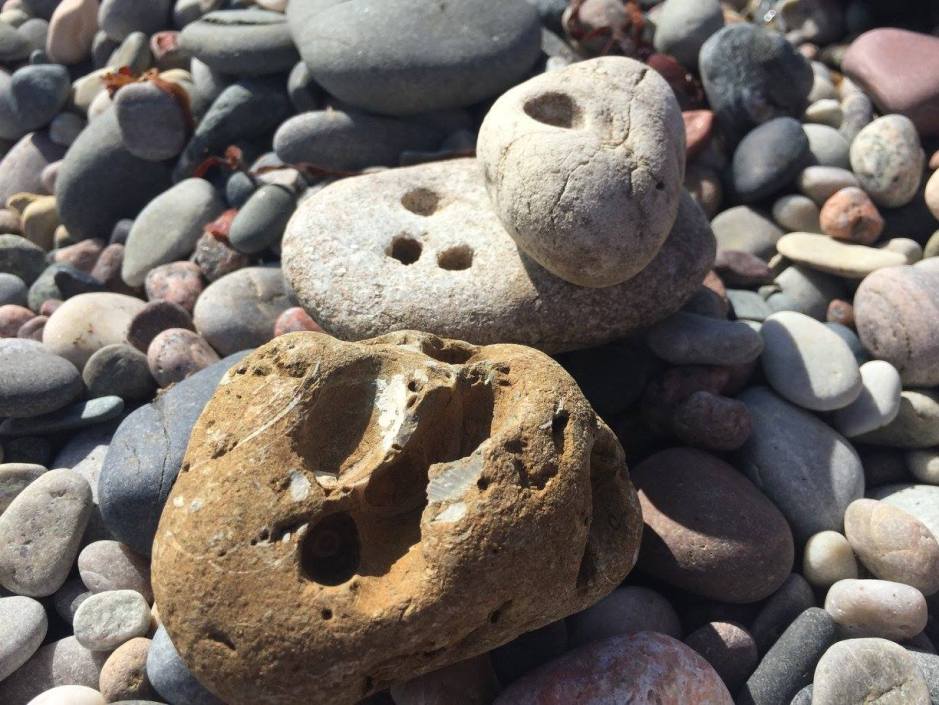
Hag Stones on Iona for no reason other than they are beautiful – my own picture.
It’s funny how life likes to close circles Auntie thought as she tipped backfill into Maurice Turners grave.
She had been at his birth, his mother had gone into labour during his father’s funeral and Auntie had been in the wings waiting to fill the man’s grave. His birth had been quick, Maurice had seemingly been in a hurry to get at the world.
Auntie knew most people who rested here, bar those who had passed long before her time and Maurice was no exception. A nice boy, quick, slight and into everything. He’d had a hawkish face, which suited him as he bobbed and dashed around the place. Smart and likeable, mostly. Maurice had done well at school, earned a scholarship and had even managed to get himself all the way to university in neighbouring St Almany. At this point he had dropped off Aunties radar for she seldom left the cemetery let alone Kilder.
It wasn’t until her niece, Lolly had gone to St Almany to have her wisdom teeth pulled, that Auntie heard of Maurice again. Lolly met him by chance in the street, and he had taken her out for a fine dinner, then to the theatre. Not used to being around people with coin to splash Lolly had been very taken by him. She remained in touch with Maurice when she returned to Kilder, writing to him and seeking opportunities to visit St Almany.
Once done with school Lolly pursued a stage career, which took her back to St Almany and Maurice. Lolly had been beautiful and wasn’t short of suitors, but it was only Maurice that she had eyes for. It wasn’t long before they were engaged, which Lolly’s mother thought a good thing, as the girl couldn’t act and clearly wasn’t going to make her fortune on the stage. Better that she marries and perhaps start a family.
Maurice had become a wealthy young man, having started a successful shipping company. With his wealth he bought up land around Kilder including the old Rhodes estate. The estate had once been a grand residence, with extensive orchards and grazing. He intended it to become the family home and set about returning it to its former glory.
Lolly and Maurice’s wedding was an extravagant affair. Their guests were treated to a lavish feast, dancing and performances by friends from Lolly’s theatre days. Auntie had been invited, but had not attended, she didn’t go in for crowds or the formalities of the living.
For the first year of their union, they lived in St Almany, but when Lolly fell pregnant, she returned to Kilder taking up residence in the Rhodes Estate. She had an easy pregnancy, glowing throughout. At weekends Maurice would come down from the city and they would entertain guests. The love and joy of the young couple seemed to flow from their home and out into the wider community, rippling out like a flame. For the first time in years there was a sense that great things could happen in Kilder.
The night the baby arrived was still and calm, except the sky which had been lit by the burning debris of a passing meteor. Auntie had watched the flares of light and energy in wonder from the cemetery. When she heard Lolly’s child had chosen that night to be born, she couldn’t help but wonder about the nature of this omen. Good or bad? Whichever it was there was power bound into it.
A month later Auntie dug a new grave. She chose the spot carefully, on the edge of the cemetery, near the riverbank among a cluster of mayhaw trees, which would cascade with white blossoms in the spring and flame red with rich ripe fruit in the flowers wake. Lolly’s child was laid to rest here, amongst the trees. The funeral had been short, the parents were statuesque in their grief, and that night Maurice had returned to St Almany.
Lolly remained on the estate and for a while Maurice had travelled between the two homes, but storms, rival firms and even pirates had meant that his business was in difficulty, and he couldn’t be spared. Eventually he stopped travelling between his homes and stayed in the big city leaving his wife alone in her grief.
The pain of loss changed Lolly, she was no longer a bright and beautiful creature. Her mother and friends tried to provide her with solace and comfort, but she would take none. She blamed herself for what had happened and Maurice’s absence only reinforced this.
For a year Lolly kept to herself and was seldom seen in the daylight hours. On the anniversary of their child’s birth Auntie found flowers at the child’s grave, a bright cluster of asters laid neatly before the headstone. Soon after the estate which had been in deep mourning along with its mistress returned to life. The gates reopened, the household was restaffed, the orchard workers returned, and livestock brought to auction. A shroud had been lifted.
However, Lolly remained largely unseen by those who knew her, reclusive, she communicated with notes and letters only, but that winter things changed. Invitations came out, inviting the whole town to a New Years party.
The event was extravagant, and it was only the first of many. Soon it was not just the Kilder folk who were invited, but also those from distant regions. Each party grew in scale and expense, and Lolly was the queen of excess. When she started to invite theatre groups to the estate to entertain people began to talk, for everyone knew about Maurice’s money woes, but Lolly continued to spend, and they continued to attend. Maurice remained in St Almany, he didn’t come to chastise his wife for her spending and their credit for now remained good, but everyone noticed the growing rift between husband and wife.
A particularly famous troop of performers came over from Europe that season and they brought the roof down in every town and city they visited. Lolly just had to host them, she pulled every string and spent a royal fortune to get them out to the Rhodes Estate.
The troop arrived under the light of a full moon, in carriages pulled by fine black horses. Auntie watched them pass through the town and believed she recognised them for what they were. The following morning, she went out to the estate and asked to speak to Lolly, but she was turned away. Undeterred she had found another way in but was sent packing when she reached the house. Still, she tried again, asking a maid to take her niece a letter, the girl promised she would.
That night all the towns folk were invited to the estate, except Auntie. An elaborate production of Midsummer Night’s Dream was put on by the Europeans and the next day it was all anyone spoke about. Auntie felt slightly calmed as nothing untoward had happened.
Another night, another performance, the comic opera Princess Ida, this time with guests from all over the county not just Kilder. Auntie watched the fireworks that concluded the party from her bench at the cemetery. As the coaches rolled back to town, she began to wonder if she had been wrong about the performer’s nature.
The third night was the troops final performance. Kilder buzzed with excitement and gossip about the extravagances Lolly had planned.
A knitting in Aunties stomach set her worrying. She decided to seek her niece out, she needed reassurance that all was well. It was easy to slip into the estate this time for every tradesman and his dog had business there that day and she was just one of many people arriving. She let herself into the house, slipping past the maid she had previously asked to deliver her warning and made for Lolly’s bedchambers. She found the curtains drawn, but the bed had not been slept in. It was at this point she was discovered and was escorted from the property. As she was roughly handled down the drive, she caught a glimpse of Lolly emerging from one of the large carriages in which the performers travelled. Even from this distance Auntie could see the radiant glow about the girl, they locked eyes, then Lolly turned her back on Auntie.
Auntie watched as carriage after carriage rolled past her cemetery on route to the estate. The hum of the party could be heard over the cicadas, music and voices rising and falling. Later when she retired to bed Auntie noticed an orange glow on the horizon, she opened her window and the air that crept through carried the scent of smoke.
The fire had started in the kitchen, spreading quickly, trapping many of the guests inside. By the time an organised response was underway it was too late, forty-four souls had perished. When the news reached Maurice, he rushed back to Kilder and it was he who pulled Lolly from the rubble.
His wife was utterly unscathed, her clothes were burnt, but she hadn’t a bruise or singe upon her. She was hurried back up to St Almany for medical treatment, but it was unnecessary, and she was discharged into Maurice’s care. Once back in their town house she took to the bedchamber and wouldn’t leave.
Auntie interred the locals over the next few days and helped arrange for the final passage of the deceased who had further to travel. The cemetery had been a busy place, busier than Kilder which was now much reduced and deep in mourning. Though behind closed doors and in quiet places whispers began, had Lolly had started the fire.
While his wife refused to be part of the world and remained locked away in her bedroom Maurice’s money woes came calling. The estate had been mortgaged to cover his business debts, and with the fire the debt had been called. His remaining assets were seized, the business foreclosed on, and the estate sold.
Months later on a moonless night Maurice and Lolly returned to Kilder, taking up residence in their only remaining property, a small house near the forest. Nobody saw Lolly, but Maurice was seen pacing on the porch or walking in the woods. He came to the cemetery daily, placing a single lily at his child’s grave. Where he got the coin for the flower from Auntie didn’t know, but she never asked about it. However, at her sister’s behest she did approach him to enquire after Lolly. His voice was slow and heavy, his answer short – she was recovering.
The weeks passed, the seasons changed, Lolly remained an unseen entity while Maurice became wraith like in his demise.
One morning Auntie found fresh flowers at the child’s grave, not the singular lily she was used to but the purple blue asters. The following day Maurice’s body was found. He had been brutally slain. The coroner concluded it was an animal attack and when Auntie was called upon to prepare him for burial, she agreed that something wild had ended his life.
Of Lolly there was no sign. The house had been vacant when the sherif went to inform her about her husband’s passing. A search had been conducted but nothing turned up, she had simply vanished.
So here was Maurice, resting in a shallow grave just yards from where he had been born, thirty-one years ago. Funny how things worked out. Auntie pulled her pipe from her pocket and settled down to wait. Not long after sunset a shadow came creeping. Lolly. She approached and paused by the shifting soil in the grave before her. A hand clawed its way through the dirt, an arm, another hand, then Maurice’s face, filthy and feral. Auntie sighed, tapped out the pipes embers and picked up her shovel. Duty called.
Image – Bing Microsoft Image Creator – Mississippi estate
Mind Burble
This piece was originally much shorter and was written for a workshop. I wrote it following a trip to New Orleans which should tell you were all the ideas came from, least surprising of all the I guess would be the appearance of vampires. It was a lifelong dream to visit New Orleans and I did hope it would inspire a story.
I enjoyed leaning into the tone and the tropes in this piece. It was nice to come back to it, to make changes and finish it, as lately I am really struggling to finish anything and I don’t feel like I am making any progress with my long term projects. So yes a box ticked, a story finished and a vague sense of achievement, even if I am not wild about the story.
Tricked by the sun into setting out on my run wearing shorts and a vest, I push myself to move faster. I never know what to wear when I go running at this time of year, the joys of British weather.
A kilometre into my run and I no longer care about what I am wearing. The first kilometre is always the worst, it takes a while for my body to remember that it can do this, and I am not going to die. Probably not.
Today’s route takes me along the Innocent Railway Line, which cuts behind Duddingston Loch and some posh golf course. It’s a hay fever hellhole at the moment, but it’s nice to be off the roads. A man comes into view and at once my woman’s radars squawks.
(Women will know the radar I am talking about; we all have one, it alerts us to potential threats and dangers. These radars start to develop when we reach our early teens, sometimes when we are younger – the when doesn’t really matter, it’s just a sad fact that all women have one. There comes a point when being female has its disadvantages.)
He’s squatting at the edge of the path, facing the wall with his hood pulled tight around his head. It isn’t warm, but there is no reason for his hood to be obscuring his face. He’s half hidden in the bushes – everything about him seems off.
He’s on my side of the path, so I cross to my right and speed up, not wanting to linger near him. I check behind me to see if anyone else is around, but there isn’t. It’s just me and him. I turn my music off and keep running.
As I pass him, he slowly turns and rises to his feet, casting his eyes over me. My skin crawls, I feel like meat. I force myself to move faster, not liking the look on his face. Five meters grow between us, then ten. I keep glancing back. He hasn’t moved, but he’s still staring at me. I don’t turn my music back on, I need to stay alert, I don’t want him suddenly sprinting up behind me.
I turn again and he’s smiling. There’s an edge to that smile, its cold, blade sharp and it doesn’t reach his eyes.
‘No need to run so fast love, I wouldn’t touch you,’ his voice is coarse, thick with threat. ‘You wish I would rape you.’
I’m sprinting, my feet pounding the tarmac, and he starts to laugh, enjoying my fear.
‘You wish I’d lick …’
I’m done. I stop. I turn to face him, red faced, sweat stinging my eyes and with a flick of my hand I send him spinning up into the air. Not gently, his arms and legs flail wildly. He shouts, not words, just noisy barks of fear.
This feels good.
I slam him against a huge oak tree, he smashes his way through the branches and thuds meatily into the trunk.
‘Fucking bitch!’ He bellows.
Again, I batter him into the tree and this time something cracks, it’s a moist sound – his ribs perhaps? A smile sweeps across my face. He’s making a lot of noise, so I spin him like a Catherine wheel. He vomits, bile and blood splatter the ground narrowly missing me.
‘Please,’ he sounds piteous now. His earlier menace is gone.
I stop his head long spin and he hangs untidily in the air, like a puppet whose master doesn’t quite know how to pull the strings. I savour the moment nibbling the inside of my cheek as I consider him.
‘Please,’ he repeats his plea.
No. Not today. I shoot him up into the air, higher and higher and just when I am about to lose my control over him, I snap my fingers. His body rips apart. I fling my arms wide and his remains fly in opposite directions, one half landing in the loch with a splash, the other somewhere out of sight on the golf course.
The sweat has cooled on my body and my muscles have begun to stiffen. I turn my music back on and restart my run.
I wrote this piece a year ago after bumping into the gentleman who ends up all over the local landscape whilst out on a run. I decided to share it today as on my run this morning a cyclist felt the need to pull his bike into my path, forcing me to a stop whereupon he inform me to get a better running bra.
By the time I had processed what he had said he was on his way. Firstly I was wearing my best bra, secondly he had no need or indeed right to approach me like this. Anyway, it made me want to share my I Wish piece again.
This short story went into the anthology that Janet Armstrong, Shabs Rajan and I put together. Which is available in print from Amazon or on Kindle Unlimited. We hope to put together another collection at some point its fun to do and a good way to use stories that otherwise seem to end up sitting in a folder on our computers.
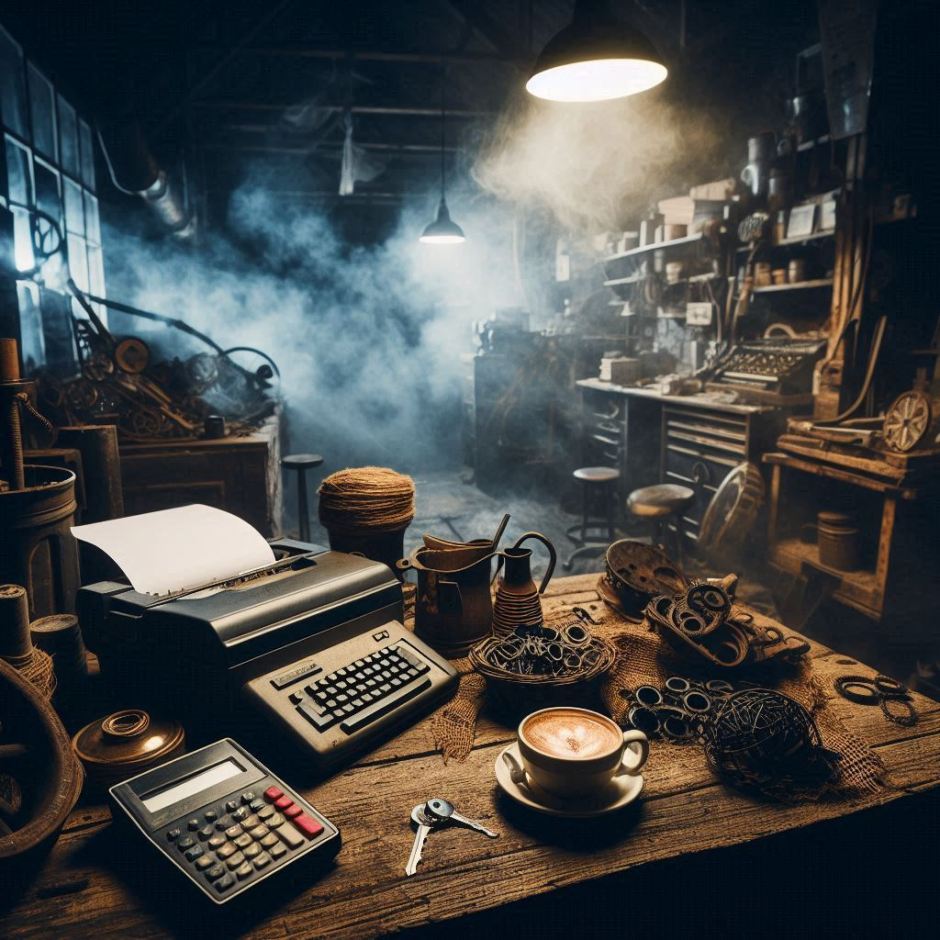
‘I woke at six. I need no alarm clock. I was already comprehensively alarmed.’ Silence followed Murray’s smug words and he shot his audience a peevish look.
Only Owlish seemed to be listening, he blinked two large eyes and shuffled his chicken wire wings. Murray pursed his lips and decided to help them get to the punchline. He waved his left arm in the air and pulled his sleeved down, exposing raw, puckered skin, and an ugly rend which dominated most of the ruined limb. Nestled amongst the pus and tendons was a green Bakelite alarm clock, its second hand had fallen off, but the hours and minutes still ticked.
‘Comprehensively alarmed.’ He shoggled the limb and blood started to seep from the tender flesh.
Owlish turned his head away, the whole hundred and eighty degrees.
‘Clearly I’m only one whose had their coffee this morning!’ Murray grumbled. He picked up a spanner and wiped dried blood from its head. ‘Speaking of coffee – De’Longhi?’ the dark corners of the shed shuffled, but nobody came forward. ‘De-Loooonnnghiiiiiii.’
A trundle of wheels answered Murrays call as finally De’Longhi rolled forth. Her feet had been replaced with office chair wheels, her lovely long legs curved upwards, to her hips which now supported a rusty coffee machine, upon which her heavy bosom rested nestled amongst the stacks of cups.
‘Cappuccino,’ Murray demanded. ‘Anyone else?’ No reply.
De’Longhi smiled weakly and started his order. Her gel nails were chipped and as she steamed the milk flakes of pink tumbled into the froth, where they spun and twisted.
‘You do make a fine coffee,’ Murray offered her rare praise. ‘Shame you had to go on maternity leave, the office wasn’t the same without you. I told you when you started, we are a family. You don’t walk away from your first family.’ He glanced down at her wheels and smirked.
De’Longhi poured the espresso and topped it with steamed milk and froth. Her mottled hands were shaking and a maggot fell from her flesh and plopped into the beverage. She started to shake, cups clattering.
‘Extra protein,’ Murray smiled, his dry lips stretching thin over stained teeth as he took the cup. As De’Longhi retreated and he slapped her behind playfully.
Owlish hooted reproachfully.
‘What?’ Silence. ‘Yeah I thought so. No backbone, you were a weak and pathetic security guard and whilst you’ve changed a great deal you’re still pitiful.’
He sipped his coffee for a moment, then pulled the sheets from the workbench. Gary the intern lay there, his mouth bound with gaffer tape. Next to him was the office fax machine, the one that only he had been able to work, when Gary left his placement, returning to college the damned thing had given up.
Murray ran a finger along the machine, ‘You weren’t the only one who missed him. But he’s here now.’ He smiled at Gary, ‘Aren’t you.’ The lads eyes bulged and he strained at the telephone cords binding his limbs. ‘No, no my dear boy don’t fret, this is a job for life. Think of it, lifelong security, not many companies offer that anymore.’
Murray turned away to consider his sketched-out plans, he had been careful to consult with the fax machines manual while planning Gary’s premotion. Tinkering was a fine art you could never be too careful.
‘Tell me Gary, where do you see yourself in ten years’ time?’ he asked wondering if he had left enough room for upgrades, what if the office went fully digital, switched to email entirely. ‘Do you know how to send and receive emails? You’re young, is that something you’ve learnt at your fancy college?’ Murray turned back to the youth, but Gary wasn’t on the workbench anymore, nor was the fax machine.
‘Gary?’
A flash of white and something heavy smashed into Murrays face. The fax machine. Gary swung again, this time striking Murray in the stomach.
‘I quit!’ Gary roared as Murray slumped to the ground. He turned and rushed towards the door where he struggled with the bolts. Just as he pulled the last one free Owlish swept in, leaping from the shelf in a flurry of wire and feathers. It didn’t take him long to subdue the youth. Murray sat up, shaking his head sadly at Gary. But he quickly brightened and smiled at Owlish, ‘Somebody’s getting their bonus this year.’








 A Year of Time