
Apologies in advance … this post got long, you might need snacks.
I’m dyslexic (why is that word so difficult to spell?). I like being dyslexic. Now, in my ripe old age, having lived with dyslexia for four decades, I view it as a superpower – but recognising my dyslexia as a superpower is a new thing.
I slipped under the radar with my dyslexia until I was eight, copying other peoples work, being really quiet and not drawing attention to myself. But I remember feeling frustrated and stupid. Why couldn’t I do the things that my classmates seemed to find so easy. Along came a new teacher and she spotted that my work was a bit off, for example I would write upside down in a workbook, as I didn’t know which was the right way up if there weren’t pictures to show me, she also noticed the copying. After this I was assessed, and my superpower was discovered.
With the right guidance and teaching methods I learned to write! Though spelling to this day remains an issue, letters muddle themselves, I can look at something I’ve written and because I know what word I meant to use or spell my brain see’s the correct one, when what is sitting on the paper is another word entirely.
With proper instruction and support I learned to read. This shocked my teacher and my parents. The first book I read at the age of eight was The Horse and His Boy, and to my never-ending delight the second was The Hobbit. This was the start of a lifelong love of fantasy and science fiction, I fell willingly down the rabbit hole of these genres.
For people with dyslexia who are nervous about reading – find something you love and go with it. You don’t have to read books which only make it onto the Booker Prize lists, you can read graphic novels, fan fiction whatever it is, if you enjoy it, don’t be ashamed.

I was lucky to be diagnosed with dyslexia when I was young, but my confidence had been knocked. I struggle with self doubt, I don’t feel my work has any worth, and I can be very sensitive if people point out mistakes in my work (especially if its a spelling mistake).
My experience in the 80s following my diagnosis was of support and patience. My mum was a huge factor in this. She was determined I could do well in school and perhaps university. Mum wasn’t diagnosed with dyslexia until she was well into her forties, so a little late. Academically she was crushed, being expelled from school for being stupid. Though she did go to college and worked in advertising, and later administration she never got to go to university which had been a goal of hers. Thankfully things have changed a lot since the fifties.
For anyone looking for support there are many groups and associations now which educate, discuss and offer support for people with dyslexia or those with family members with the superpower. Schools, colleges and university’s offer a huge range of support, recognising that not one dyslexia fits all.
I thoroughly recommend The British Dyslexia Association its a great place to start.
https://www.bdadyslexia.org.uk/
For me since leaving education I have found my fellow dyslexics to be the greatest of cheerleaders. A surprising number of my friends happen to also be blessed with this superpower.
Dyslexia and Writing
When it comes to writing stories, my dyslexia brings mixed factors to the page.
Some of the most creative people I know are dyslexic and I hope I can count myself among their number.
When it comes to reading, watching films or tv shows I’m often way ahead, piecing together the plot, as I find it easy to see the bigger picture. (I am not so sure this happens with my writing though, I often get lost in my plots or my stories runaway, taking themselves in directions I never intended.)
And whilst I might not be the editor of choice for spelling and grammar, I am very good at looking through peoples work and picking out areas that need tweaking.
Things that others can do quickly take me longer, earlier I said I was a good reader, but it takes me a long time to read and follow instructions. I have to go over my work a billion times and even then, mistakes creep through the gaps – I don’t see the spelling mistakes or notice the missing words.
I listen to all my written work, this helps me spot dropped words, misspelt words or indeed random words which have for some reason inserted themselves into my work, but it’s time-consuming. When I was at university, I was given extra time in my exams, this wasn’t a way for me to cheat, it just levelled the playing field. I once tried to explain how long it can take me to write even a seven-hundred-word story to someone, and she helpfully suggested I shouldn’t let myself get distracted so easily.
One of the things I find hardest is when people are critical of my errors. Now, don’t get me wrong of course you shouldn’t have spelling mistakes in a finished story. But I have often been really disheartened by how people approach such feedback.
For example … During a writing course we had to post our ongoing work to an online forum. This wasn’t our finished work, this part of the course was casual and unassessed, so I didn’t apply my usual levels of combing my work. My fellow students were very quick to point out my dyslexic errors and it became disheartening. One student said they struggled to read my posts as they couldn’t get past the spelling mistakes. In the end I stopped using the boards as the content of my work wasn’t judged on the story, the plot development or character arcs it was just being picked apart when I missed a word or misspelt one. I didn’t want to have to tell them about my dyslexia, I didn’t want them thinking I was making excuses, so silence was easier.
I have learned from this – ask people to read what you have written, not correct it. You can get to the corrections once you’ve finished, when you spend endless hours editing your story and wondering why you thought any of this would be fun in the first place.
As I said I listen to all my work, it helps me pick out mistakes. I use spellcheck like its oxygen. I have people I trust who I send my work to, people who won’t cover it in cruel, disheartening red ink. Don’t be afraid to make use of all the wonderful tools that are out there, there’s great software and I know people who use browser programs like Grammarly – I intend to explore this in the future.
If you aren’t dyslexic, you’ll probably never really understand how much of a hurdle it can be, just as I can’t imagine what its like to navigate the world without dyslexia. Isn’t it wonderful how different we all are.
I always wanted to write. When I was little my friend Ali, and I had our own ‘publishing house’ which operated under several names including Otter Books, Sea Otter Books and Ink Books. We produced many works, often about a guinea pig called Gulliver. But I didnt have the confidence to peruse this, indeed one teacher told me I couldn’t be a writer because of my dyslexia. So, I focused on other things – art, philosophy and archaeology, and it wasn’t until years later that I came back to attempting to piece stories together. I might not be knocking the ball out of the park, but I am finally trying to do something I always wanted to.
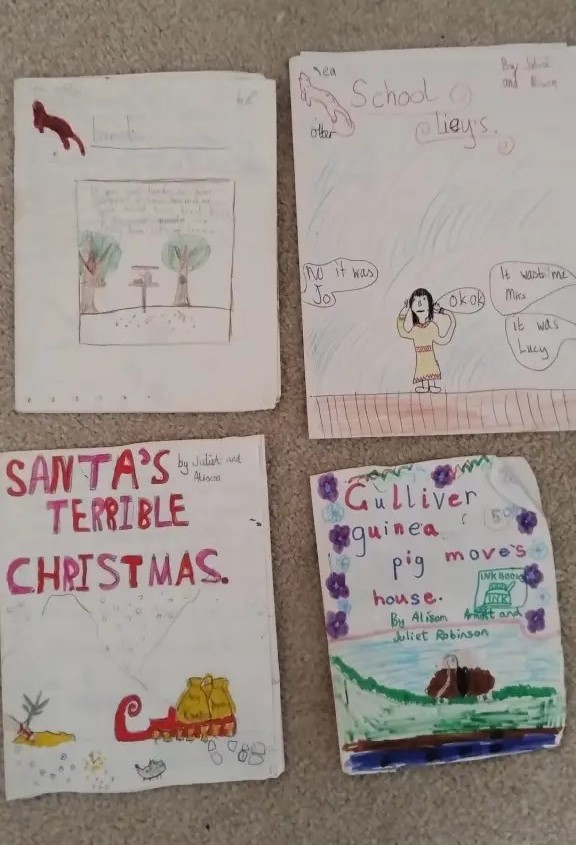
So I thoroughly encourage people with or without dyslexia to pursue your creative passions. Don’t listen to people like that teacher who told me I couldn’t write because I am dyslexic. Embrace your creativity, whatever form it takes – there is so much fun to be had immersing yourself in the process of creation. And who knows maybe you will be the next Virginia Woolf or Brandon Sanderson. Or like me, you might just enjoy writing stories for the sake of it.
If you made it this far thank you for sticking with me!!

 A Year of Time