The Bonnie Lass

I went to the bathroom and threw some water on my face, combed my hair. If I could only comb that face, I thought. I snorted, better still comb the tangles from my life, but no, things don’t work like that do they, no easy fixes. I paused before opening the bathroom door, tried to give myself a pep talk, but it didn’t work. So instead, I just forged ahead.

There was more smoke in the corridor now. Not really a surprise. The sprinkler system was doing its best, but it was older than The Bonnie Lass, having been stripped from a drifting trawler twelve years hence. I held my hand out, let the smoke-stained water fall upon my palm. What does it taste like I wondered, sea water mixed with smoke, there had been whiskies like that. I licked my palm, the coarse skin tickled my tongue, but the water tasted nothing like my memories of whisky, it was bitter, with a hint of engine oil.

We had sealed the balk heads. The fire should have been contained. The plan had been to let it burn itself out. The Bonnie Lass is a big ship, one of the largest still out on the waters, a fire in the crew quarters was manageable.

I climbed up to the bridge. William and Fritz were arguing in low voices but fell silent as I approached. William seldom lost his temper, and Fritz whilst impetuous didn’t often challenge the captain.

‘Elizabeth,’ William smiled. But I know the man well enough to see beyond the curve of his lips, ‘How fare the rest of the crew?’

How does he think they are doing? Does he imagine their making the best of the situation? Should I tell him that as I passed the crew galley I saw Francis and Juno twisted together in the pursuit of carnal needs they hadn’t explored before. What about poor Jenny who had hung herself. Could I explain Turk’s painting, how he was throwing colour as if to create a universe into which he could flee. Did I need to say that Jack was sitting out on the bow humming a piece of music I dimly recalled from my childhood, ‘My bonnie lies over the ocean, my bonnie lies over the sea, hmmm hmm, hmm hmm.’  What did William want me to say.

Fritz did the talking for me, with his fists. His huge right paw slammed into William’s face, swiftly followed by his left. William blinked, his face paled, and he crumpled to the floor. Fritz turned to me, waiting for my reaction, but I gave him none. I said nothing and I did nothing as he hoisted William’s feet and dragged the fallen captain from the wheelhouse. I crossed the boards and stood at the helm, took in the view from the bridge’s windows. Smoke billowed from the ship; the fire had not been contained. The Bonnie Lass shuddered as a blast rolled through her, the engine rooms had succumbed. The lights flickered, the engines stalled and just before the power went out, I set a course.

Twenty-eight years I had been aboard The Bonnie Lass, most of them hard, but we’d made a living. We’d trawled for salvage, we harvested drifting vessels, we’d once seen a floating house with a family of cats living aboard it. I patted the helm, the ship owed us nothing, we were good.

I passed Fritz as I climbed to Monkey Island, he was fishing, though no line fed his rod. I watched as he reeled in his imagined thread, checked a hook that didn’t exist, rebaited it, then cast for the horizon. I didn’t ask where William was.

I settled against the radar mast, which had been stripped of its paint by harsh winds, biting waves and time. The Bonnie Lass had navigated it all, but this was her final whorl. From up here the smoke that belched from her ravaged body seemed a shroud. The ocean was a stilled stage, not a wave washed its boards, no wind pulled at the smoke, even the cries and groans of the dying ship were muted.

It was slow. Drawn out. Deliberate. Water began to boil at the stern, the hungry bite of the ocean taking its due. The Bonnie Lass didn’t fight it; with the grace of a diving bird, she tucked her nose and began her descent. There was no crashing roar, just a deepening silence. It was harder now to lean against the radar, the inexorable pull of the ocean’s maw threatened to topple me from my perch. I wedged my foot against the rails and kept my seat. The grey of the ocean was rising to meet me. I thought of the cats on the floating house and wondered where the waves would take them.

© Juliet Robinsons, all rights reserved 2025
Dinner Guests

‘I’m going to check on lunch.’ Nancy smiled, though Robin who knew her like the back of his hand saw that it didn’t turn the corners of her mouth.

She headed to the dining room, wishing she had never quit smoking. A caterer was putting the final touches to the elaborately set table. How had she become the overseer of such dinners.

‘All ready?’ She asked, in what she hoped was a crisp and calm voice.

‘All set.’

Returning to drawing room she tried to catch her husband’s eye, but he was engrossed in Ileana, possibly her conversation, she thought tartly. Instead, she cleared her throat and declared dinner ready.

Drinks were poured though Ileana refused, asking for sparkling water. The starters arrived, and they were exquisite.

Robin sat next to his latest girlfriend Jade a younger variant of the last three. She was smiling at him raptly, twirling a finger through her hair though he kept trying to drag others into their conversation. Casting his eye towards Nancy every so often she thought perhaps pleadingly, but really, he had brought this on himself.

Torin sat between Ileana and Nancy; his shoulder slightly turned from his wife and his attention on Ileana. She laughed at his jokes, but kept glancing towards Nancy, almost placatingly.

‘Torin says you used paint.’ Ileana beamed.

Nancy took a large drink of white wine and looked at the woman. She could see the appeal, and at least this one was intelligent.

‘Yes, I had a studio not far from your new gallery. The southside was a little different back then.’

Torin turned to his wife. ‘Ha! More than a little, I thought you would be kidnapped. You know she really was talented but along came Alexander.’

She. Was. Nancy’s nostrils flare.

‘She still is,’ Robin corrected. ‘Stick your head round the door on the right before the bathroom, it is filled with her recent work.’

Torin sat up straighter and shot a look at Robin.

‘You’ve been allowed in the studio.’

‘Just once, back in January when you and Ileana were setting up the itinerant exhibit in Amsterdam.’

A tension vibrated round the table, four sets of eyes avoided each other, the other two cast round in amusement and confusion.

Jade changed the conversation though Nancy didn’t think it was because she had picked up on the other diner’s sudden rigidity.

‘I adore children, I would love to be a stay-at-home mother.’ She was looking directly at Robin, but he refused to notice.

Michael giggled loudly. ‘I hate children, and I need a smoke, please excuse me. I trust I have time between courses?’

He stood not waiting for a response.

‘Let me show you to the terrace.’ Nancy volunteered.

Outside he offered her a cigarette, but she declined.

‘Why am I here?’ He asked.

‘Ileana was meant to be bringing her assistant, young, Italian, with an arse you can bounce off a wall. He’s possibly your type.’

‘You’re trying to partner me off? Spare me. Relationships are for those who have given up on life.’

Nancy sighed, reached over, and snatched the cigarette from his hand. She leaned back against the rail, enjoying a long drag she held it in her lungs for a long time, savouring the chemical heat. As she exhaled, she felt herself wilt and Michael put his arm around her shoulder. She leaned into her friend and not for the first time that she and he could be something more to each other, but neither’s sex quickened the others pulse.

The second course arrived, swordfish in a lemon and garlic sauce.

‘So, Ileana, when does the new gallery open?’ Robin asked.

‘Next month in theory, but Torin keeps insisting that the space isn’t right for his new pieces.’ Her eyes lingered on the artist in question. They shared a smile.

Michael tried to kick Nancy under the table but missed and scuffed his foot up Robins leg. Robin glared at Michael, who tried to signal with his eyes that boot hadn’t been intended for him. Ileana continued unaware of the ocular bout and the glacial look Nancy had hurled at her.

‘I have never meet with an artist with such passion for the entirety of experience regarding their work. Torin is a purist, a talent, a perfectionist.’

Torin frown and waved as if to brush off Ileanas compliments and Nancy felt her eyebrows raise at this effect modesty.

‘No, its true!’ Ileana insisted.

Torin sat back languidly in his chair. ‘This collection is the peak of everything I have been working towards, my entire life. I am not apologising.’

The caterer started to clear the table; she paused at Ileana’s plate which was untouched unsure if she should take it.

‘I am sorry,’ Nancy said. ‘Don’t you like swordfish?’

Ileana fleetingly touched a gentle hand to her stomach, just for a second and Nancy may have been the only person who noticed.

‘It doesn’t seem to agree with me at the moment.’

© Juliet Robinson 2025, all rights reserved

Mind Burble

This piece was just an exercise in tension an attempt to keep its tone low.

Tea

‘Morning Alden.’

‘Ms Woodwhite,’ Alden brings the trolley to a stop. ‘Eleanor Winter the police released her body this morning.’

‘Thank you, if you could help me get Eleanor on the table, I would be grateful.’

Alden and I have done this many times, once Eleanor is safely resting on the slab, I sign off the required paperwork, see Alden out and then I read the police handover that Eleanor brought in with her. Her family have already been in touch, they identified Eleanor while she was still at the police mortuary, and they’ve requested a closed casket funeral.

Twenty-three-year-old medical student, she’d taken a gap year to travel, the baby of the family with two older sisters, she loved reading, liked to dance and apparently was an excellent cook. Pretty, well the young woman in the photo is. Eleanor suffered in the last hours of her life, and the trauma of this is evident when I open her body bag, it’s hard to match her corpse to the smiling photo in her file.

I put the radio on, and music fills the room, ‘Hello Eleanor, I’m Catharine I ‘am going to get you ready.’

My duty to Eleanor is simpler than normal, her internal organs have been removed by the police coroner, her body sewed neatly back together. Still, I wash her again and her body tells me that she fought. I massage her limbs working out the rigor mortis that has set in, then shave her, after all these years I find it easier to shave the dead than the living, bring a razor to my own legs and I will draw blood. Her lips are burst, she lost teeth, and her jaw has been dislocated it takes me a while to wire it straight and then shut. What were her last words, I have a feeling she didn’t beg, I sense defiance.

While the arterial embalming runs, I drink coffee, reply to emails and handover Mr Lamont. He has been here for two weeks now, waiting for his sons to travel back across the Atlantic in order to bury him in the family plot on Mull. They collect him and they don’t remind me in anyway of their father, who was a lean and wry witted man. They have been softened and rounded off by their time in America. They place their fathers cardboard coffin in the back of a rental van and away the Lamont’s go.

The bell rings and a childhood friend of Eleanor’s stands at the door, she has brought clothes for her friend to buried in. I bring her into my office and offer her comfort, I listen to her stories about Eleanor, and they fit with who I have come to imagine my client was. Her friends heart lightens, and I am glad, because Eleanor’s was a life that should be celebrated. As I see her friend off, she hesitates, then takes from her bag a battered copy of the Hobbit.

‘Please can you put this in with El?’

Eleanor is to be buried in soft cotton pajama’s printed with dogs, the pictures are cute and colourful, the fabric is worn. I dress her in them as the sunsets, I sort her hair, brushing it out, gently smoothing it into place, so it falls upon her shoulders. Though it is to be a closed casket funeral, I apply light make, bringing the appearance of life back to cold skin, the flush of love and laughter to bruised cheeks. I fold her left arm across her waist and bring her right hand to rest over her heart, under it I place her book. She is ready.

Black tea leaves, peppermint rolled and then chopped, a crushed bay leaf, a snip of rosemary, cinnamon, two birch leaves, a teaspoon of dried powdered willow bark (measure carefully), orange peel, three pink peppercorns and honey (be generous).

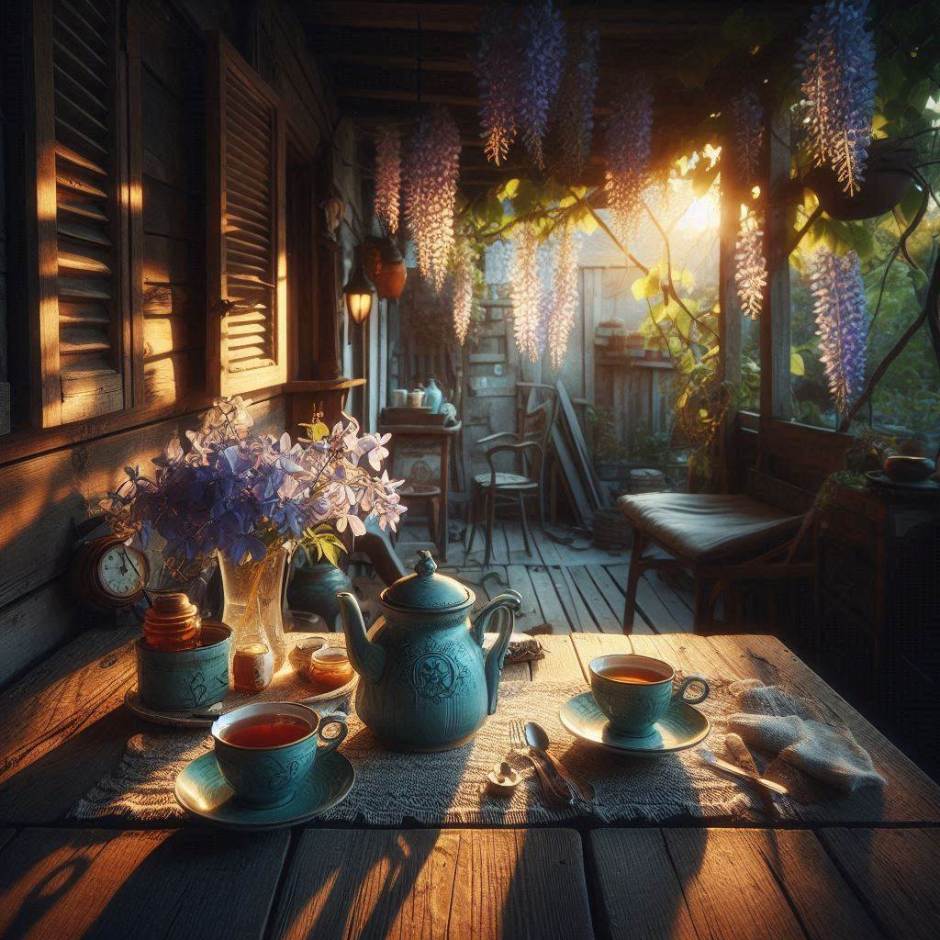
I brew familiar recipe in a chipped blue teapot which once belong to my grandmother Tilda. She taught me the recipe, just as she taught me how to deal with the dead. Once its ready, I take it out onto the porch which is heavy with the scent of magnolia and clematis, it’s a warm night and the stars seem strangely distant. I pour two cups and sit back to wait.

It isn’t long before I hear footsteps light and sure of themselves, the screen door swings open and out comes Eleanor. She’s golden, full of promise and ready for what comes next. I gesture to her cup of tea; she sits down, and we drink.

After a while she asks, ‘Why is it we never love the people we ought to?’

‘He handed himself in.’

‘I deserved better.’

‘You did.’

We drink in silence, finishing our tea. For a while she sits holding her empty cup, in the palm of her hands. I don’t rush her; she has all the time in the world. Eventually she places the empty vessel on the table and stands.

‘I’m ready now.’

‘I know.’

I gather the empty cups and head back inside alone.

© Juliet Robinson 2025, all rights reserved

Lang may yer lum reek

‘Time is priceless, but its free. You can’t own it, you can us it. You can spend it. But you can’t keep it. Once you’ve lost it you can never get it back.’

‘That’s good. A pseudo philosopher once took a shit here. Pass some bog roll.’

Fiona’s hand appears under the stall wall, she’s wearing emerald, green nail polish, which is heavily chipped, I take the sandpaper she offers.

‘Thanks – Call Gregs ma for a good time.’

‘Is there a number?’ Fiona asks.

‘Several.’

‘Don’t drink water, fish have sex in it.’

‘Solid advice.’

The toilet next door flushes.

‘You ladies do know this is gents, right?’ Callum asks.

‘Wash your hands!’ Fiona shouts.

The tap runs and a second later Fiona shrieks. By now I am finished and am hiking up my tights, which have twisted something rotten.

‘Callum Brown!’ Fiona roars. ‘I can’t believe you tee-pee’d me!’

‘Ha!’ Callum snorts.

I unlock my cubicle and stagger out, somehow in the last few minutes I seem to have gotten drunker – the inebriating stench of the men’s toilets. Callum standing at the sink wetting another handful of loo roll.

‘I wouldn’t,’ I warn him.

‘I’ll take my chances.’

I shake my head at his stupidity, Fiona is a force to be reckoned with. After washing my hands and give myself the once over. My eyeliner is halfway down my cheeks, so I push it back up, and smear some concealer over the grey stains its left behind. Callum launches his second barrage of missiles at Fiona, who screams. She is going to kill him.

Her cubicle door flies open, and she stands with her head lowered, eyes ablaze, like a bull about to charge, she’s even kicked off her heels, they lie discarded on the floor. Given the state of the tiles this was either very brave or very foolish of her.

‘Shit!’ Callum shouts and he takes off.

Fiona’s after him like a hound. ‘I’m telling mum!’ she brays.

What is about family gatherings that causes us to revert back to our formative years, I wonder. Perhaps the intellectual who wrote that nonsense about time might be able to answer that question. I leave the bathroom just as Uncle Angus tries to enter it, he looks at me in confusion, so I tell him that this is the ladies.

‘Oh, sorry.’ He wanders down the hall to the actual women’s, stops in front of the door then turns back to me, ‘Una! You’ll get me arrested for being some sort of creep!’

Laughing I make my way back into the packed bar. I know nearly everyone here, villagers, friends and family. The air is heavy with the warmth of our crush and thick with conversation. I can hear Fiona and Callum over all of this, they are still arguing, but unlike when we were young, neither of them is crying and no punches have been thrown. I force my way through to the bar and try to get the young server’s attention, but before I can Betty Tolworth starts bellowing for silence. I glance at the clock, surely it’s not that late? But right enough it’s 11:50. When nobody responds Betty smiles at me, picks up the large metal bell she keeps behind the bar and is rumoured to have once used to break up a fight.

‘Would you like the honour?’ she asks.

Taken aback by this gesture of trust and the offering of such power, I smile devilishly, and snatch up the bell eagerly.

‘On you go,’ she says.

With a heady sense of authority, I start swinging my arm and the bells tolling silences the White Harts custodians (even Callum and Fiona). Carried away by all of this I find myself shouting, ‘Bring out your dead.’

‘When you’re quite finished Una,’ Betty says. She’s standing arms folded and eyebrow raised, but she’s smiling. ‘You all know what that means! Out! All of you! Every last one of you.’

‘What about Brian?’ Someone asks. Brain is fast asleep, propped up at the far end of the bar.

‘I’ll deal with Brain,’ Betty says ominously.

And with that we start making our way out, there’s a scrummage at the door as people pull on coats, search for cigarettes and make sure they have everyone they arrived with. Its cold outside, it’s been a harsh December, even the river has frozen over. We crowd into the small car park like a milling herd of sheep. I spot Duncan and Isles who are huddled smoking by the beer garden gate and make my way over to them, ‘Cuz!’ Duncan greets me as he taps out a cigarette for me, I’m drunk enough to take it, and regret it almost instantly when the smoke hits my throat and the world spins.

The sound of feet rushing over gravel announces Callum’s arrival. He’s flushed and looks pleased with himself, I assume because he’s managed to get the better of his sister. The rest of our clan slowly gathers as we stamp our feet and huddle against the cold. Uncle Angus stinks of whisky, his cheeks are furnace red and he sways on his feet like he’s moving to a tune only he can hear. Fiona managed to sneak two pints out with her, and we pass these between us as we wait.

Behind us the church bell begins to toll, the crowd counts along with the strikes, ‘Ten, nine, eight, seven, six, five, four, three, two, one! Happy New Year!!’ we bellow as one.

Inside the White Hart the piano starts up – Old Lang Syne. I hear the back door to the pub bang open and Betty calls out, ‘Friends and family only.’

And at Hogmanay everyone is family or a friend.

© Juliet Robinson, all rights reserved 2025

Mind Burble

I am writing at the moment, just slowly and mainly my focus is on editing. I hate editing, and I really struggle to get on with it.
This short piece was written for a workshop. The quote ‘Time is priceless, but its free. You can’t own it, you can us it. You can spend it. But you can’t keep it. Once you’ve lost it you can never get it back.’ – comes from Harvey MacKay and was the prompt we were set for the workshop.

The title – Lang may yer lum reek, is a Scottish new years greeting, or indeed Hogmanay greeting and is essentially a blessing. Lang means long, yer means your and a lum is a chimney. Thus it means may you never be without fuel for your fire, or indeed warmth, health and good fortune.

I Wish

( This piece contains swears and mild violence )

Tricked by the sun into setting out on my run wearing shorts and a vest, I push myself to move faster. I never know what to wear when I go running at this time of year, the joys of British weather.

A kilometre into my run and I no longer care about what I am wearing. The first kilometre is always the worst, it takes a while for my body to remember that it can do this, and I am not going to die. Probably not.

Today’s route takes me along the Innocent Railway Line, which cuts behind Duddingston Loch and some posh golf course. It’s a hay fever hellhole at the moment, but it’s nice to be off the roads. A man comes into view and at once my woman’s radars squawks.

(Women will know the radar I am talking about; we all have one, it alerts us to potential threats and dangers. These radars start to develop when we reach our early teens, sometimes when we are younger – the when doesn’t really matter, it’s just a sad fact that all women have one. There comes a point when being female has its disadvantages.)

He’s squatting at the edge of the path, facing the wall with his hood pulled tight around his head. It isn’t warm, but there is no reason for his hood to be obscuring his face. He’s half hidden in the bushes – everything about him seems off.

He’s on my side of the path, so I cross to my right and speed up, not wanting to linger near him. I check behind me to see if anyone else is around, but there isn’t. It’s just me and him. I turn my music off and keep running.

As I pass him, he slowly turns and rises to his feet, casting his eyes over me. My skin crawls, I feel like meat. I force myself to move faster, not liking the look on his face. Five meters grow between us, then ten. I keep glancing back. He hasn’t moved, but he’s still staring at me. I don’t turn my music back on, I need to stay alert, I don’t want him suddenly sprinting up behind me.

I turn again and he’s smiling. There’s an edge to that smile, its cold, blade sharp and it doesn’t reach his eyes.

‘No need to run so fast love, I wouldn’t touch you,’ his voice is coarse, thick with threat. ‘You wish I would rape you.’

I’m sprinting, my feet pounding the tarmac, and he starts to laugh, enjoying my fear.

‘You wish I’d lick …’

I’m done. I stop. I turn to face him, red faced, sweat stinging my eyes and with a flick of my hand I send him spinning up into the air. Not gently, his arms and legs flail wildly. He shouts, not words, just noisy barks of fear.

This feels good.

I slam him against a huge oak tree, he smashes his way through the branches and thuds meatily into the trunk.

‘Fucking bitch!’ He bellows.

Again, I batter him into the tree and this time something cracks, it’s a moist sound – his ribs perhaps? A smile sweeps across my face. He’s making a lot of noise, so I spin him like a Catherine wheel. He vomits, bile and blood splatter the ground narrowly missing me.

‘Please,’ he sounds piteous now. His earlier menace is gone.

I stop his head long spin and he hangs untidily in the air, like a puppet whose master doesn’t quite know how to pull the strings. I savour the moment nibbling the inside of my cheek as I consider him.

‘Please,’ he repeats his plea.

No. Not today. I shoot him up into the air, higher and higher and just when I am about to lose my control over him, I snap my fingers. His body rips apart. I fling my arms wide and his remains fly in opposite directions, one half landing in the loch with a splash, the other somewhere out of sight on the golf course.

The sweat has cooled on my body and my muscles have begun to stiffen. I turn my music back on and restart my run.

© Juliet Robinson 2023, all rights reserved

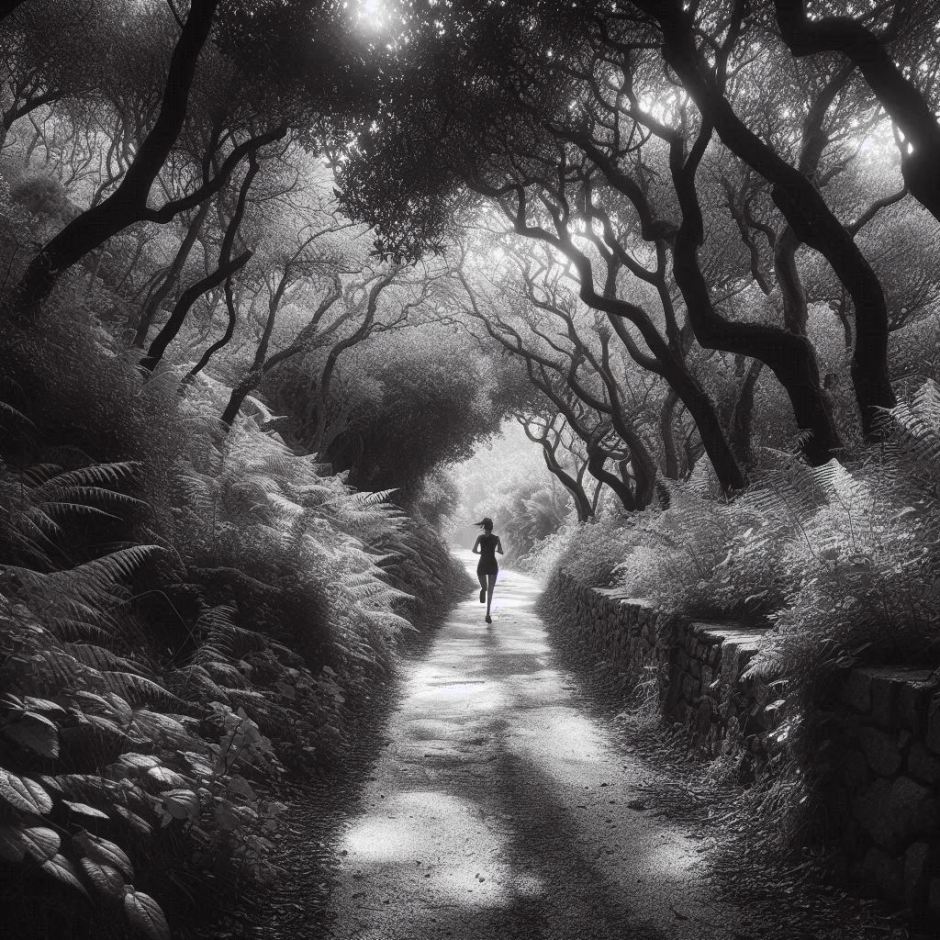
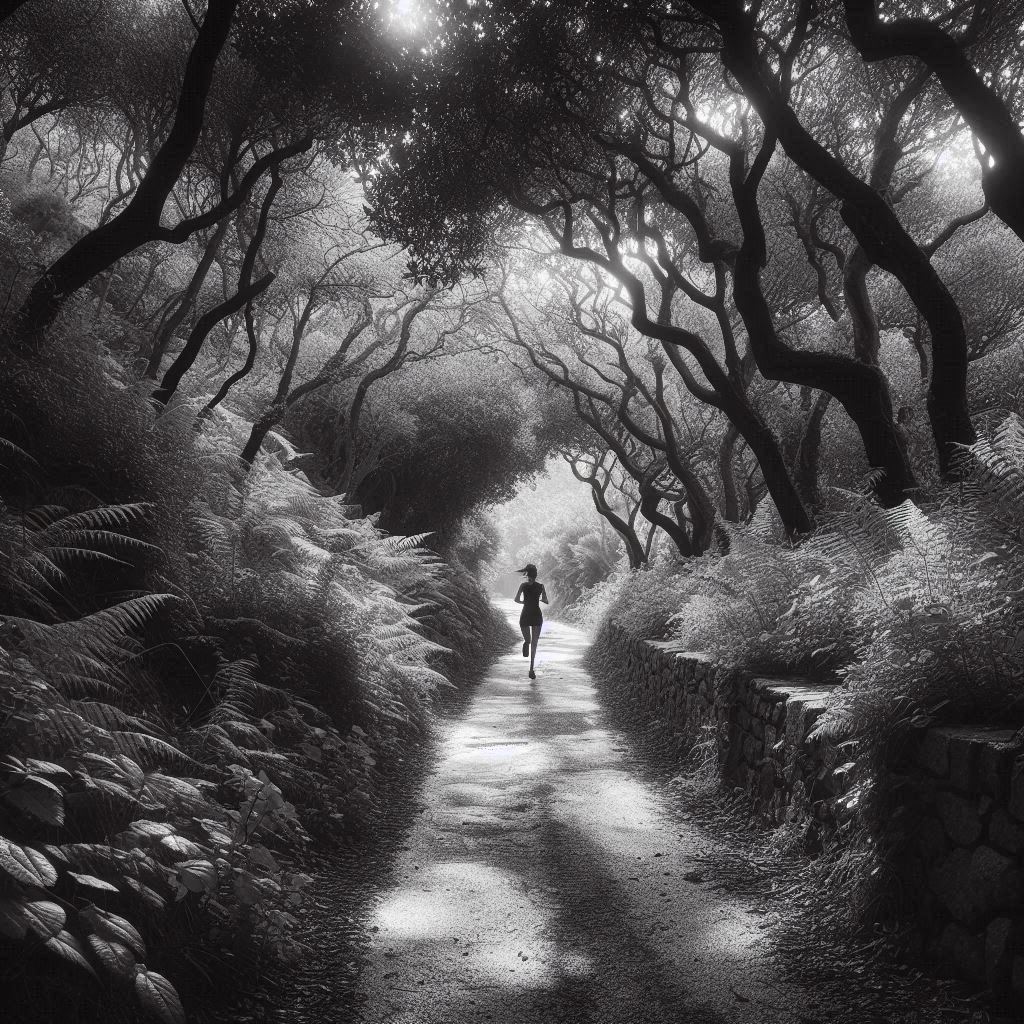
Bing Image Creator – woman running on a footpath

Mind Burble

I wrote this piece a year ago after bumping into the gentleman who ends up all over the local landscape whilst out on a run. I decided to share it today as on my run this morning a cyclist felt the need to pull his bike into my path, forcing me to a stop whereupon he inform me to get a better running bra.

By the time I had processed what he had said he was on his way. Firstly I was wearing my best bra, secondly he had no need or indeed right to approach me like this. Anyway, it made me want to share my I Wish piece again.

This short story went into the anthology that Janet Armstrong, Shabs Rajan and I put together. Which is available in print from Amazon or on Kindle Unlimited. We hope to put together another collection at some point its fun to do and a good way to use stories that otherwise seem to end up sitting in a folder on our computers.

Dyslexia: Challenges in Writing and Reading

Apologies in advance … this post got long, you might need snacks.

I’m dyslexic (why is that word so difficult to spell?). I like being dyslexic. Now, in my ripe old age, having lived with dyslexia for four decades, I view it as a superpower – but recognising my dyslexia as a superpower is a new thing.

I slipped under the radar with my dyslexia until I was eight, copying other peoples work, being really quiet and not drawing attention to myself. But I remember feeling frustrated and stupid. Why couldn’t I do the things that my classmates seemed to find so easy. Along came a new teacher and she spotted that my work was a bit off, for example I would write upside down in a workbook, as I didn’t know which was the right way up if there weren’t pictures to show me, she also noticed the copying. After this I was assessed, and my superpower was discovered.

With the right guidance and teaching methods I learned to write! Though spelling to this day remains an issue, letters muddle themselves, I can look at something I’ve written and because I know what word I meant to use or spell my brain see’s the correct one, when what is sitting on the paper is another word entirely.

With proper instruction and support I learned to read. This shocked my teacher and my parents. The first book I read at the age of eight was The Horse and His Boy, and to my never-ending delight the second was The Hobbit. This was the start of a lifelong love of fantasy and science fiction, I fell willingly down the rabbit hole of these genres.

For people with dyslexia who are nervous about reading – find something you love and go with it. You don’t have to read books which only make it onto the Booker Prize lists, you can read graphic novels, fan fiction whatever it is, if you enjoy it, don’t be ashamed.

My original copy of The Horse and his Boy bought at a school fair and one of many copies of The Hobbit that I own – this one came backpacking round Borneo with me.

I was lucky to be diagnosed with dyslexia when I was young, but my confidence had been knocked. I struggle with self doubt, I don’t feel my work has any worth, and I can be very sensitive if people point out mistakes in my work (especially if its a spelling mistake).

My experience in the 80s following my diagnosis was of support and patience. My mum was a huge factor in this. She was determined I could do well in school and perhaps university. Mum wasn’t diagnosed with dyslexia until she was well into her forties, so a little late. Academically she was crushed, being expelled from school for being stupid. Though she did go to college and worked in advertising, and later administration she never got to go to university which had been a goal of hers. Thankfully things have changed a lot since the fifties.

For anyone looking for support there are many groups and associations now which educate, discuss and offer support for people with dyslexia or those with family members with the superpower. Schools, colleges and university’s offer a huge range of support, recognising that not one dyslexia fits all.

I thoroughly recommend The British Dyslexia Association its a great place to start.

https://www.bdadyslexia.org.uk/

For me since leaving education I have found my fellow dyslexics to be the greatest of cheerleaders. A surprising number of my friends happen to also be blessed with this superpower.

Dyslexia and Writing

When it comes to writing stories, my dyslexia brings mixed factors to the page.

Some of the most creative people I know are dyslexic and I hope I can count myself among their number.

When it comes to reading, watching films or tv shows I’m often way ahead, piecing together the plot, as I find it easy to see the bigger picture. (I am not so sure this happens with my writing though, I often get lost in my plots or my stories runaway, taking themselves in directions I never intended.)

And whilst I might not be the editor of choice for spelling and grammar, I am very good at looking through peoples work and picking out areas that need tweaking.

Things that others can do quickly take me longer, earlier I said I was a good reader, but it takes me a long time to read and follow instructions. I have to go over my work a billion times and even then, mistakes creep through the gaps – I don’t see the spelling mistakes or notice the missing words.

I listen to all my written work, this helps me spot dropped words, misspelt words or indeed random words which have for some reason inserted themselves into my work, but it’s time-consuming. When I was at university, I was given extra time in my exams, this wasn’t a way for me to cheat, it just levelled the playing field. I once tried to explain how long it can take me to write even a seven-hundred-word story to someone, and she helpfully suggested I shouldn’t let myself get distracted so easily.

One of the things I find hardest is when people are critical of my errors. Now, don’t get me wrong of course you shouldn’t have spelling mistakes in a finished story. But I have often been really disheartened by how people approach such feedback.

For example … During a writing course we had to post our ongoing work to an online forum. This wasn’t our finished work, this part of the course was casual and unassessed, so I didn’t apply my usual levels of combing my work. My fellow students were very quick to point out my dyslexic errors and it became disheartening. One student said they struggled to read my posts as they couldn’t get past the spelling mistakes. In the end I stopped using the boards as the content of my work wasn’t judged on the story, the plot development or character arcs it was just being picked apart when I missed a word or misspelt one. I didn’t want to have to tell them about my dyslexia, I didn’t want them thinking I was making excuses, so silence was easier.  

I have learned from this – ask people to read what you have written, not correct it. You can get to the corrections once you’ve finished, when you spend endless hours editing your story and wondering why you thought any of this would be fun in the first place.

As I said I listen to all my work, it helps me pick out mistakes. I use spellcheck like its oxygen. I have people I trust who I send my work to, people who won’t cover it in cruel, disheartening red ink. Don’t be afraid to make use of all the wonderful tools that are out there, there’s great software and I know people who use browser programs like Grammarly – I intend to explore this in the future.

If you aren’t dyslexic, you’ll probably never really understand how much of a hurdle it can be, just as I can’t imagine what its like to navigate the world without dyslexia. Isn’t it wonderful how different we all are.

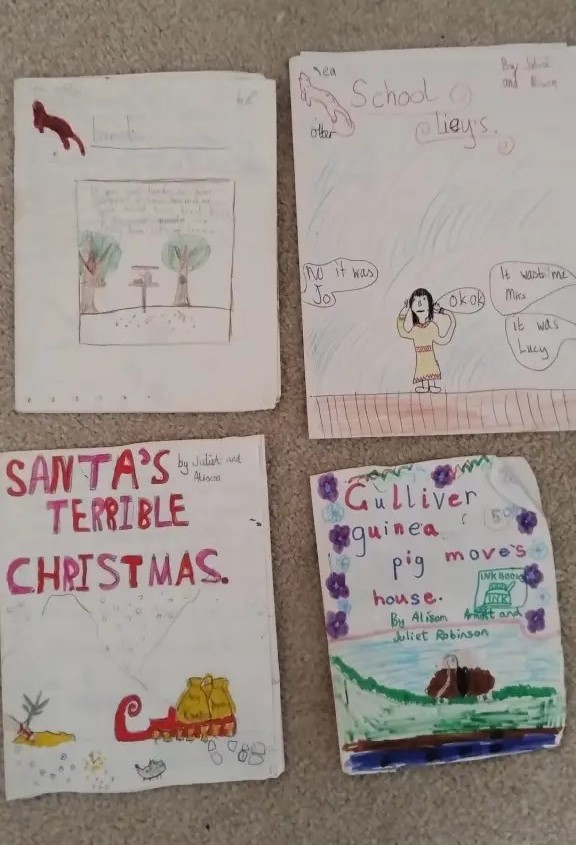
I always wanted to write. When I was little my friend Ali, and I had our own ‘publishing house’ which operated under several names including Otter Books, Sea Otter Books and Ink Books. We produced many works, often about a guinea pig called Gulliver. But I didnt have the confidence to peruse this, indeed one teacher told me I couldn’t be a writer because of my dyslexia. So, I focused on other things – art, philosophy and archaeology, and it wasn’t until years later that I came back to attempting to piece stories together. I might not be knocking the ball out of the park, but I am finally trying to do something I always wanted to.

Some of the surviving master pieces from Ali and I’s work.

So I thoroughly encourage people with or without dyslexia to pursue your creative passions. Don’t listen to people like that teacher who told me I couldn’t write because I am dyslexic. Embrace your creativity, whatever form it takes – there is so much fun to be had immersing yourself in the process of creation. And who knows maybe you will be the next Virginia Woolf or Brandon Sanderson. Or like me, you might just enjoy writing stories for the sake of it.

If you made it this far thank you for sticking with me!!

A Short Story

Though it probably isn’t obvious the following short story was inspired by Jack Schaefer’s book Shane. It was written for a workshop, the requirements being it had to include the quote …

“I leave you, to go the road we all must go. The road I would choose, if only I could, is the other.”

Which comes from Murasaki Shikibu’s, The Tale of Genji https://www.goodreads.com/book/show/7042.The_Tale_of_Genji a book I admit I haven’t read. The piece also had to be under 800 words. I chopped the quote up and played with it to make it better fit the story I wanted to tell. I had planned to return to this story, but as of yet I haven’t managed to do anything further with it.

Saquin Point

We came late to Saquin Point. Not a bad thing, for if we had been early or indeed on time, I wouldn’t be here to reflect upon what we found. The fire must have died before we passed over the range that separated the town from the Shifting Plains. So, we saw no tell-tale plume of smoke. It was around midday, so likewise we didn’t note an absence of lights. From our vantage point, the town was just a smudge on the horizon.

The first hint of anything untoward came as we passed an outer lying farm, it was mechanised so it wasn’t unusual not to see a soul, but it was odd that the large machines which tended the crops stood idle. Solomon who was taking point radioed the convoy.

‘Eyes right guys,’ there was a tightness to his usually relaxed drawl.

I glanced at the field and spotted what he was referring to, in large black letters someone had scribed on the side of a disabled piece of machinery.

The Gods love Chaos

We debated who the artist might have been as we continued down the road. I suspected it wasn’t the handy work of bored teenagers, but as things were it didn’t really give me cause for concern. Solomon and Nessa, however, were both spooked by the graffiti.

A mob of barking dogs greeted us at the edge of town. We stopped, puzzled by the pack and they distracted us, preventing us from properly taking in our surroundings. I didn’t note the lack of vehicles, I didn’t consider the absence of people or the silence. It was Maya who woke us up to the oddity of the situation, she tossed a half-eaten apple at the closest dog and pulled the pistol she wore on her hip.

I thought she was going to shoot the dog and snapped at her to leave the thing alone. She threw me a withering look.

‘Catch up Bryan.’

I finally took in the ghost town, the silence, and the faint smell of smoke. We left Nessa and Burke to watch the convoy and proceeded on foot, slinking from building to building, guns in our hands. We can handle ourselves; you don’t travel the highways with valuable cargo if you can’t, but still I felt uneasy and I kept thinking back to the message in the field.

As we approached the town centre, signs of violence started to appear. Bullet holes splashed along a wall, burnt buildings, looted stores, an overturned electric wagon and dried blood on the pavement.

The remains of a huge bonfire stained the town square, where once a baobab tree brought all the way from earth had grown. More words had been painted here, encircling the ashes.

The road I would choose, if only I could, is the other

We searched what was left of the pyre. I did so with my heart in my mouth, expecting to find charred remains, but nobody had been burnt in the flames. Thoroughly unnerved we stood in a clump as I checked in with the convoy, but only static answered my hail. Ashen faced, Maya started to talk, but she was cut off by the blaring of a horn, to be precise the airhorn from Solomon’s rig. Its shrill scream came from the opposite side of town, not from the Shifting Plains Road, where we had left the convoy.

Now we moved quickly, rushing through the streets, the horn crying constantly. At the edge of town, we found more graffiti, this time on the side of the school.

I leave you, to go the road we all must go

The horn reduced to a faded ringing in my ears, as I studied the words – did I want to understand what the scribe was saying? A loud retching sound drew me back. It was Maya emptying her guts over her worn boots. Beyond her Solomon was running, pounding down the middle of the road. In the distance, I could see his rig, it sat blocking the highway. I was about to follow when my brain caught up and I properly took in my surrounds. The poles that flanked the road, and which initially I had dismissed as being related to some construction project – the things that hung upon them, not things, people. The people of Saquin Point, they lined the road that led out of town, their throats slit, their eyes gouged out, their hands and feet hacked off.

I started to run, chasing Solomon down the road, refusing to look at the grim and silent honour guard, as I rushed past them. I caught up with Solomon moments after he silence the horn. He tumbled from the vehicle cab, his face a mask. ‘No Nessa, no Burke,’ he choked.

In blood on the side of his truck someone had carefully written,

Which road will you choose?

© Juliet Robinson 2023, all rights reserved

Cute Dogs and Short Stories (slightly shameful plug)

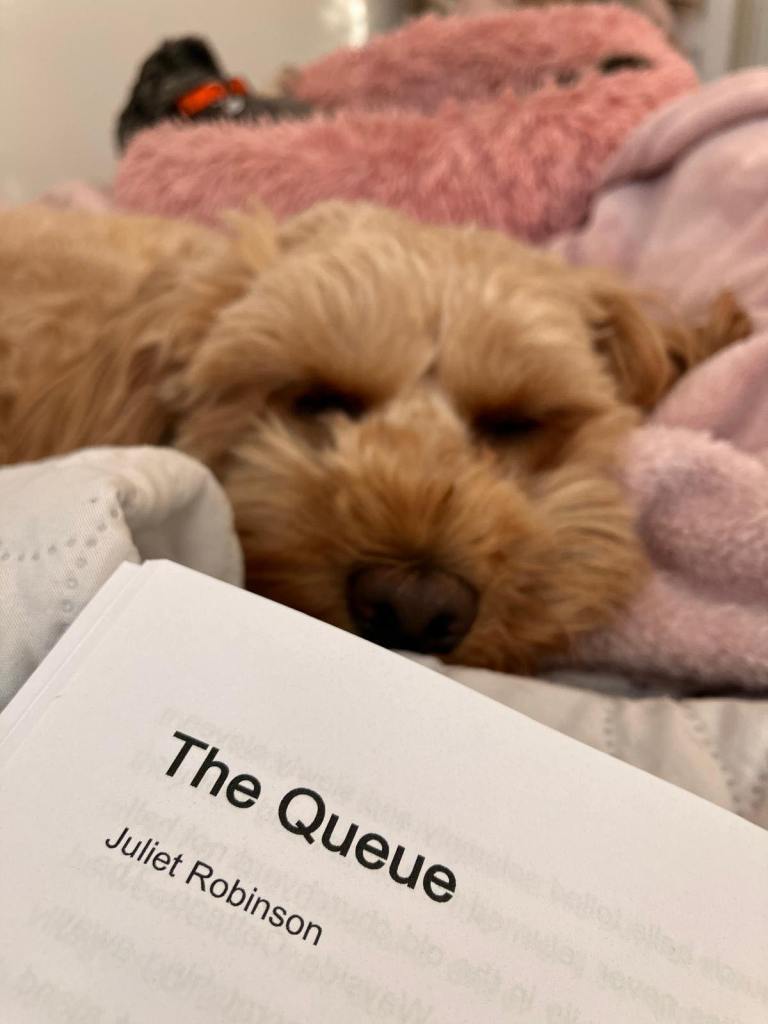
When someone sends you a picture of a cute dog and it takes you a moment to realise what’s in the foreground!

The Queue is in the short story collection Janet Armstrong, Shabs Rajan and
I put together. I’m touched when people reach out to say they have bought the
book and I am delighted when they say they like it. It surprises me when people
enjoy something I have written.

Short story collections are a wonderful oddity, especially when they include
work from several writers as the stories are so varied, they take you
everywhere, each writer has a different style and way of thinking. There is
something refreshing in diving from one world to another in single book.

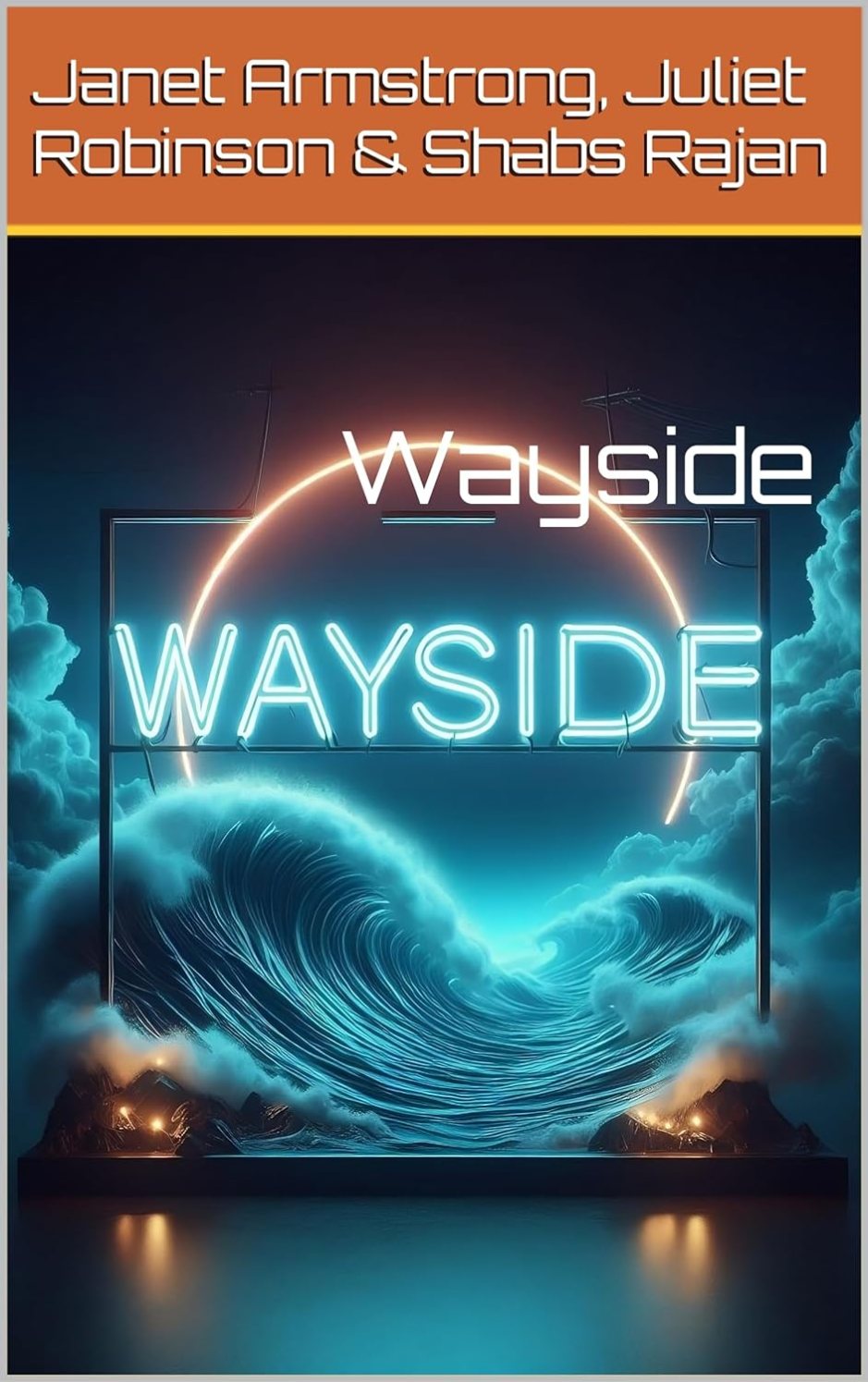
We didn’t have a theme when we started putting Wayside together, but we did notice that water often featured in the pieces so that became the loose thread that connected our stories. I stress the loose part! And our writing styles vary wildly, but we enjoy working together and I love Janet and Shabs stories. 

Shamelessly sharing a link to Janet, Shabs and I’s short story collection

Excerpt from The Queue …

‘Donald?’

‘What?’ I shook my head; my vision was clouded, and I had a sense of disconnect. I looked around; I wasn’t in the hospital car park.

Seeing my confusion, the speaker gently placed her hand on my shoulder.

‘It’s OK Donald. You had an accident, but it’s ok now.’

‘What?’ I stammered. I must have knocked my head. I looked at the speaker, who glowed with the flush of health that the young enjoy. She smiled kindly at me, and her mouth was filled with perfect, white teeth, the kind that paid for an orthodontist’s retirement.

‘You had an accident,’ she repeated. Her voice was melodious. ‘But it’s OK now, you don’t have to worry.’ She smiled again, a generous smile that was all confidence. ‘But I do need you to join the queue over there.’

The Long Way Round

I started writing – ok – trying to write back in 2010 when I moved to the Netherlands and found myself unemployed. I wrote a lot, but none of it was very good, to be honest I don’t ever feel what I write has any worth. But I do enjoy writing.

Fast forward a few years and I was in the U.A.E where I joined a writing workshop, The Write Stuff. I loved this group, it was inspirational, so many different people from all over the world writing and creating. It rekindled my desire to write. This time I focused on short stories but kept the dream of a novel alive. I had a few stories published, including one in a collection put together by The Write Stuff.

Then parenthood came crashing in, and it brought complications. The next few years where a game of survival in many ways and it wasn’t until 2022 that I actually started to write again. I did a couple of courses with The National Centre for Writing, both of which were excellent and here I met Janet and Shabs.

When our course finished, we continued to meet via zoom (something I never wanted to use again after Covid), we talked books and writing. We shared prompts and inspirational things we found, we sometimes wrote together, we reviewed each other’s stories and though it took us a very long time … we eventually assembled some of those stories into a small collection … which we published today on Amazon, named Wayside, a title taken from one of Janet Armstrong’s stories. It’s a strange feeling self-publishing, I don’t like attention, I don’t like standing up and shouting look at what I have done. It makes me entirely to uncomfortable. But this is me trying to shake of that sense of discomfort … so yes Wayside, by Janet Armstrong, Juliet Robinson and Shabs Rajan. An eclectic collection of short stories which has been incredibly fun to work on, because I got to do it with friends.

Wayside – Janet Armstrong, Juliet Robinson and Shabs Rajan. In the Kindle Store and in print form from Amazon.