A Job for Life

‘I woke at six. I need no alarm clock. I was already comprehensively alarmed.’
Silence followed Murray’s smug words and he shot his audience a peevish look.

Only Owlish seemed to be listening, he blinked two large eyes and shuffled his chicken wire wings. Murray pursed his lips and decided to help them get to the punchline. He waved his left arm in the air and pulled his sleeved down, exposing raw, puckered skin, and an ugly rend which dominated most of the ruined limb. Nestled amongst the pus and tendons was a green Bakelite alarm clock, its second hand had fallen off, but the hours and minutes still ticked.

‘Comprehensively alarmed.’ He shoggled the limb and blood started to seep from the tender flesh.

Owlish turned his head away, the whole hundred and eighty degrees.

‘Clearly I’m only one whose had their coffee this morning!’ Murray grumbled. He picked up a spanner and wiped dried blood from its head. ‘Speaking of coffee – De’Longhi?’ the dark corners of the shed shuffled, but nobody came forward. ‘De-Loooonnnghiiiiiii.’ 

A trundle of wheels answered Murrays call as finally De’Longhi rolled forth. Her feet had been replaced with office chair wheels, her lovely long legs curved upwards, to her hips which now supported a rusty coffee machine, upon which her heavy bosom rested nestled amongst the stacks of cups.

‘Cappuccino,’ Murray demanded. ‘Anyone else?’ No reply.

De’Longhi smiled weakly and started his order. Her gel nails were chipped and as she steamed the milk flakes of pink tumbled into the froth, where they spun and twisted.

‘You do make a fine coffee,’ Murray offered her rare praise. ‘Shame you had to go on maternity leave, the office wasn’t the same without you. I told you when you started, we are a family. You don’t walk away from your first family.’ He glanced down at her wheels and smirked.

De’Longhi poured the espresso and topped it with steamed milk and froth. Her mottled hands were shaking and a maggot fell from her flesh and plopped into the beverage. She started to shake, cups clattering.

‘Extra protein,’ Murray smiled, his dry lips stretching thin over stained teeth as he took the cup. As De’Longhi retreated and he slapped her behind playfully.

Owlish hooted reproachfully.

‘What?’ Silence. ‘Yeah I thought so. No backbone, you were a weak and pathetic security guard and whilst you’ve changed a great deal you’re still pitiful.’

He sipped his coffee for a moment, then pulled the sheets from the workbench. Gary the intern lay there, his mouth bound with gaffer tape. Next to him was the office fax machine, the one that only he had been able to work, when Gary left his placement, returning to college the damned thing had given up.

Murray ran a finger along the machine, ‘You weren’t the only one who missed him. But he’s here now.’ He smiled at Gary, ‘Aren’t you.’ The lads eyes bulged and he strained at the telephone cords binding his limbs. ‘No, no my dear boy don’t fret, this is a job for life. Think of it, lifelong security, not many companies offer that anymore.’

Murray turned away to consider his sketched-out plans, he had been careful to consult with the fax machines manual while planning Gary’s premotion. Tinkering was a fine art you could never be too careful.

‘Tell me Gary, where do you see yourself in ten years’ time?’ he asked wondering if he had left enough room for upgrades, what if the office went fully digital, switched to email entirely. ‘Do you know how to send and receive emails? You’re young, is that something you’ve learnt at your fancy college?’ Murray turned back to the youth, but Gary wasn’t on the workbench anymore, nor was the fax machine.

‘Gary?’

A flash of white and something heavy smashed into Murrays face. The fax machine. Gary swung again, this time striking Murray in the stomach.

‘I quit!’ Gary roared as Murray slumped to the ground. He turned and rushed towards the door where he struggled with the bolts. Just as he pulled the last one free Owlish swept in, leaping from the shelf in a flurry of wire and feathers. It didn’t take him long to subdue the youth. Murray sat up, shaking his head sadly at Gary. But he quickly brightened and smiled at Owlish, ‘Somebody’s getting their bonus this year.’

© Juliet Robinson, 2024 all rights reserved. 
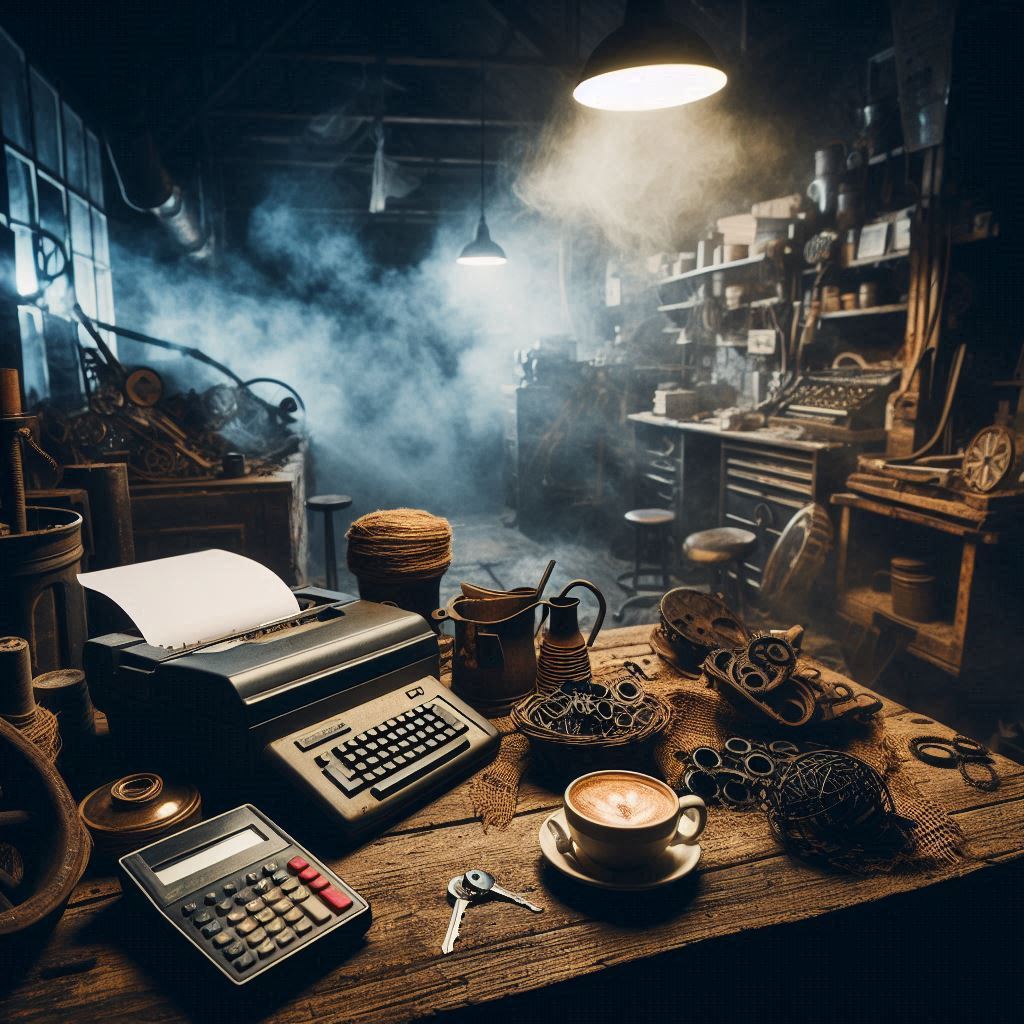
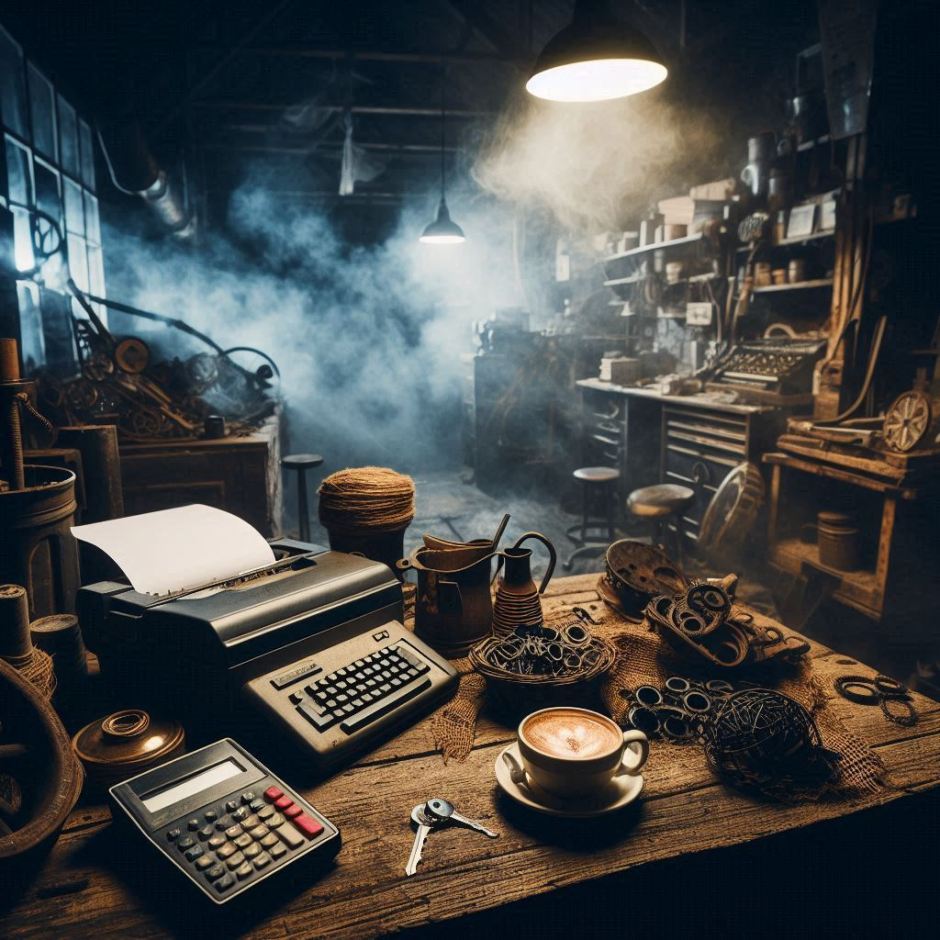
Image – Bing Image creator, a creepy workshop

That Time in the Jungle with ‘Tom Cruise’

The boat lies low in the shallow water, so the hull scrapes over rocks and sticks in the silty mud, we climb out when this happens and push. The first few times I take off my boots, and then put them back on lacing them carefully, but soon I stop lacing them and then I don’t bother to put them back on. Eventually we abandon the boat, and instead we walk upriver alongside it, pushing it against the sluggish current.

Despite the lack of rain, the humidity hasn’t gone anywhere. When we first arrived all
those months ago it was like walking into the hothouses at the botanical gardens. I felt wet and shiny the whole time, and it smelt like a tropical fish tank. But we’ve acclimatized, I’m used to the sheen of sweat on my face and my t-shirt sticking to my back. And the smell, I’m used to that also, rot and decay (which are really the scents of growth and life), at first it had stuck at the back of my throat, and it was hard to swallow, but now it isn’t even there.

We’ve been traveling for four days – one short jungle flight, where there were more
chickens on the plane than people, a day walking along dusty old military roads, a spot of hitch hiking and now the river. Our guide, who told us to call him Tom Cruise, says his sister has a restaurant in the next village where we can spend the night. Will negotiated a good price for the boat, so we can afford a night of accommodation. I’m looking forward to not sleeping in a hammock strung between two trees in the forest. I’m afraid of the dark and there are few places darker than the rain forest at night. And the noise! The sounds of the forest are so alien I fall asleep sure I won’t wake in the morning, I am convinced a monster will kill me in the night.

Its late when we arrive at the village, which is little more than a few longhouses crowded
on the riverbank. A rust brown dog lies in a pile of fishing nets, it stirs as we unload the
boat and comes over to see if we have any food. Tom Cruise tries to shoe it away, but I tell him off and in apology offer the dog a chunk of the tracker bar I have just opened.

Dusk falls quickly here and it’s upon us before we have even shouldered our packs. Tom Cruise is eager to get to his sisters, he buzzes around hurrying us, though when we insist on having a smoke before we leave, he forgets his hurry and bums a rollie. We smoke a lot here – it keeps the insects away, but also because it’s a comfort and a luxury. Two things which don’t otherwise exist in the jungles of Borneo.

Tom Cruise gathers our cigarette butts, pockets them, and then he is off, leading us along
the trail which wind between the houses. There are no roads here and no village boundary, the forest just starts at the edge of some hog pens. Tom Cruise pushes forwards and the jungle swallows him. We follow him, no questions asked, though it briefly occurs to me that he could be about to rob and murder us, but this doesn’t really worry me as much as it should.

It turns out his sister’s restaurant is a long way into the forest. We stumble through the
thick undergrowth, and I laugh when Will accidentally kicks up a fire ants’ nest. I shouldn’t it really hurts when those things set about you, but it’s funny listening to him shriek and thrash about in the dark.

After a while we find ourselves on a well-worn path which is a welcome relief and then there are lights ahead of us and Tom Cruise calls out, ‘Hungry?’

His sister’s restaurant is a funny place, its location for a start is strange, out here in the
forest a good hours walk from the village. It’s a large two-story longhouse on stilts, too big for one family and it doesn’t look like a restaurant. We troop in and it takes a moment for my eyes to adjust to the bright glare of the bare bulbs which light the place. A bench table sits in the middle of the hall and a balcony runs around the upper level, there are doors up there – lots of them and scantily clad women hang over the rails peering down at us.

‘A restaurant,’ I raise an eyebrow at Will.

His face is sunset red, and he starts to stammer a reply, but I ignore him and stalk towards the bar at the back of the room. The smell of cooking meat stirs my stomach, and a warm beer will go nicely with that. A roof is a roof, if I get fed and I don’t have to worry about forest monsters for a night I don’t care if Tom Cruise’s sister’s restaurant is really a brothel.

© Juliet Robinson 2024, all rights reserved

My own picture a river in Borneo

Mind Burble

This short piece is based on a trip I took many thousands of years ago to Borneo. It was an amazing adventure filled with leeches (I hate them), dodgy stomachs, endless rainforest, climbing, hiking, living on beaches and being young. We would hire locals to take us out on long treks through the rainforest and to sites, often they would give themselves celebrity names. So yes, ‘Tom Cruise’ did take us to stay at his sisters brothel, the food was amazing and it was the first bed I think I had slept in for weeks. ‘Chandler Bing’ took us climbing and showed a cave burial site, in which his ancestors rested in. We had the pleasure to meet lots of amazing people who showed us their wonderful part of the world.

Honestly though none of this seems real anymore.

The Stationary Cupboard

I first noticed I was missing on a Thursday. It was coming up for lunch and my stomach was nagging, demanding I eat the soggy egg mayo sandwich I had stuffed in my handbag this morning as I hurried out the front door. I was standing in the corridor by the stationary cupboard, waiting for Brenda to unlock it. If I ever find out who put Brenda in charge of office supplies all those years ago when she started here, I will kill them. She takes her role as overseer of pens, paper, paperclips and staples insanely seriously. Honestly, I think the world would be a better place if when she finally gets the cupboard open, I snatch the keys from her hand, shove her into her precious cupboard and lock the door.

Brenda mumbles in a gripey manner as she places the key in the lock. She has a way of speaking that suggests the whole world is a disappointment to her and my need to replace my missing pen is just one task too many. I nod and make preprogrammed noises that I have learnt over my years working here at Duns, that I know will appease Brenda without further entangling me in any form of conversation with her.

Out of the corner of my eye I see something move. I turn and look out the window, the something is pretty large, and it lumbers between the chimneys on the roof opposite. It hops like a crow, but it’s far too big to be an average corvid.

Black and brown feathers.

Brenda tuts, she has realized I am not listening. I smile at her apologetically and wonder when I became an appeaser of such people. She opens the cupboard door, pulls the light chord and strides into the tight space of the stationary cupboard like a queen inspecting a parade. The walls are stacked high with carefully organized boxes, this place is a treasure trove of office supplies, there’s enough in here to see out the end of days filing needs. She is still tutting.

Tut, tut.

I twist my hair between my fingers, looping its dull brown strands round them. Brown, my sister got our mothers beautiful golden locks while I got our father’s boring brown ones. As soon as I left home, I got rid of them, chopping my hair super short, and dying it a different colour nearly every month. I was a rainbow. Now I’m something else, I have shed my rainbow plumage.

Drab little bird.

Brendas pudgy hand is offering me a box of clicky tipped pens, there’s five in there, rattling around. She watches with beady eyes as I take one, determined to make sure that I don’t try and sneak an extra pen. Heaven forbid such a wanton act, these supplies are for hoarding, not using. I wonder what she would do if I did take an extra pen and for a second my hand havers. Brenda’s eyes narrow, her shoulders tighten, she is tensed, coiled and ready to strike at my hand should I take more than my allotted one clicky tipped pen.

Click, click.

The thing on the roof opposite moves again. I sense it’s trying to get my attention. I pick a pen and look up at Brenda, smiling my thanks. My smile isn’t real. It isn’t my smile. It’s one I paint on when I am here, when I am on the bus, when I am doing the weekly shopping and all the other hundred little things that make up my monotonous life.

It isn’t my smile.

I glance out the window. The shadowy thing on the roof is now leaning against a red brick chimney. Casually, with a coolness that reminds me of James Dean, thanks to the nonchalant slope of its wings and the cock of its head. I was right it isn’t a crow. I am no ornithologist, but I think it might be a vulture. Like the ones from the film the jungle book. I hated that film, it terrified me.

King of the swingers.

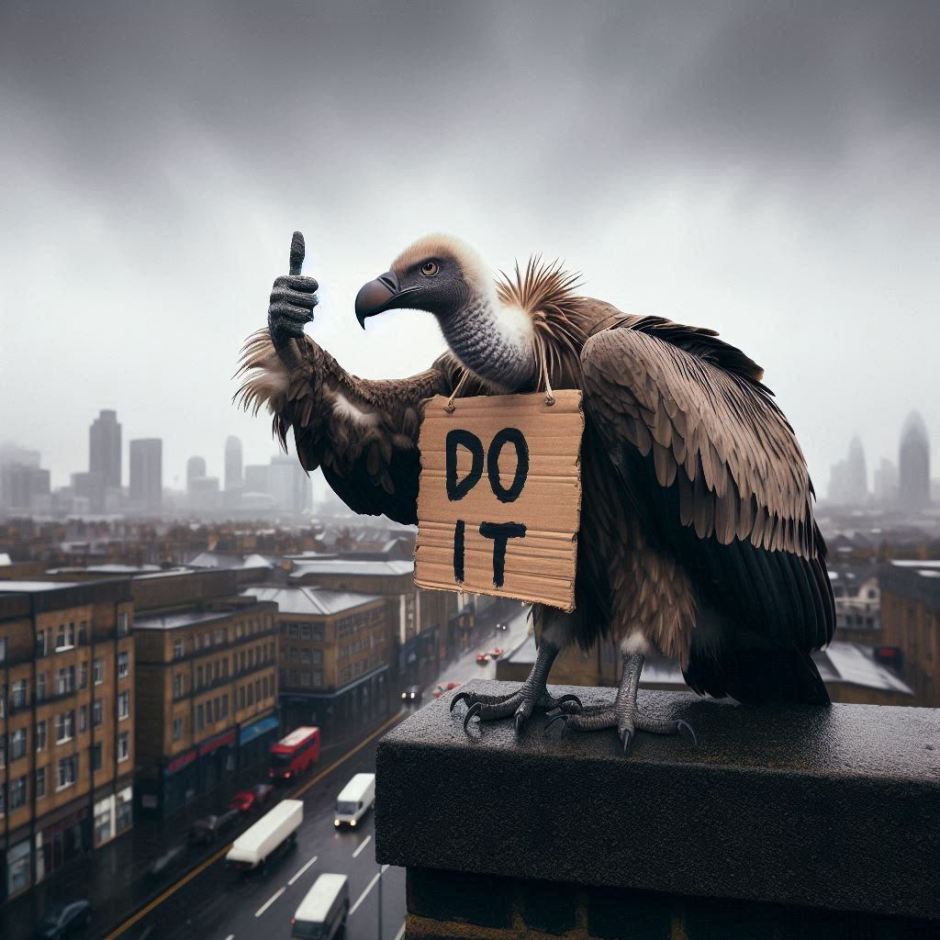
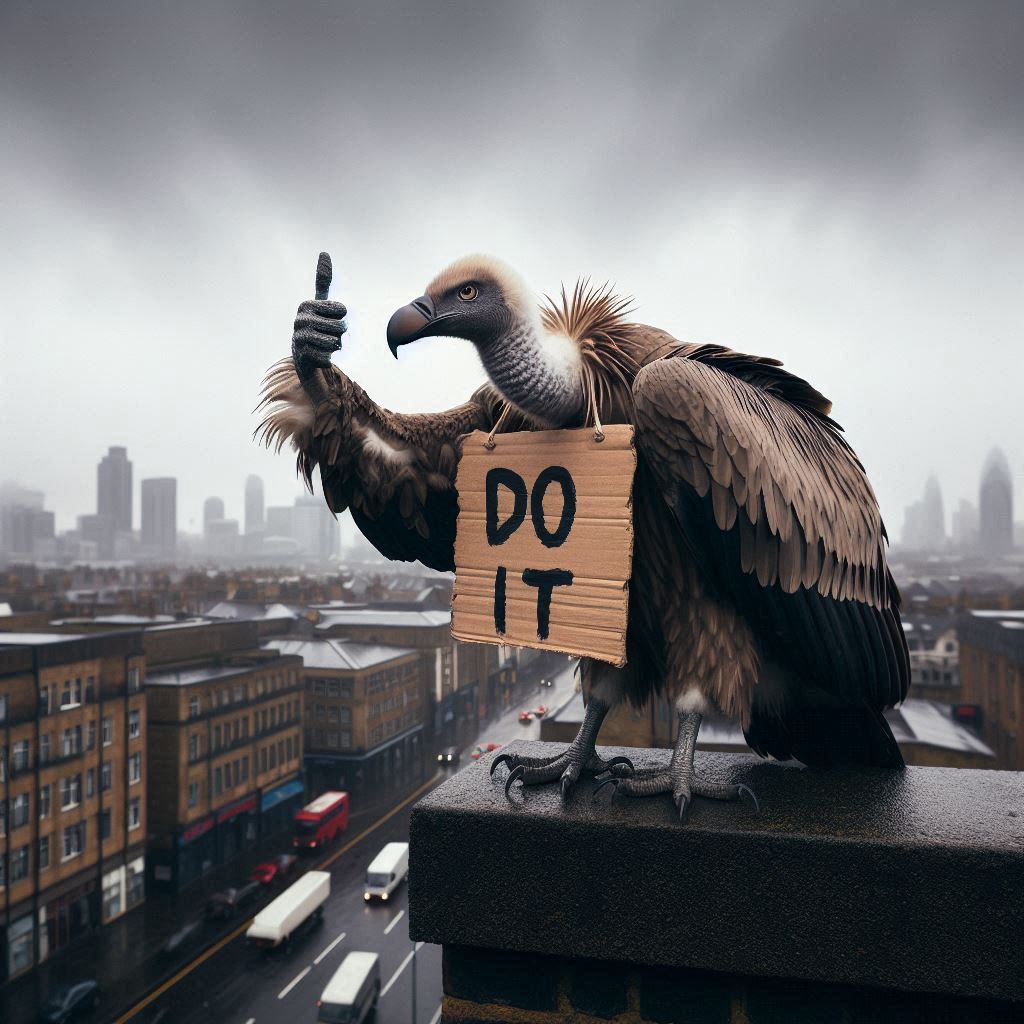
It notices it finally has my attention and with flippant ease it holds up a sign. Brenda asks me if I am ok. I ignore her, and squint through the grey rain outside trying to read what the sign says.

‘Do it.’

Do what, I wonder. Brenda shuffles closer trying to get past me to lock up her precious stationary, she presses against me, and her breath smells like stale laundry. The vulture holds the sign up higher. Then turns it over, revealing that the other side also has writing on it. Brenda has turned her back to me and is about to close the cupboard door.

I read the new message, ‘You won’t regret it.’

I don’t even think about it. I raise both my hands and shove Brenda into the cupboard. It’s not an easy thing to do, she’s a powerful woman. She squawks as she trips forward, but again I don’t really hear her. Her voice has become a static buzz. I close the door as she tumbles into a towering pile of boxed A4 paper and turn the keys that she helpfully left in the lock.

Clunk

Outside the vulture has shuffled to the edge of the roof. It’s busy writing on another large piece of card. I wait for it to finish. Beside me Brenda is banging on the door, I can tell because its lurching in the frame, but I can’t actually hear anything, it is as if cotton wool now swaddles the world. Everything seems distanced and softened. Somewhere deep inside the office a radio is playing, its faint and the tune is familiar.

The vulture holds up its sign.

‘Feel better?’

No. I don’t.

I shrug at it helplessly and the bird begins to write again. As I wait for it to finish its scribing the radio grows louder, but I still can’t figure out what the tune is. But I know I once knew it. Word for word in fact.

The bird holds the sign up.

‘Call missing persons.’

What? I gesture with my hands. The bird smiles knowingly at me, flaps its wings and takes to the air, dropping its signs upon the street below. They scatter as they fall, twisting in the wind. The radio plays on and Brenda’s protesting bangs upon the stationary cupboard door seem to track the unidentified songs rhythm. So, I first became aware of my missing persons status on a Thursday thanks to a vulture, but if I am to be entirely honest, I’d had a sneaky suspicion something wasn’t right for a while.

© Juliet Robinson 2024, all rights reserved.

Image from Microsoft Bing Image Creator – Do it vulture

Mind Burble

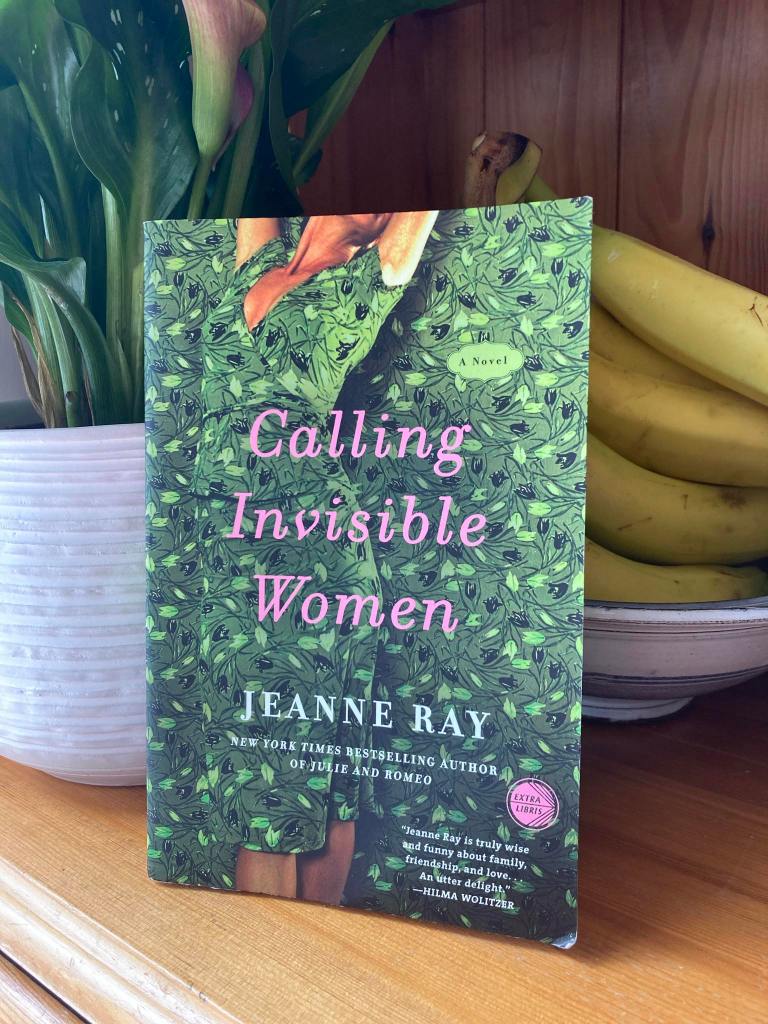
This piece was written as a timed exercise during a workshop. We were given the prompt I first noticed I was missing on a Thursday, which comes from Calling Invisible Women by Jeanne Ray. I hadn’t read the book at the time, but went on to do so. I really enjoyed it, its a quirky look at the experience of middle aged women, told in a thoroughly relatable manner! I enjoyed the feminist undertones of the book and often found myself nodding along in agreement.

Protector

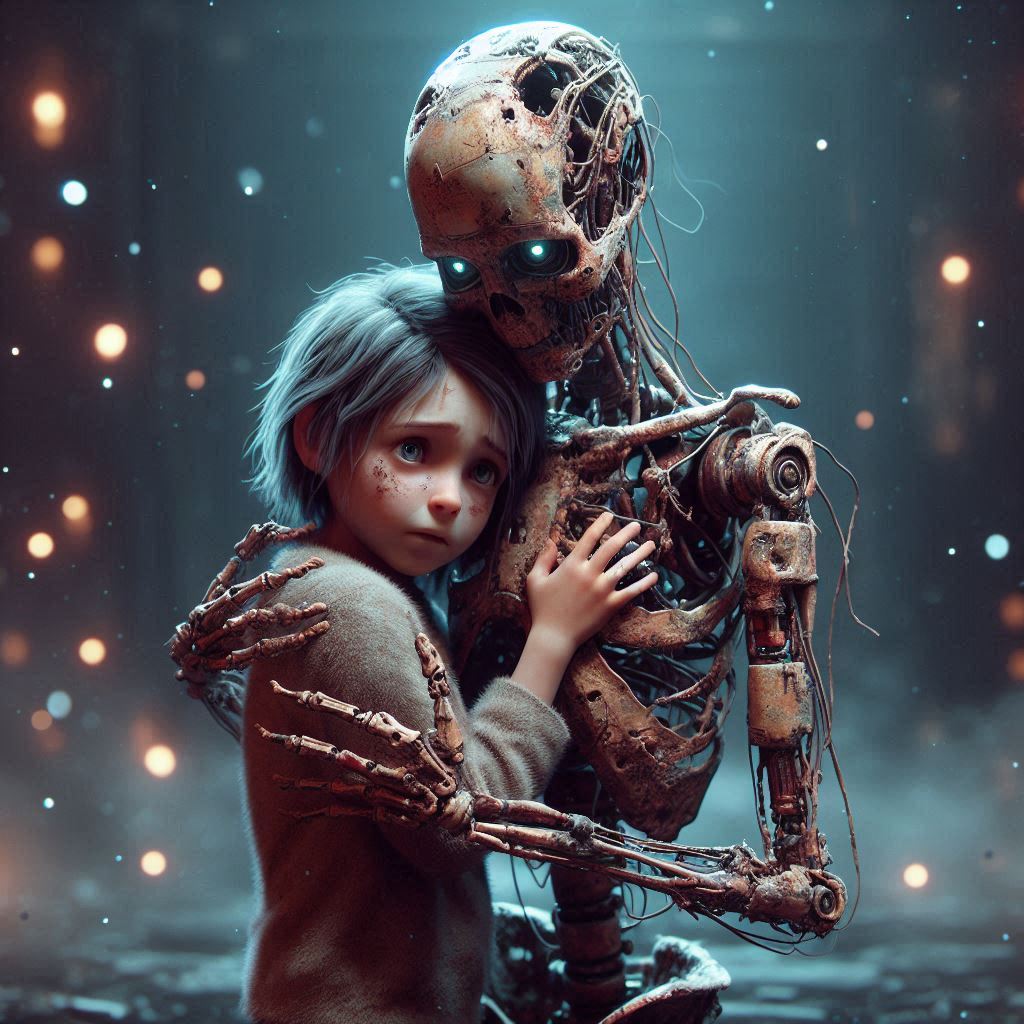
The child who has just thrown herself like a shield over a rotting synth causes me to pause. Forces me to see her. She lies draped upon the cowering machine and she glares at me. She’s scared, but defiant. I shift my rifle, making sure she can see its aimed at her. She takes a jagged breath but doesn’t move.

‘Step away from the synth.’ My voice is sterile and authoritative.

She shakes her head. She’s terrified, but she still doesn’t move.

‘I am here for the synth,’ I say. My gun doesn’t waver, but neither does this small half-starved human shield.

‘Not Polly.’

I stare at her from behind my visor. She’s shaking, her whole-body rattles, but she doesn’t
back down. She’s tiny, malnourished, no different from any other slum rat, except that she’s brave enough to defy me, she’s able to overrule the animal parts of her brain that are probably screaming for her to run, to flee into the twisting alleys that make up the Pritech Quarter.

I am used to people protesting when we come for the synths. But not like this – Who’s going to look after me now? How am I going to get work done around the store without it? That thing cost me a lot of money. Am I going to be compensated?

Polly, an odd and soft name for a synth.

There’s chatter over the comms, other patrol members reporting in, synths being brought
back to the convoy, and I am still standing here considering this street rat and her Polly. I
have a job to do, I have orders, not worth the trouble of not doing my duty, I need this job. I lower my rifle and pull my holstered stun pistol, aiming it at the child. I will use it, I would rather not, but I am here for the synth, and she is in my way.


‘You have till the count of five,’

She doesn’t blink.

‘One,’ I pause giving her chance, ‘two,’ another pause, ‘Thr …’

The synth moves. With practiced ease I holster my stunner, swing my rifle up and aim it
at the pair, not taking any chances. The synth gently curls a hand round the girl’s bony wrist, its missing fingers, the index and the pinkie and the synthetic epidermis on its hands looks rotten. It can’t rot, its not real, but this synth is old and that’s why I am here for it. Another virus, the work of yet another smart-arse hacker is doing the rounds. The older synths have less protection, so it struck them harder, for the most part its just affected their motor functions causing erratic twitching and immobility. But others the virus has had a more dramatic effect on, like the service synths at Sukara Sushi the virus managed to take full control of their systems, and it weaponised them. After attending that mess, I won’t be eating sushi anytime soon.

‘I will come with you Protector,’ the synth says.

Its voice is rasping and weary. It possesses a human like quality, the melancholic echoes
of a lifelong lived.

‘No!’ the girl wails. It’s the first time she’s let fear and panic take control. Her stick thin
legs scrabble for a purchase on the synth as it rises to its feet, a desperate attempt to hold on. ‘No, no, no!’ Her arms tighten around its neck. ‘Polly, please!’

The synth is now standing, the girl wrapped around it like a primate infant clinging to its
mother. (I have seen those in reruns of centuries old documentaries, visited them in the
artificial zoo.) With its full form unfolded, I can see the extent of its deterioration, the ravages which time have worked upon it. It’s an antique, a Mark Two, maybe even a relic from the Mark One era. How is this ancient machine still functioning? Its survived decades, perhaps even a century.

‘It will be ok. You will be ok,’ it assures the girl whose face is buried in its neck.
Slowly and with great care it starts to detach the child. Initially she resists, fighting this
removal with the same tenacious ferocity from earlier. But then as if a thread has snapped, a dam broken the fight goes out of her, her tiny body falls limp, the fierce spirit dissolving. Her surrender fractures something within me, a shard of empathy pieces the calloused armor of my rank and role. Protector, here to collect, to bring the hacked synths in for repurposing, stripping down, recycling.

My rifle is heavy. ‘I can’t do it,’ the words scrape against my throat.

With a shaky breath I lower my weapon. My mind races – scrub the data from my helmet
cam, I’ve done it before, but for lesser sins. It’s a gamble, I’ve a lot to lose, people depending on me. I turn my back on the pair, heading away from the heavy shadows of this alley, the synths voice follows me through the gloom.

‘Thank you, Protector.’

© Juliet Robinson 2024, all rights reserved

child and ancient synthetic robot – bing image creator

The Writers Room Part 2

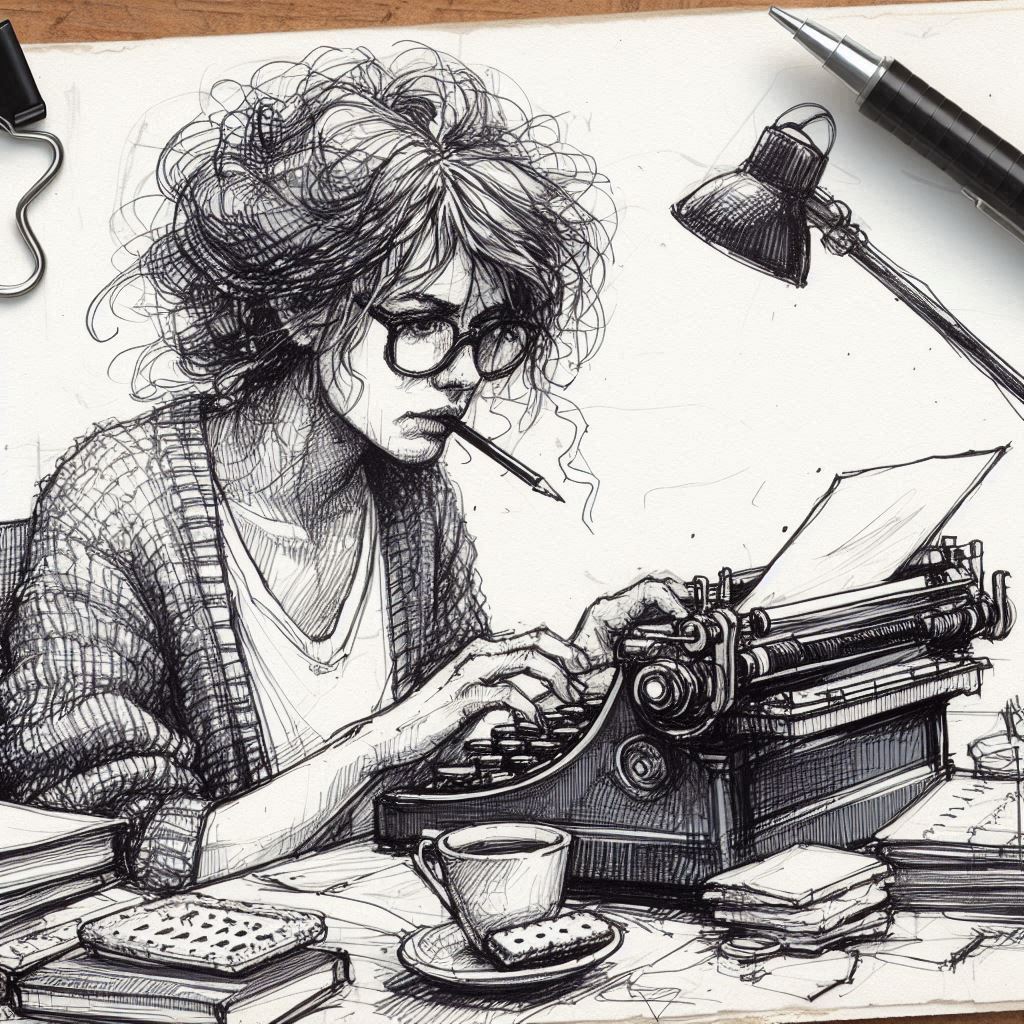
Image from Bing Image Creator – focused writer.

Productivity strode into the room. Great Idea, Inspiration and Research all cheered. Great Idea turned the computer on and hovered excitedly next to the empty chair waiting for her idol to get down to business.


On the other side of the room Distraction hurriedly picked up her phone and tried to open Facebook, but Diligence was onto her. She snatched the phone and changed their password, ensuring doom scrolling couldn’t commence. Grateful that Diligence had her back Productivity gave her friend a snappy high five as she took her seat, flexed her fingers and opened a new word document.

‘We’ve got this!’ Great Idea declared.

Inner Critic pretended to vomit, but nobody was paying her any attention. Great Idea and Inspiration both started talking at once, gushing with excitement, while Creativity began to hum. The room quickly divided, half of the occupants bubbled with anticipation, while the remainder were an agitated mess.

Great Idea and Inspiration called Research over, they conferred, and Research opened a search engine, they needed to know more.

Distraction zoned in on Research, slinking across the room seductively. ‘What are you looking at?’ She purred smiling sweetly at her target.

Research blushed, Distraction had a lovely smile, and she was looking rather attractive today. She started to explain what she was investigating, but Distraction interrupted her.

‘Ohhh,’ Distraction sighed disinterestedly. Then she leant in close to Research, ‘I like dogs, dogs are cute. Maybe we should check the adoption sights?’

Research havered, they all liked dogs. Inspiration floated over, she forced herself into the narrow space between Research and Distraction deliberately jostling the would-be tangent off the bench.

Fear of Exposure had overheard what Research was looking up. She started huffing and puffing, pacing back and forth across the room. Finally, she could take it no more.

‘That’s a controversial topic Research. I don’t think we are qualified to write about it. We could upset people.’ 

Inner Critic agreed while in the corner Stuck in the Middle started to cry. She wasn’t close to being needed yet, but she had a sixth sense for knowing when things could get messy and she had a bad feeling about this story already.

‘We haven’t had a cup of tea in ages,’ Distraction grumbled. 

‘Or a biscuit,’ Can’t get in the Zone added. ‘I wonder if we have any biscuits, maybe we should go to the shops?’

Productivity, Inspiration, Great Idea, Research, Creativity and Diligence shared a look.

‘Get them!’ Productivity shouted.

There was a passionate tussle, but Diligence won over and soon Distraction, Can’t Get in the Zone, Perfectionism, Fear of Exposure, Inner Critic and Stuck in the Middle were all tied up in the corner of the room. For a while they mumbled and grumbled, but it was no good Productivity was on a roll.  

© Juliet Robinson 2024, all rights reserved

The Writers Room

Distraction jumped to her feet and Can’t Get in the Zone followed her lead. They paced the room, poking in draws, and flicking through books on the shelves. Great Idea grumped, annoyed that they were once again dominating. Inner Critic rolled her eyes and got up to join them, she was pretty sure Great Idea had floundered again.

‘Ignore them,’ Inspiration urged. She was sat in the corner, surrounded by notebooks, postcards, and magazine clippings. Distraction drifted over to join her; they had a natural chemistry but were a bad influence on each other. Within minutes Inspiration had her phone out and was spiraling down a black hole with Distraction.

Research started to get angsty, she and Inspiration had been going steady lately, but she knew Distraction was a threat to their budding relationship. Rightly threatened she marched across the room, and tapped Diligence on the shoulder, ‘Have you seen what those two are up to?’

‘Again,’ Diligence groaned and hurried to break the pair up. Research smiled smugly and went to sit with Creativity, who was doing a plot puzzle. Research immediately found a missing link.

‘We’ve been here for ages,’ Stuck in the Middle moaned. She felt trapped and she sensed that they were going nowhere, she was anxious.

‘Yeah, I don’t think Productivity is coming back,’ Inner Critic gloated.

The room fell silent, and a creeping sense of panic settled on everyone.

Distraction abandoned Inspiration and started to make the bed. She pulled the covers back and there was Fear of Exposure, curled up in a ball. Fear of Exposure grabbed at the blankets and tried to bury herself again, but Diligence pounced and wrestled her out of her hiding place.

Forced into the open Fear of Exposure scuttled across the room to join Perfectionism. Immediately they set about reworking the rooms latest short story. Inner Critic rushed to join them she had a lot to say about that piece and wanted to make sure her opinions were heard.

Can’t Get in the Zone headed to the record collection, maybe the right music would help. Distraction and Inspiration joined her and before Productivity and Diligence could get a handle on things the tunes were pumping.  

© Juliet Robinson 2024, all rights reserved

Bing Microsoft Image Creator – a writers desk

Dook

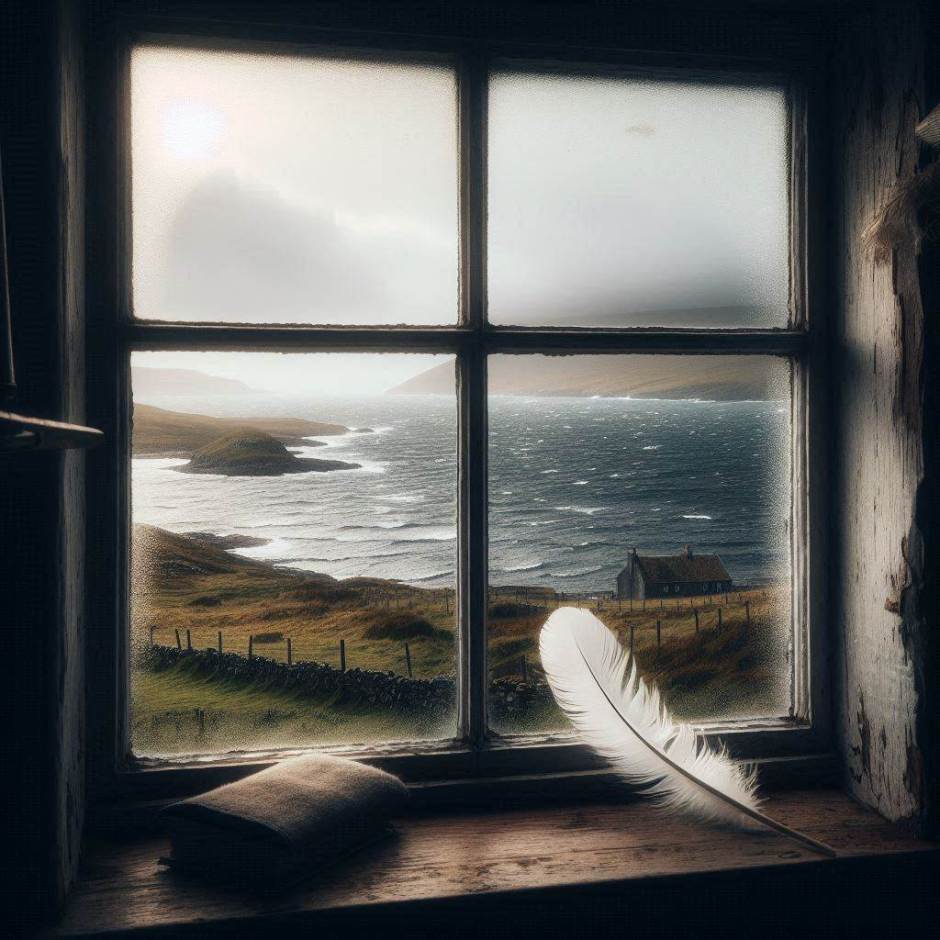
View from a crofts window looking out at the north sea, Bing Image Creator

I tried the window, but it wouldn’t budge. Painted shut. The room was stale. There was a scent swirling amongst the dust motes that I couldn’t quite pin down, feathers, old pillows. Whatever it was, it wasn’t pleasant. I peered out at the darkening sky, clouds where creeping in, soon I wouldn’t be able to see the hills across the water.

The bed was damp and unaired, the sheets clung to me, and a chill settled upon me. My stomach growled, I should have eaten on the ferry, but the food in the canteen had looked plastic, hardly appetising. And the rolling waves had done nothing to inspire hunger. I turned the light off and darkness swallowed me.

I dreamt I was flying a kite. I stood barefoot on the beach, the icy waves washed over my frozen feet, back and forth, back, and forth. I faced the ocean, but I could sense someone up on the dunes watching me, the creep of their eyes upon me. The wind tugged at the kite. Snatching it and snapping its line.

I woke as the red and yellow kite was swallowed by a towering cloud.

The room was still dank, and the funk of my sleep had done nothing to improve the smell. I pulled on the thick woolen jumper I had picked up in a charity shop while waiting for the ferry. It prickled my skin, but it was a barrier to the cold. The curtainless window revealed a dreary day, with heavy clouds. White horses raced over the waves and for a moment I thought I saw something breach, a fin, or a tail, but it was engulfed and lost from sight almost instantly.

Something fluttered by the window. I moved closer to the jack frosted panes of glass. It was a bird’s wing, the rest of the creature was a fetid mass, stuck to the rotting wood of the window frame, but its wing was flight ready. I watched it twist in the wind and remembered the kite.

Nobody was about downstairs, but the water in the kettle was still hot. I made myself a cup of tea, which I drank in a hurry. It sloshed in my empty stomach stirring a sense of nausea. I needed to eat something.

The fridge was empty except for some wilted celery, a crumb covered lump of butter and tub of chopped up bait. A search of the cupboards revealed various aged tins and a packet of half-eaten mince pies which were nearing their first birthday. I hate mince pies, but I don’t function when I’m hungry.

Picking pie from my molars with my tongue I wandered down to the beach. The wind turned my hair into a mess of writhing snakes, which whipped and snapped at my face. I could feel the pounding of the waves through the soles of my boots. I stood just out of their reach and watched as they threw themselves on the sand with frantic hunger.

I was hypnotised by their energy and didn’t hear Magda until she spoke, her words soft and warm in my ear, ‘Did you bring your wetsuit?’

I laughed, of course I hadn’t. No time for that, as soon as I had hung up the phone I was in the car, on the road, on my way here.

‘Only a fool would swim on a day like today,’ she concluded. But there is a challenge in her voice.

For a moment neither of us moved. Statue still. Runners poised at the starting line. Then I was a tangle of limbs, twisting, pulling, hurriedly ridding myself of my clothes. The bitter wind lanced through my exposed skin. Beside me Magda skipped on one leg as she tried to pull her foot free from her jeans. I gave her a shove and she fell bare arsed on the cold sand with a satisfying slap.

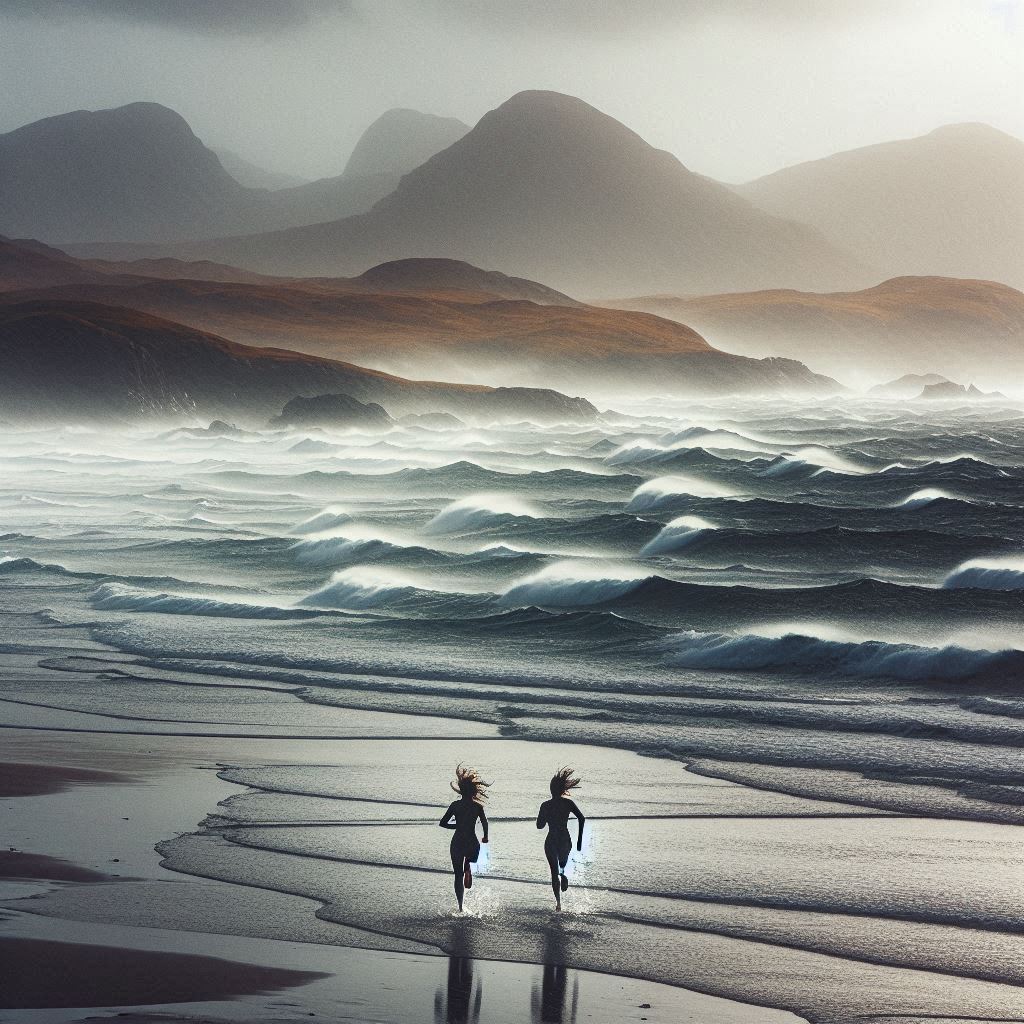
Then my sister and I are naked as we were when our mother pushed us out of the womb we once shared. I grin at Magda, and she returns my smile, for hers is mine and we run, full tilt into the wild ocean.

© Juliet Robinson 2024, all rights reserved

two wild swimmers on a Scottish Island – Bing Image Creator

Moon Cast Smile

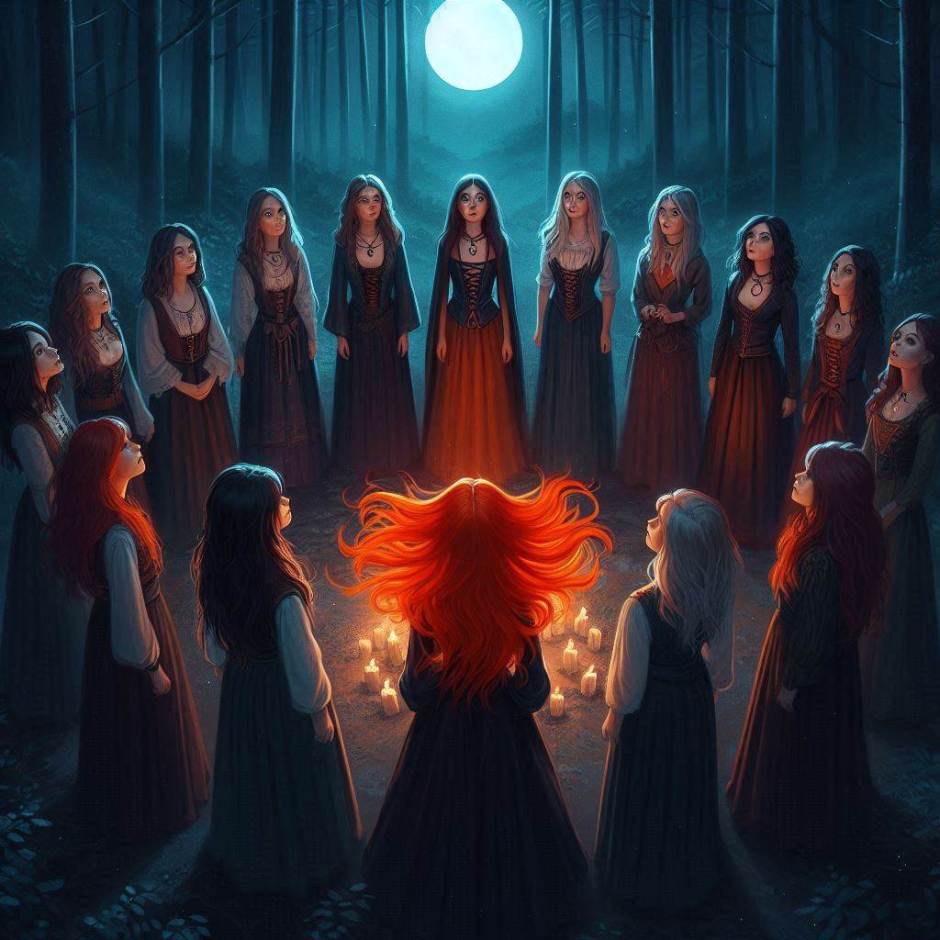
We enter the glade and form our circle. Above us the stars burn. No one speaks, no one looks at each other. Silent, we stand, in silence we witness and slowly the moon passes over the glade. Its light bathing us, refreshing us, rekindling our powers which had dwindled over the last month.

Once it has passed, we turn taking our leave. All solemn, all silent.

Then to my left someone softly giggles. It is melodious, infused with joy and it is sacrilegious. I freeze, stalling in my procession and glance at the chuckler. She is looking straight at me, her face dark in the shadows of the trees, but her eyes stare brightly at me, and she smiles. Her teeth are white and starlight pours from her. I am chilled, though not with dread, something flickers in my chest. An ache. A yearning. She is beautiful and unashamedly powerful. I turn and hurry from the glade.

Over the next lunar cycle, I busy myself with my healer duties. I try to push the giggler from my mind. She is one of the Lunar Circle; one chosen to take in the powers of the moon and practice the sacred art of healing. A venerable duty. Our place in the circle is an honour. We were picked as children and trained by our predecessor whose place we now stand in. We have always been kept apart. This keeps us safe. Not knowing the other parts of the circle ensures that it can never be broken. I shouldn’t have glanced at the giggler, and she shouldn’t have been looking at me.

I try not to think about her, but I wake at night to the echo of her laugh ringing in my room. I draw my quilts tighter in attempt to shield myself. But what am I shielding myself from? I burn and as I burn it seems like her smile hangs in the dark above me. A bewitching moon cast smile.

I don’t sleep.

Slowly the moon moves through her cycle.

Back to the glade I go. My powers are weak, I am drawn out, wearied, but I am also excited.

I keep my eyes on the ground as I join the circle, then as the moon reaches her zenith and I cast my gaze skyward, I risk a glance to my left. She is there. Her radiant red hair tumbling down her back. She is looking at me and her look tells me she knew I would glance her way. I blush to the tips of my toes, my face smolders. She smiles and my heart nearly bursts from my chest.

Another lunar cycle. Another month of no sleep. She haunts me. Every red head I see could be her. I rush after a woman in the market, but when I reach a tentative hand out to touch her shoulder she turns, and she isn’t my lady of the moon. Her face is tired, bitter and holds none of her magic.

The moon is full and to the glade I go.

This afternoon I took my time as I bathed and dressed. I wanted to look more than myself to be worthy of her.

I steel myself; I don’t look her way. I want to, but I don’t. I am too afraid of what I will see, what I may unleash. The moon clears the glade, and I am sated, but not in the way I wish. As one we turn and take our leave. My spine tingles telling me she is near, just yards from me in the darkness. I can smell her, lavender, sage and something spicy. My hand stretches out instinctively and there it finds another. Fingers curl round fingers and I am undone.

© Juliet Robinson 2024, all rights reserved

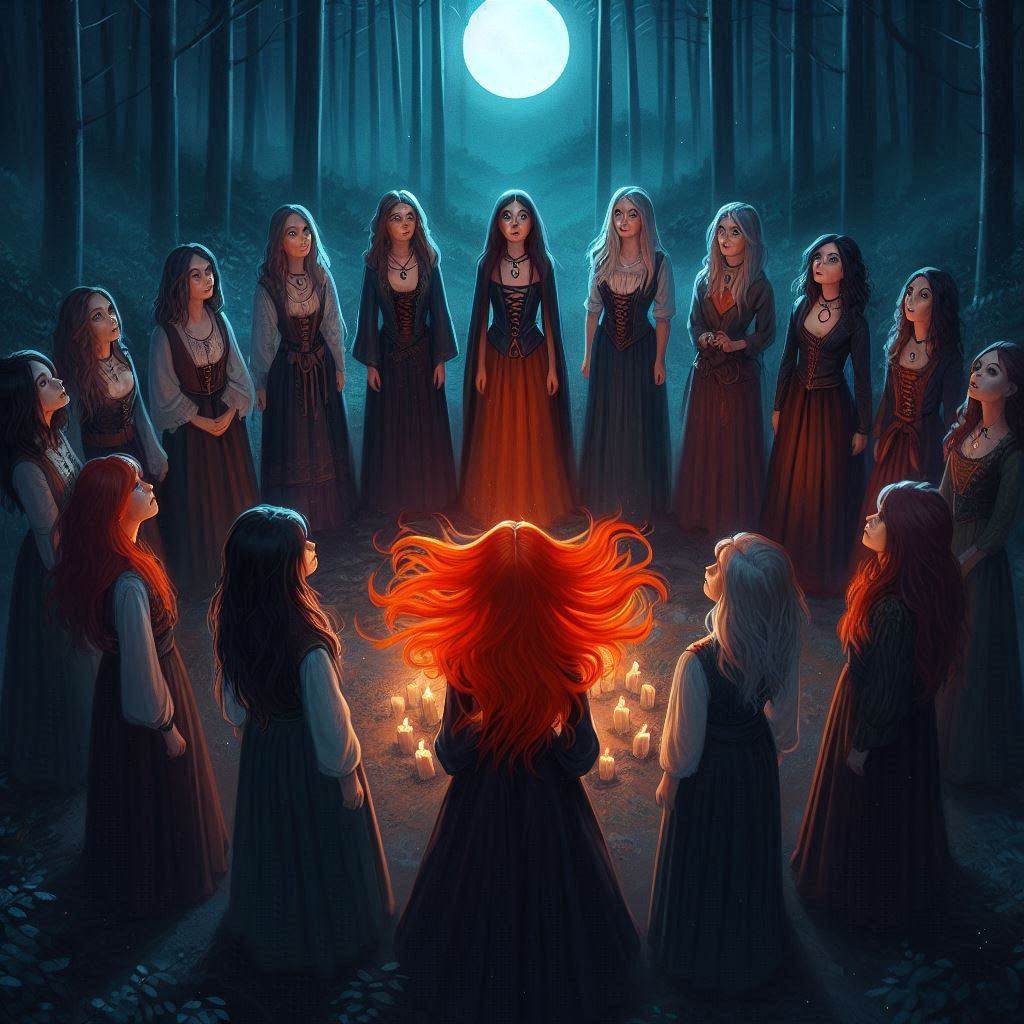
Circle of women in a forest at night – Bing Image Creator 25th June 2024

© Juliet Robinson 2024, all rights reserved

The Art Store

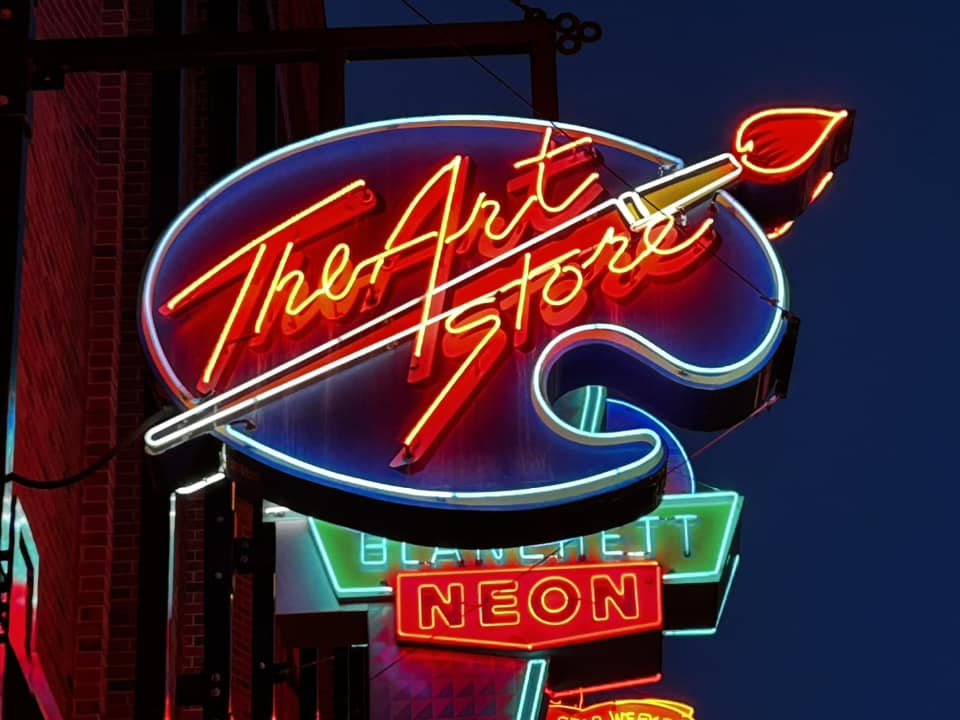
Neon Sign Museum Edmonton – my own photo 2023

A flickering sign had drawn me down the narrow alley. Some wizards work, from many years ago, the spell now fading, but still effective, a naked woman grinding her behind against the capital A of the word Art.

Florin nudged me, a smutty look on his face. ‘The Art Store, a place to experience the culture of Nylryi.’

There was nothing about this dump that promised culture or indeed art, we were in the heart of the slum district, but we needed a place to lay low and The Art Store appeared to be just that.

We pushed our way through the beaded curtain which jingled and swayed. A dwarf bouncer sat on a bench beyond the curtain, their beard slick with beer froth, their axe propped against the smoke-stained wall, they nodded at us as we passed, confident, not worried about a halfling and skinny human. Inside the air hung heavy, a mixed scent, something sweet, body must and a metallic tang – perhaps blood.

A stage, sat at the center of the room. An unnatural purple haze radiated from it, illuminating the crowd, though the further you got from the stage the less you could see of the patrons. The customers were a mixed bunch, humans, trolls, dwarfs, a couple of goblins, a hunched over creature with scaled skin, we wouldn’t be noticed here. They sat nursing drinks, talking quietly amongst themselves, or playing cards, not one of them showed the slightest interest in our arrival. This was a good sign, perhaps word hadn’t gotten out that Ironbeard had put a price on our heads.

We found a table, greasy and wobbly in the midst of the crowd and Florin flicked his wrist, summoning a serving girl. We ordered drinks, which I suspected would be poor, but when they arrived, I was surprised by the quality of the wine.

Suddenly the air crackled with anticipation. A spotlight sliced the haze, illuminating a figure who was descending from a hidden platform above, an elfin woman. My pulse quickened. She was a vision. Her skin was polished alabaster, it shimmered with flecks of gold. Long sun-bleached hair framed her heart shaped face, a face that many would readily bleed for.

Her costume … well, there wasn’t much to it, clung to her curves like the possessive hands of a lover, but for the most part we were treated to an expansive view of her toned body. She alighted on the stage and bestowed a playful smile upon the crowd, all of whom had fallen silent and then in a honeyed voice she teased, ‘Admire as much as you can. Most people don’t admire enough.’

Well, that was a lie, there wasn’t a soul here who wasn’t admiring. Next to me Florin sat frozen with his drink forgotten halfway to his mouth, his eyes riveted on the near nude goddess.

And then she started to dance, and I, like everyone else, was captivated. It was the way she moved, every step, every turn, every twist was a symphony of grace. The music pulsed, not leading her steps, but responding to her flow. She shaped the music, it was enthralled to her, as was I. This wasn’t just dancing; it was a story. A story of a faraway land, she taught us ancient rituals with a twist and spin. She wove desire and hunger into the tale, and I leaned forward, eager. The crowds’ bored stupor had vanished and had been replaced by a primal fascination. We were all drunk on her.

When the music finally ended, the room shook with thunderous applause, and bestial calls. I joined the chorus, I needed more.

The woman basked in our desperate pleas with a smile on her face. It was cruel, she had given me a taste of the sweetest nectar, she had let me sip, but she had snatched it away before I could quench my thirst. She raised her arms, stretching out her long slender body, the light dancing over her form, and then she ascended back to the heavens from whence she came.

Silence, the crowd’s voice had deserted it. I shook my head, I felt drunk, yet I had barely touched my wine. I wasn’t alone in this trance, a glance around the room showed me that my fellows in the crowd were as numb as I.

The Art Store had promised nothing, well nothing other than smut, but it had delivered. No, she had delivered a sensual transcending.

‘I didn’t expect that,’ Florian said his voice raw and rasping.

‘Nor did I,’ I breathed. Surprised I had been able to draw breath enough to speak. A hand fell upon my shoulder, its grip like an iron vice, a gravelly voice growled in my ear, ‘and I didn’t expect to find you two so easily, it is a day for surprises it seems.’

© Juliet Robinson 2024, all rights reserved.

Mind Burble

This piece was written for a workshop, the requirements being it had to less than 800 words and it needed to include the quote ‘Admire as much as you can. Most people don’t admire enough.’ This is a from one of the many letters Van Gogh wrote.

I wanted the reader to be as absorbed in the dance as the main character, for you to forget that these two were actually being pursued.

I think will return to the characters here, though only for other short stories set in their world.

Thank you for reading.

Under the Apple Tree

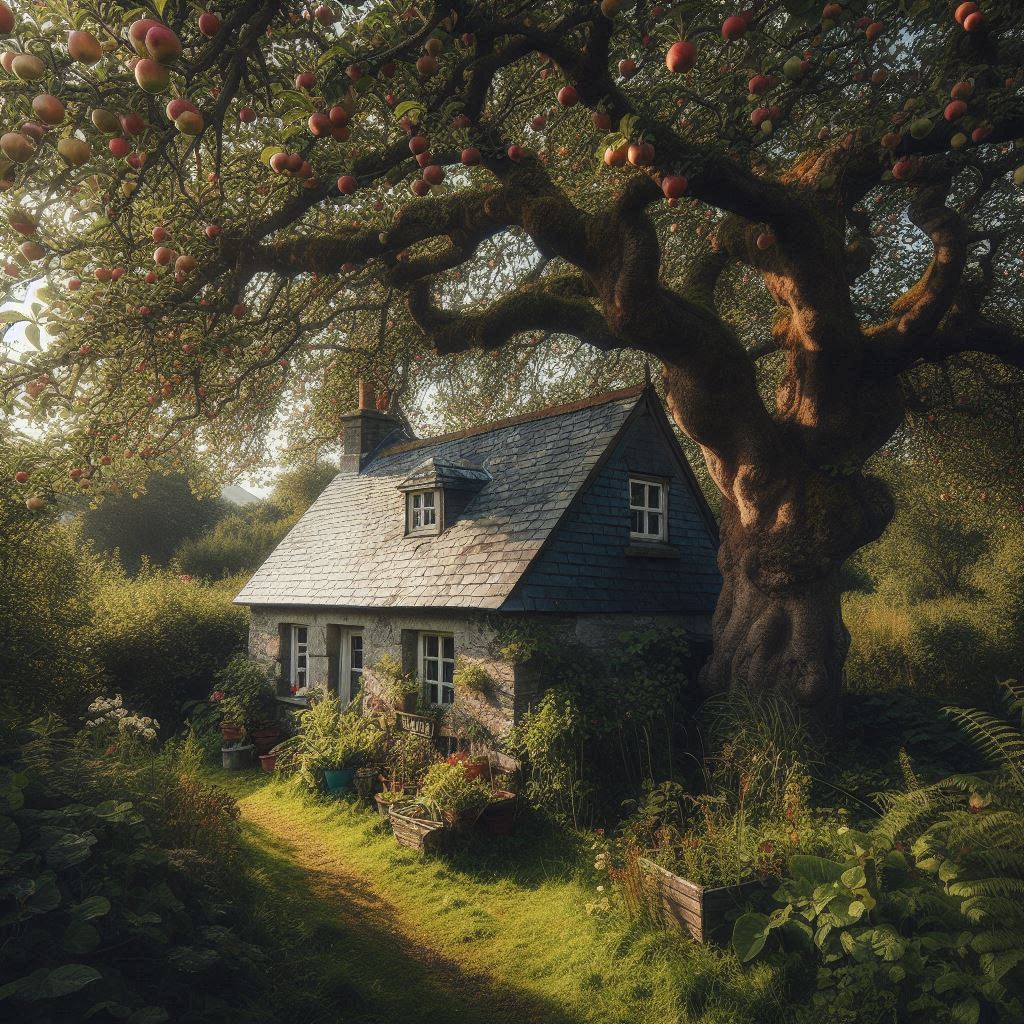
Image. “ramshackle cottage under a large apple tree,” image generated by Microsoft Bing Image Creator, June 17, 2024

Let me tell you about my mother. This morning when making coffee, the percolator boiled over and the smell of burnt coffee, the toasting bread, and the jam was like a conjuring. I wasn’t in my own home, in a rush, half-dressed and wondering why I hadn’t gone to bed earlier, and worrying about the school run, or work, or how I was to walk the dog and still have time to make lunch. I was young again, maybe five, though I could have been any other age between five and leaving home and I was in another kitchen.

My mother’s kitchen, with its low oak ceiling, stained from years of cooking, with the small window which was always covered in pots of parsley, chives, basil, rosemary and coriander all wilted and straining for the light. With the too much stuff piled around the counters, books, opened letters, chopping boards, half-drunk cups of coffee, the toaster that had never worked – sometimes burning the bread sometimes returning it with a mild tan but it was such a pretty colour that we kept it, the postcards peeling away from cupboard doors and the notes, little nippets of a thought, or a message from someone saying we needed milk.

In the house under the tree time was a funny thing, it was endless, all stretched out, and slow, not like the present where all it seems to do is hurtle along racing towards what I don’t know or perhaps I do know and I don’t like to think on it. Time is a trickster just like the devil supposedly is, or was, or isn’t depending on your beliefs.

My mother fell on the wrong side of time, or the devil if you would believe her mother who knew much of such matters and had solely given herself to the one god and his son, but it was my mother that the smells brought through time, or perhaps it was me who was cast back in time, either way not her mother.

My mother was late to be born, nearly a month, not the September baby she was meant to be but an October one. October the tenth month of the year, though it to is out of place or time, since originally it was the eighth month of the year, hence its name – ôctō. October, an autumn month full of fat trees, branches hanging with fruit, like the cooking apple tree which half swallowed our house and dropped swollen apples upon the roof when the wind was up, which it normally was and we half thought the ceiling would come down upon us, but the slate was strong and backed with oak so it never did.

My mother was too early for her own wedding and had time to think it over and leave, because it was the right thing to do, but for her mother this was the end of the familial bond, for she left my mother that day, even as my mother took me with her, because I was there, just a small seed of a person growing in the cup of her womb.

My mother knew there would be other men, kinder, gentler, meaner, richer, uglier, wiser and all the things that any person can be, and there were, for my sister came along and then my brother but he wasn’t meant for the world yet, so he left and perhaps might come back another time and we will know him if he does. But no man ever stayed in the house with the too full kitchen and I think maybe my brother knew this was not a space for men, or maybe it might be in another time, but it wasn’t then.

So it was just me, my sister and our mother. Our mother whose heart tried to break, not from the ache of love, but from disease and when we were only little she nearly left us, but she didn’t, they did things in hospital and she came back. But I remember her not being there and other women coming and looking after us and they were like my mother in that they were kind, gentle and soft and they spoke in low voices until my mother came back and rested in bed. While she took rest we watched all the tv in the house under the apple tree, and the other women took us to school, brushed our hair, washed our clothes and cooked food that wasn’t ever quite right.

And then one morning my mother was back in the kitchen with the hazy green light from all the plants throttling the window, burning the coffee, shouting at the toaster, spreading the jam, stuffing the lunch boxes, feeding the dog and hustling me and my sister out the door to school.

But she was on borrowed time, or out of her time, for it kept on trying to take her, and it became like a game, she would go to hospital, the women would come and then my mother would return and for a while things would be as they were meant to be, but then back to the hospital she would go, before home again, and we came to depend on her return. It was like a game, a tug of war between time, my mother’s broken heart, the hospital and us, and our life in the house under the apple tree. She always came back to us, a little less herself, a little hollower and more fragile, but home again.

And this went on for a number of years. We became complacent, it was expected that she would always get better. So when time finally took her and didn’t send her back a promise was broken.

© Juliet Robinson 2024, all rights reserved.

Mind Burble

This piece was an attempt at telling a story as a stream of consciousness. I really enjoyed writing it, the deliberate repetitions of ‘my mother’ and ‘under the apple tree’ felt right given the flow of the story. When I had a friend read the piece out loud to me I felt they sounded particularly effective.

The story is vaguely based on life experience – the mothers health issues and the giant apple tree in particular. My mother passed away three years ago and one of the things I have found helpful for my grief is infusing her, my memories of her and stories she told me into my writing. I play with the truth of things, but often I don’t need to, my mother had an interesting life and she was quite a character.

I enjoyed drawing on the symbolism associated with apples in this story. In Norse mythology, the goddess Idunn guards apples that grant the gods immortality. This links the apple to everlasting life and the fight against death which felt right given the mothers battle with heart disease. I also drew a vague link between the idea of time being a trickster, my mention of the devil, and the fiercely religious grandmother with apples and the garden of Eden – this was stretching it a wee bit!

Thank you for reading!