Give Me To The Soil

They struggle to bring him up, the slope is

steep, their heights uneven. They almost

lose him as they approach the crest

I look skyward to catch my laughter

Sombre faces serious stares,

forced silence and constructed grief

Painted by the influence of perception

assumptions deep as the ocean

The words spoken round the cut,

are long, laboured and clichéd

Pious, unctuous, heavy with faith

celebrating a life, itself a long sermon

I watch a woodpecker, radiant green

a blur of light. It flashes from tree to tree

scurries up the bark, knocks on wood,

cocks its head, takes flight – a whorl of colour

His female descendants come forth,

Cluster, then break into song, high and shrill

The words of their hymn competing with the birds,

whose song hold more warmth, more authenticity

When you think it would end, it goes on

I study the groups, tight family huddles.

I try to pick their expressions, attempt

understanding of their place in this play

A variety of masks displayed, none natural

But then how could they be? Though death

is part of nature, humans pretend it away

It is other, removed, divorced, unspoken

The bearers return, take up their load,

hoist him and swing him out over the void

Down he goes, almost tumbling headfirst,

but salvaged at the last possible moment

Then it’s done, a wooden box holding grave dirt

passes around the gathered – a mimicry of the one below,

A congregation of hands take their solemn pinch,

a token of the inevitable to lay a man to rest.

Unique the sound of earth hitting wood,

differs with each cemetery

Here it’s the slap of clay on pine,

hollow, though a body fills the cradle

The soil here is changed, altered by the dead

by the rot of bone and flesh, the wood and cloth

dissolving. Necrosol, the true alchemy of death.

Creation universal, born of nature and time

We break apart, voices low and reverent

I let them pass, fold into an oaks shade

There is no burden of grief for me, no sense of remorse

I search for it – the guilt does not come

Bury the old, their measure is complete

no sorrow for what was spent or wasted

Mourn the young, there is a loss

a branch snapped to soon, season failed to turn

Why linger at the grave? The dead do not dwell

they have dispersed, to who knows where

Their memory is claimed by the mourners

shaped to please their own desires

Give me to the soil, let the earth reshape me

not those who mourn, I will feed

the trees, sate the worms. May the memory  

of me be the woodpecker’s quick flight

© Juliet Robinson 2025, all rights reserved
Black and White Slinker

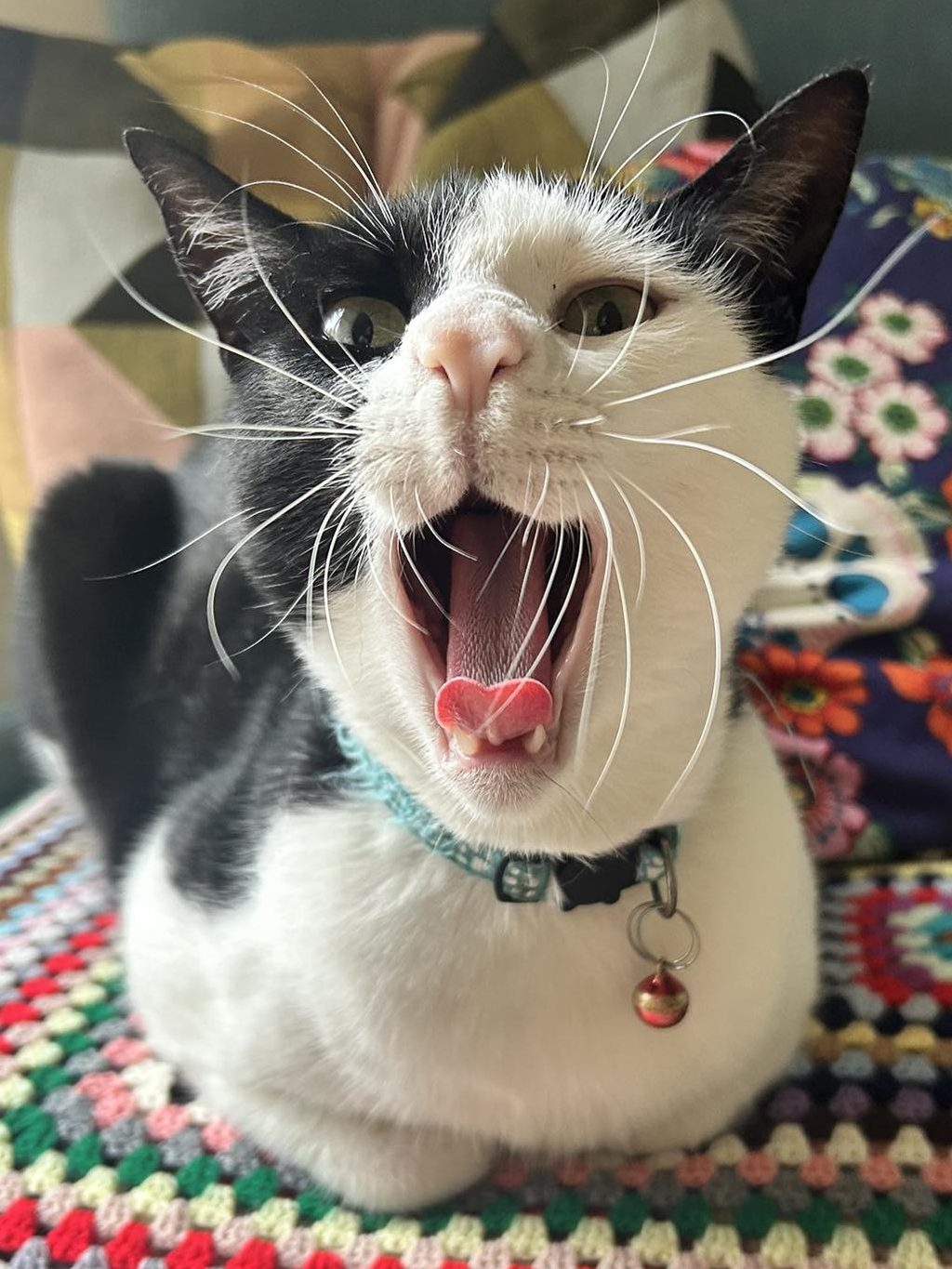
Black and white slinker

strolls into the room

He who owns the house

but pays for nothing

With a spine bending stretch

paws fasten into the blue chair

Pong. Scratch. Pick. Slice.

‘You twatting cat, none of that’

The look he casts over me

scathing defiance indifference

Again, the claws dig, cut

Making, unmaking, owning Cat Lord.

Prince and Master

© Juliet Robinson 2025, all rights reserved

Bunny

I’m heading south today for my uncle’s funeral.

Brian, or Bunny as we all knew him, sadly passed away two weeks ago. These last few years thanks to Covid and life I haven’t seen nearly as much of him as I would have liked. In fact the last time I saw him was my mother’s funeral at which he read his favourite poem – A Coat, by William Butler Yeats.

A Coat

I made my song a coat 

Covered with embroideries 

Out of old mythologies 

From heel to throat; 

But the fools caught it, 

Wore it in the world’s eyes 

As though they’d wrought it. 

Song, let them take it

For there’s more enterprise 

In walking naked.

William Butler Yeats

https://www.poetryfoundation.org/poetrymagazine/poems/12893/a-coat: Bunny

Bunny was someone who always made you feel seen, heard and valued. He was fascinated with life, interested in everything and was a talented artist. He persued art for the love of creation. He was a photographer, a painter and a sculptor, though there was little he couldn’t turn his hand to.

I have done many things in my life, but the
most important segments are the periods
from 1960 to 1980 and 2004 until the present when I was and am now making
sculpture and drawing. The gap in-between
I foolishly devoted entirely to business and
regard these as fallow years.

Here Bunny talks of himself and his art. I am so struck by what he says here, fallow years. I keep thinking about this phrase and Bunny. He was a wonderful person, complex and intelligent. We all loved him very much and we all miss him, my aunt most of all who he loved above everything.

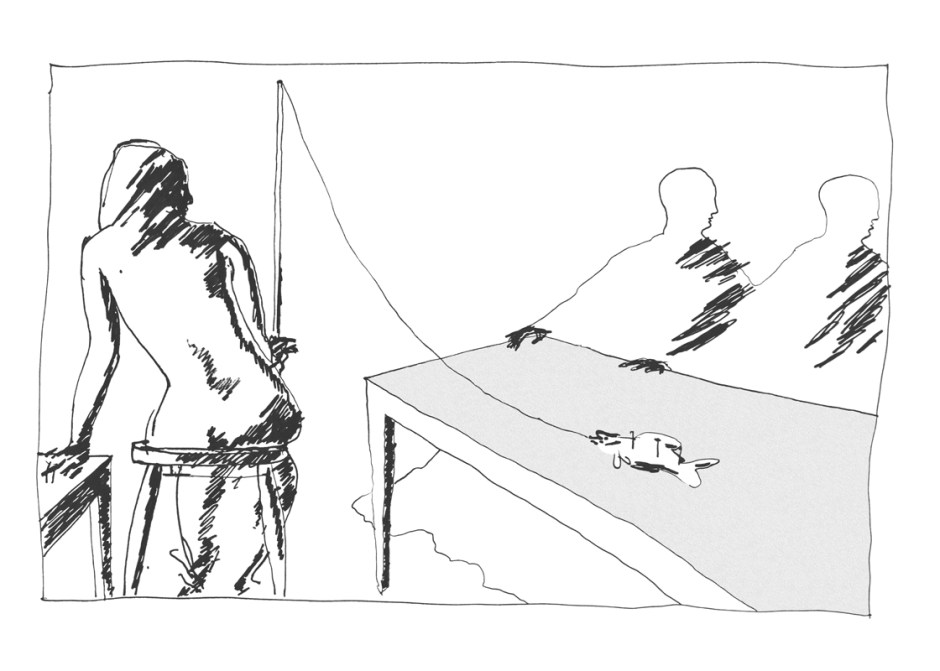
Art by Brian Dunstone ©.

I have many memories of Bunny, him in Orkney hidden behind the lens of his camera, him cooking in his kitchen, sitting on a veranda in Tuscany drinking wine with him, Bunny bustling around in his workshop or working on his Mac. When he worked he radiated a calm sense of purpose which was hypnotic. I loved that if I ran cross country to my aunt and Bunny’s house, upon arrival he would offer me coffee or wine, never a glass of water, even if the sun wasn’t past the yardarm yet.

I haven’t yet really processed that Bunny has moved on, gone ahead or left us. This won’t really happen until the funeral, but even then I don’t know when or if his passing will ever feel real. Its been three years since my mum died and I still feel like she could just be away on holiday.

https://flickr.com/photos/noust123/: Bunny

Meadowfield Park

A tanker slips up the Firth

Seeming not to move but the river drifts by

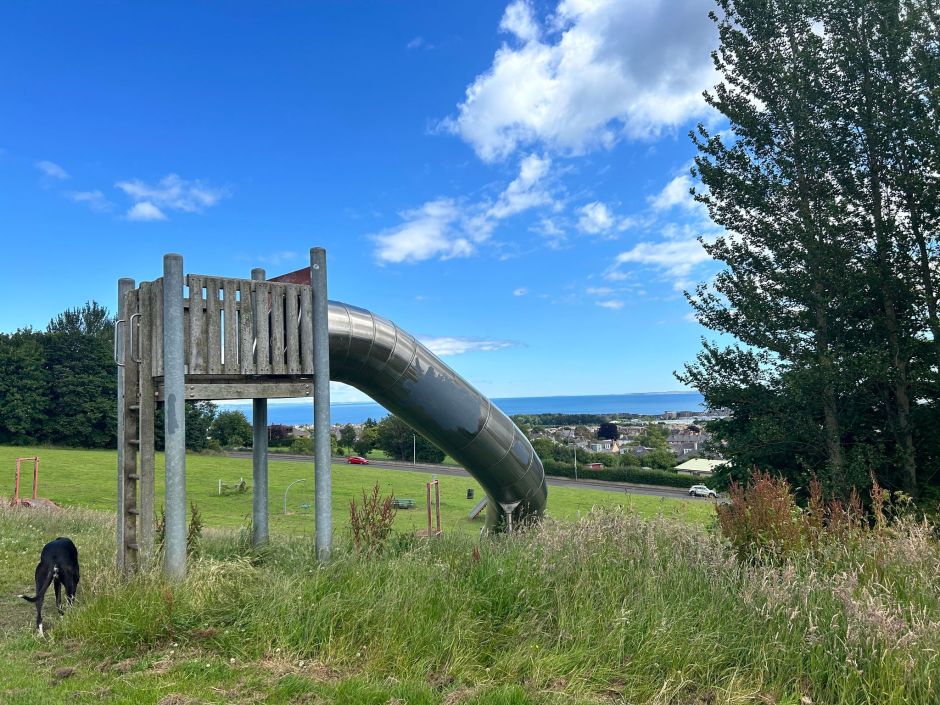
I stand at the slide and watch her go

Wonder where and when she has been

Not long ago many boats sat out there

Cruise ships, containers and tankers

Anchored fleet of metal seabirds

Still like the world, if not the waves and sky

Funny to think of that time

No trains, no planes, all the boats stilled

And us tuckered away in our homes

A stayed and quiet world in appearance

© Juliet Robinson 2024, all rights reserved.

Mind Burble

I don’t write poetry and not because I don’t love it! I adore Billy Collins, Elizabeth Bishop, Carol Ann Duffy, Emily Dickinson, Maya Angelou and Ted Hughes to name just a few. I admire those who can create poetry, it is not an easy art and it is such a personal one.

But this poem Meadowfield Park, had been forming in my mind for a number of years. Its about my local park where even before covid I spent many hours with my dogs and son, but during covid it became a haven to us. I used to stand at the crest of the hill by the long metal slide and stare out at the ships which had been forced to dock in the Firth of Forth thanks to the virus. They captivated me. Who was on them? Where had they been going? I had so many questions.

My poem began there during covid as I stared at anchored ships and wondered when the world would return.

I sometimes can’t believe covid happened. Everyone’s experience of that time was different and I am not here to have an opinion on what happened, or the rights and wrongs of it. But I do find it fascinating when covid creeps into the arts – I felt numb the first time I saw it in a television show, I was oddly excited the first time covid raised its ugly head in a short story I was reading. To me there is something cathartic in seeing covid acknowledged in creative form, but for others I suspect it is the opposite.

Roddy Philips who runs the online creative writing workshops I have previously spoken about put together an anthology of the writers work that was created during covid – Still Life. I loved pouring over this book, being able delve into other peoples creative reactions to covid.

I have a reading wish list of books which feature covid, Fourteen Days – Margaret Atwood & Douglas Preston, Companion Piece by Ali Smith and The Sentence by Louise Erdrich to name a few. It isn’t easy to read about but for me it helps.

I wonder how other writers have handled covid and if it makes its way into their work. How has it been writing about covid? Was it difficult? How did it impact peoples creative process? Except for this poem, I haven’t tackled it yet in any significant way.

Thank you for reading!


Pandoras Box

Doctors, nurses, and specialists all become familiar

I can crush my feelings and fears

I can scream silently in the shower

I can smile while inside me continents smash apart

I sense myself becoming something other

My insides seem bigger than the shell of my body

© Juliet Robinson 2024, all rights reserved

Mind Burble

This is an excerpt from a longer piece which I wrote about my son and his congenital heart disease. I hope to do something with the complete piece in the future. It is the hardest thing I have ever written and certainly the most personal. I found that as I wrote about his journey and what we went through there were things I couldn’t say without breaking into poetic prose, so throughout the story, there are sections like the above part.

Writing about personal grief is a new thing to me. Yes, I spend a lot of time crying when I write about my son or my mother, but I feel lighter, perhaps not always better, but unburdened. It is helpful.

My hope is that my story Pandoras Box will help raise awareness of congenital heart disease. Congenital heart disease is one of the most common types of birth defect, affecting up to 9 in every 1,000 babies born in the UK. During our time in Great Ormond Street we met many other wonderful children who like my son had been born with congenital heart conditions. Their strength and bravery, and that of their families was both inspiring and humbling. Heart Warrior Children are amazing.

Today was my sons bi-annual check up at the hospital and he did amazingly. His heart is functioning brilliantly and we don’t need to go back for another two years unless things change, but touch my wooden head hopefully they wont. I am so proud of him.

Congenital Heart Disease – Bing Image Creator