I'm a daydreamer with a pen in hand, weaving tales that transport me and others to new realities. Reading is my portal to endless universes, and I devour everything from magical realism to sci-fi epics (though a good mystery never goes amiss!). My background in archaeology fuels my fascination with history, ensuring even fantastical stories have a touch of real-world richness.
Writing is my escape, my passion, and the bridge that connects me to a community of incredible fellow creators. Through words, I explore the unseen, celebrate the extraordinary, and find magic in the everyday.
My grandmothers family are from the Orkney Islands. If you haven’t been – go!! There is something magical about Orkney and its not just because I am an archaeology geek – there is something in the air.
Orkney is one of my most favourite places and I have been writing about it, in particular about the island of Hoy.
Lately I have been writing about Hoy, its landscape and the feeling I have when I am there, these things are being woven into my writing. So far the island, acts as the backdrop for a few pieces I have written and I have several more stories planned which are set there.
I exaggerate aspects of Hoy in these stories, but it is the inspiration. And the nature and geography of the island has definitely helped shaped these stories.
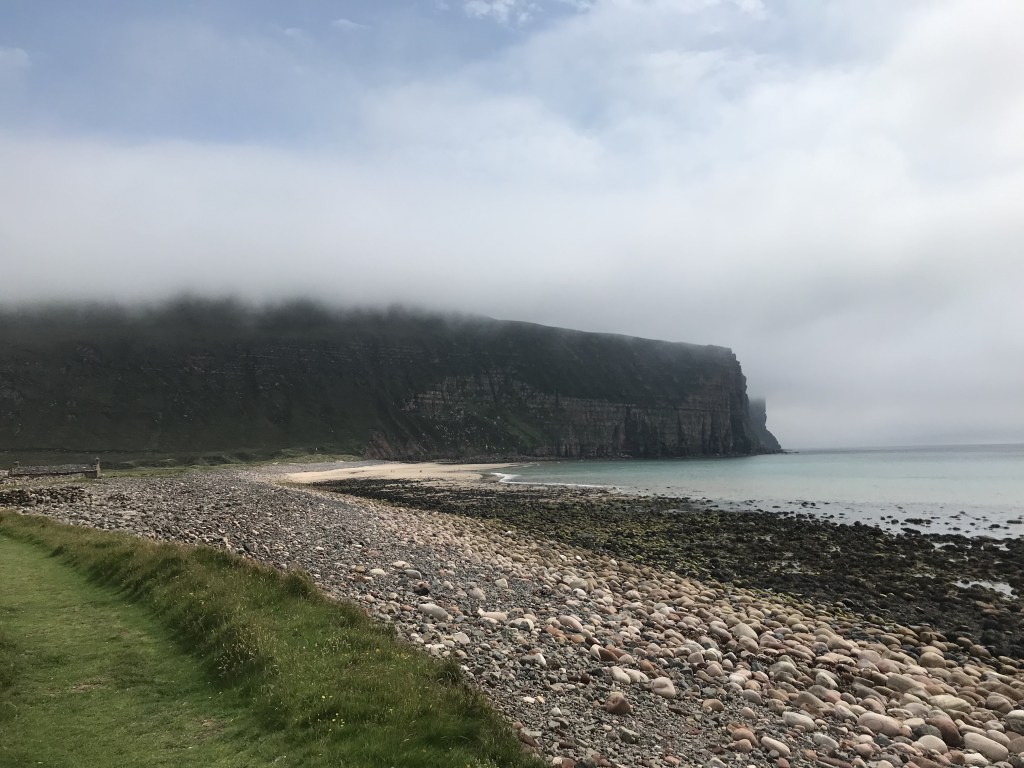
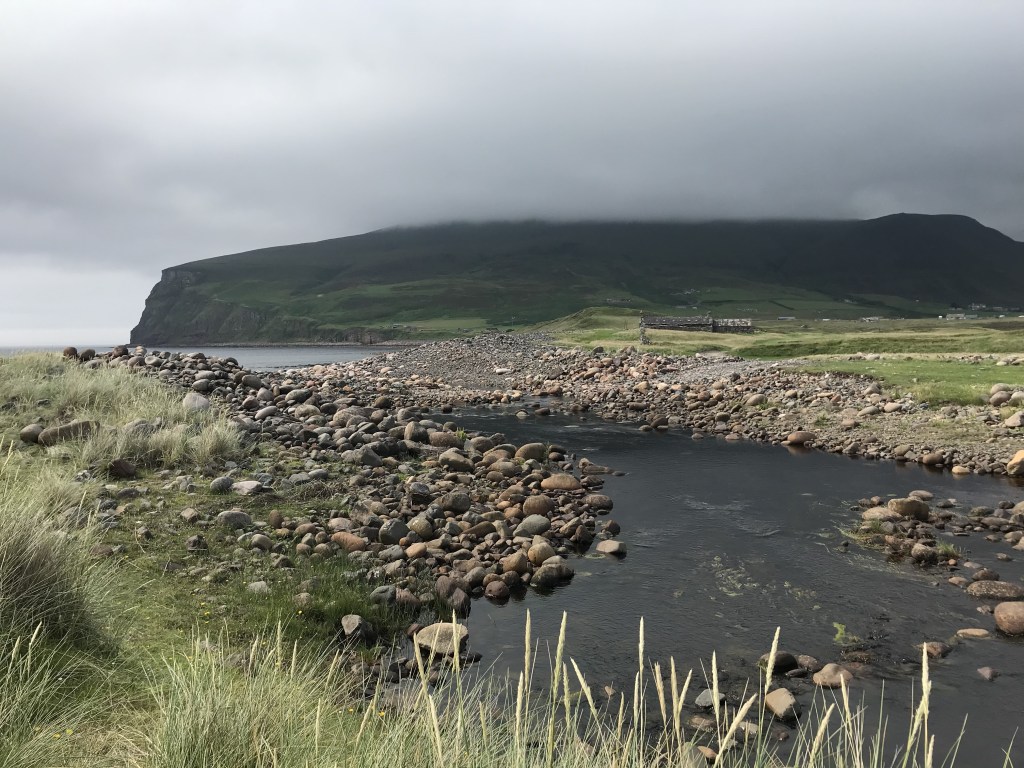
And I mean look at it? How could such a place not inspire? Rackwick Bay is dramatic, there is a stark contrast between the soaring red sandstone cliffs, the soft green grass, the pristine beach ringed with beautiful coloured stones, the endless sky and the ocean.
For me there is a sense of connection, a link to my family. My grandmother used to come to Rackwick Bay to camp, my mother did and now I do when I can. The layering of my families history feels heavy in Orkney, but for some reason here in Rackwick Bay the layers feel a little thinner, like I could reach out and touch the past.
A family camping trip to Rackwick Bay, the building in the back is the Bothy which is open to all – predates my time picture taken by mother when she would have been in her late teens
Landscapes naturally inspire the art world, touching painters, poets, writers, comedians and dancers. I love when I read a book which has a deep sense of connection to the place where the story is set.
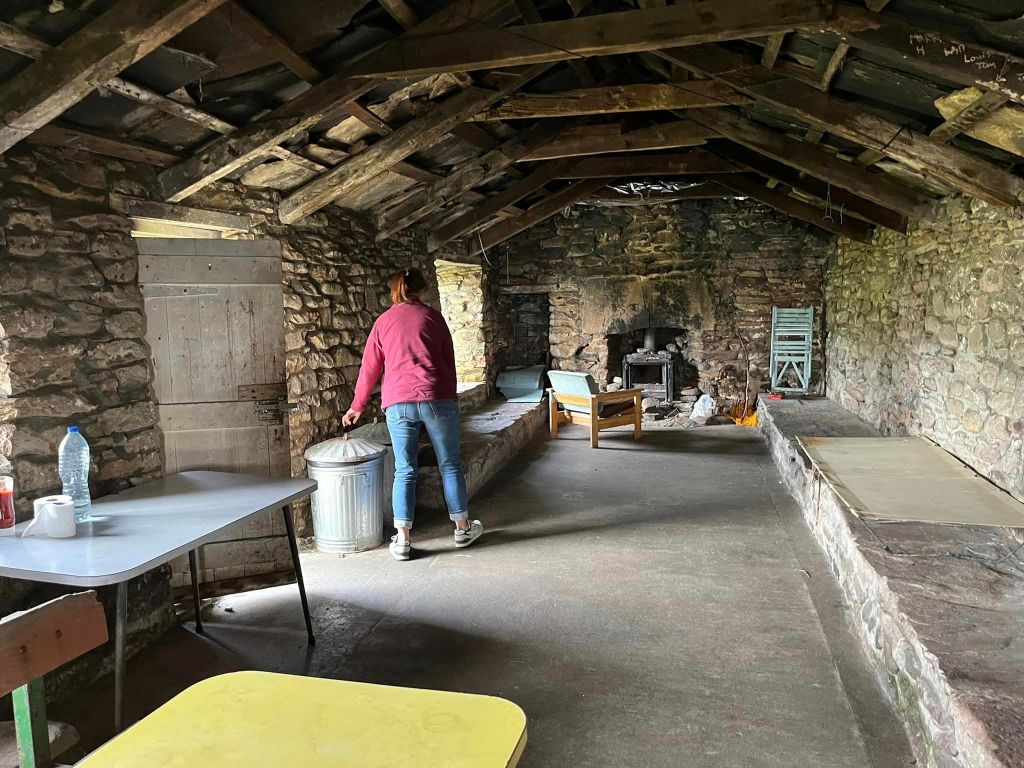
On our last trip to the island, in 2022 my sister and I spent a couple of nights camping in Rackwick Bay. The Bothy was pretty quiet, other than ourselves the only other campers were two women, both travelling alone. We went our separate ways during the day, but at night we gathered by the fire, shared wine, food and we talked and talked and talked. It was special to be able to share that time with those women, to hear their stories, to get to know a small part of who they were and what brought them to the island. For me after the isolation of covid, the loss of my mother and several hard years this was a truly magical experience – just being able to connect to others and share. I think I healed more in those couple of days than I can explain.
So yes it was probably inevitable that I would begin writing about Hoy and the women we met that weekend will be featuring in a story that I have planned. Though I suspect they may not recognise themselves if they were to come across the story! This morning I felt a sense of urgency, a need to return to Orkney, it’s been two years, which feels far too long. The best I can do for now however is write about the islands and look at photos I have taken on trips there over the years.
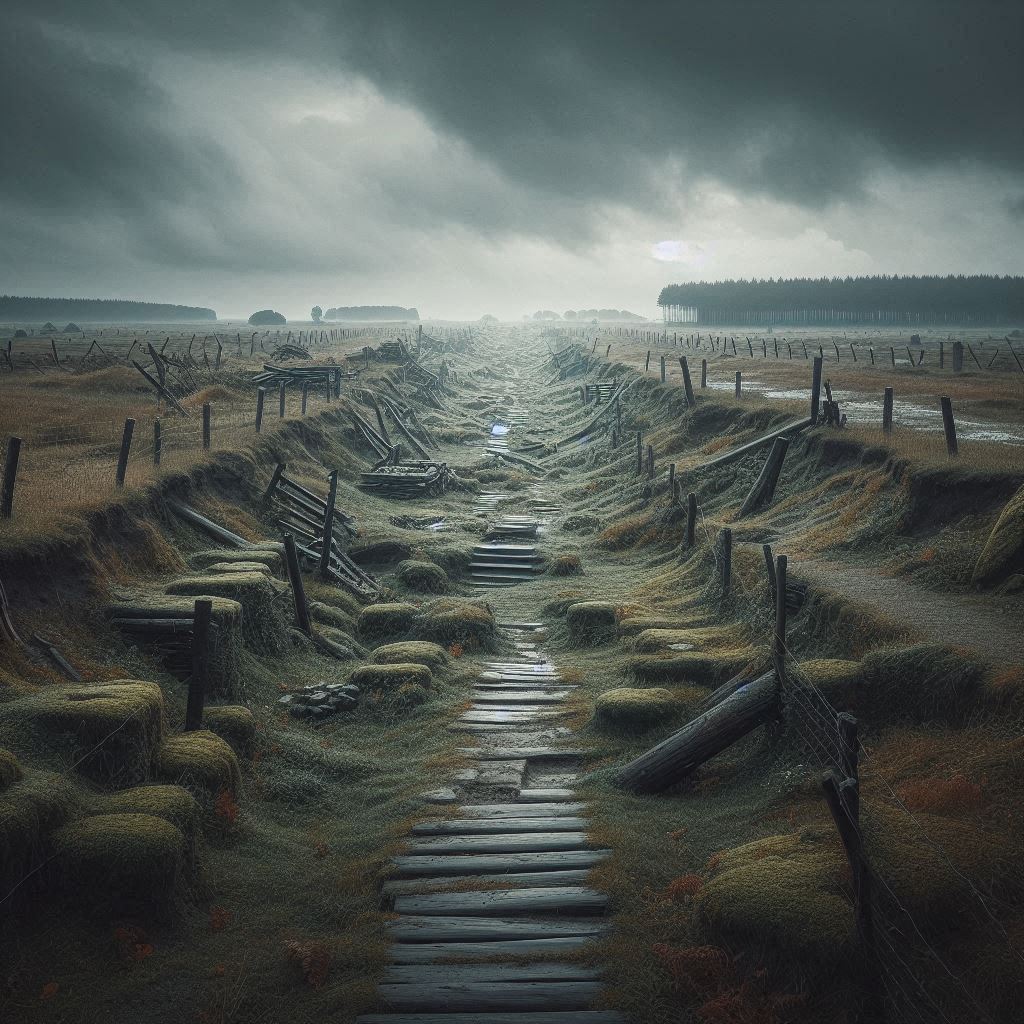
Image. “post war landscape,” image generated by Microsoft Bing Image Creator, June 6, 2024
A gloaming light was building, not a single cloud smudged the gradually lightening sky, it was empty, hollow and vast. No birds flew in this void, none drifted on the wing, above the torn-up ground.
Tam’s tiredness hurt, it’d kept him awake. Not a moment’s rest, not a moment’s escape. But the night had passed, taking its inky black with it and now dawn was here. It had started as a low burst of light on the horizon. So bright, it had hurt his eyes, like the flares before an attack. Then the creeping light had advanced laying claim to the land, an army on the march. Though this army didn’t bleed or break or cry for its mother.
Maybe it wasn’t the tiredness that hurt. Maybe it was the hole in his side, where shrapnel had hurried through him. Maybe it was the twisted and broken leg, with the foot that faced entirely the wrong way, as if it had decided enough was enough and it was going home, with or without Tam. Pain has a colour Tam realised, and it wasn’t red. He had imagined it might be, but it was brown and burrowing, and it sought out the deeper places which were yellow and orange, warm like autumn leaves or cut and dried hay.
Silence, it stretched all the way up to the hollow sky. Not a sound. Where had this quiet come from. The world isn’t a silent place. Its all noise, birds, wind, leaves rustling, the far-off hum of a tractor working its way across a field, people talking, footsteps ringing on cobbles, the caw of a crow. Not silence, the world isn’t silent. But beneath this empty sky sound was missing. M.I.A
Tam had a pencil, he had paper – Eilidh’s letter. He could write on the reverse, send her words home with his, tangled together like lovers in the sheets. Funny how hard it was to get the pencil and letter from his pocket. He drifted, losing himself in the silence, which seemed to be fading at the edges, blurring, though that could have been him he supposed. And then there was the finding of words, for here and now they wouldn’t come, his mind was a fog. He slept, drifting with the red and orange colours. When he woke he took his numb fingers and forced them to scribe words upon the soft paper. Paper that had been white and crisp, but to reach Tam it had passed through many hands, and then he had constantly been picking at the letter, reading it over and over, hearing Eilidh’s voice as he read. Just her words, her voice and him.
The starkness of the light was wearing out. A gradual fading, a leeching of substance. The horizon was drawing in, though the sky continued onwards, upwards and forever. There was noise, a gentle murmur, slowly filling the vacuum, but distant, far away, somewhere else.
What do you say to someone who knows every part of you when these might be your last words? He couldn’t bring himself to fill this letter with goodbyes.
‘Eilidh, you wouldn’t believe the skies here. Unbroken, no hills bite into them, they start from the flats of the fields and soar upwards. Its rich land, fenland, divided and controlled by canals and ditches. Crops grow tall here, animal’s fat. Not like home, where the sheep cling to the hillsides in feral weather, and the peat water washes brown down to the ocean. I don’t know if I like this land. It isn’t home. But the greater part of not liking it is that you aren’t here. You aren’t under the same sky, you’re beneath another. And I can see you there. I know you there and I know myself there…’
Tam stopped writing.
The noise was deepening. Voices, not the crack of gunfire, not the screaming of incoming shells. He couldn’t make out the words or the language, no way to know if the approaching talkers were friend or foe. He could cry out, call for help. Perhaps it would come, or perhaps the faces that would peer down at him in his crater wouldn’t be friends. He was beyond war, he was no threat now, his body was a twisted mess, but would they deliver mercy and if so what sort? A bullet to put the man out of his misery or a stretcher to see if he could be put back together again.
‘Eilidh, I know who I am when I am under the same sky as you. I miss that. I miss you. I miss us.’
A dirt covered face appeared at the edge of Tam’s hole. Tired eyes considered him. Voices, words, all of it blurring at the edges. The sky was vast and open. Tam held out the letter.
A couple of years ago I did a course through The National Centre for Writing. It was a treat to myself after years of no creative output and an attempt to kick start my writing habit again.
Our tutor was the wonderful Yan Ge, who has written some absolutely excellent books – Strange Beasts of China being my favourite. Yan was enthusiastic, inspiring and kind. She really encouraged us to enjoy what we worked on.
She told us a story about a ceramics teacher which went like this ….
A pottery teacher decided upon a unique grading method for her class. She split the students into two groups. For the first group, the entire year’s grade would hinge on crafting a single, flawless piece of pottery.
The second group faced a different challenge: quantity over quality. Their grade would be based solely on the amount of pottery they produced throughout the year.
At the end of the year, the teacher reviewed the results. As expected, the first group delivered impressive, well-crafted pieces. They had, after all, dedicated the entire year to perfecting just one creation.
The second group stacked their work in huge, towering piles for grading. The earlier pieces, at the bottom of the pile reflected hurried attempts at churning out work. But, as the teacher progressed up the pile, things began to change. The pottery in the middle of the stacks, which represented the mid-point of the year, showed a noticeable improvement in quality. The students themselves were baffled when questioned about this shift. They insisted they hadn’t changed their focus – quantity had remained their sole objective. This trend continued on up the stack, the pieces of pottery becoming finer and finer until the teacher reached the top of the pile and there sat a near perfect piece.
So the students in the second group, had not only produced a vast amount of work they had also unknowingly honed their skills as they created.
I started flicking through the book and there on page twenty-nine was the story about the ceramics teacher! So I finally knew where the story came from and if you read Art & Fear you will see that David Bayles and Ted Orland tell the story of the ceramics class in a far more eloquent manner than I did.
This story struck a chord with me as I am someone who is paralysed by the pursuit of perfection. I want to write, but I fear not creating something perfect, so often I don’t write, I don’t create, I just make excuses not to put words on paper. I was inspired by this story, it helped free me from my crippling self doubt, it allowed me to see writing as something that is always developing and improving. It certainly isn’t something that will improve if we don’t practice it! I wont ever write the perfect story, but that is ok, all art is a form of growth.
So to steal from Dory of Finding Nemo fame – ‘Just keep writing, just keep writing.’
My current reading pile. I try to stick to a three book rule, otherwise I find I don’t fully immerse myself in the books.
But I can’t wait to read Art & Fear, I suspect it will inspire me to be less fearful of the creative process. I wonder how other creative people over come the obstacle of perfectionism and self doubt?
Dog and I started early. Dog is my crapped-out car’s name when she is behaving. Last month when she failed her MOT, she was the Bitch. But mostly she is a reliable companion who chugs along, panting like an old and faithful Labrador.
It’s a long drive, but one I have done a hundred times. By the time we hit the highlands I had eaten my body weight in snacks and the passenger seat was buried under wrappers, half eaten apples and a bottle of Lucozade I hadn’t been able to open, its lid was apparently cemented on. The drizzle that had been blanketing the hills had turned into torrential rain, the possible beginnings of a second biblical flood.
I rounded a corner, regretting that I hadn’t slowed down, and spotted a figure in my path. I spun the wheel to avoid them, skidded across the road and hit the soft verge which slowed us before we bumped into a fence. It was the gentlest crash going, almost a non-crash, soft as it was.
All the same for a moment the world stopped. The only sound was the rain hammering down on Dog’s roof. I stared at the wipers as they struggled to clear the falling water which cloaked the windscreen like a veil. Then someone tapped at my window and I jolted, rocking in my seat. I had been far away, absorbed by the sheeting rain. Returned by the rapping I was dragged back into the moment and the reality of what had just happened. I had nearly hit someone on the road.
I turned to see an ancient woman peering in at me. She was weathered and it seemed quite possible that she was crumbling under the weight of her years. Her eyes were bright, emerald-green, serpent-like and her concerned face calmed me.
I wound the window down.
I meant to ask her if she was ok, after all I had nearly just killed her. Instead, she offered me relief.
‘You’re alright wee one.’
Her voice crackled like the embers of a fire, warm and reassuring. I nodded, surprised by the fact that yes, I was all right. Relief flooded me, I hadn’t done any harm, this woman, presumably had been the figure in the road and she was fine. So fine, here she was telling me I was all right.
I offered her a lift, hoping she wouldn’t mention that I had nearly run her down. She accepted and, when I started to clear the debris from the passenger seat, she told me not to bother, she would be happy in the back. She clambered in, bringing with her a fair amount of rain and settled in. I took a moment, just to breathe, letting my heart race slow, I was fine, Dog was fine and we hadn’t killed the old woman.
Once sure I was steady enough to drive, I popped Dog into reverse. For a moment she churned mud, but then thankfully she managed to pull free and we were back on the road. During our first mile I was worried I had done the car some damage, but she went well, and the rain was washing the mud from her as we went. Except for my fellow traveller there would be nothing to show for my spin out.
I asked the woman where she was headed and it turned out her destination was also the ferry crossing. I wondered about that. We still had a good fifty miles to go, so I asked if she had been waiting on a bus, though I hadn’t ever seen one out this way.
‘A bus or something,’ she replied.
Her answer caused me to frown as I wondered if perhaps, she been in the middle of the road on purpose, hoping to force a passing car to stop. It would have been easier and certainly safer to stand at the roadside and wave a lift down. But I didn’t like to mention this as I had very nearly struck her with Dog, best not to remind her of that.
I turned the heating up, thinking she would be grateful for the warmth and a chance to dry off. Dog’s windows quickly started to fog and the old lady gave off a peculiar scent as she dried. It reminded me of autumn walks, kicked up moulding leaves and cold frosted nights.
After a while, a grumbling snore echoed from the back of the car. Apparently, my passenger wasn’t going to offer conversation. Not wanting to drive in silence I tried the radio, but it didn’t work. Static hissed from the speakers, though I was sure I heard a voice mixed in there, it was soft and accented. Something about this tickled at the edges of a memory, but I was unable to tie it down.
The remainder of the drive was slow, and thankfully uneventful. Winding roads, tractors and a herd of sheep, no other near misses, or bumped fences. We reached the crossing and I pulled Dog up not far from the slip road. I wanted to stretch my legs and take a piss. I stood stiffly and took a moment to enjoy the view. The rain had finally stopped, and though it was only early evening a heavy moon hung in the sky, its silver light dancing on the calm sea. Behind me the car door opened and closed. The old lady was finally awake. Footsteps approached and she paused beside me.
‘Its beautiful at this time of year,’ she sighed.
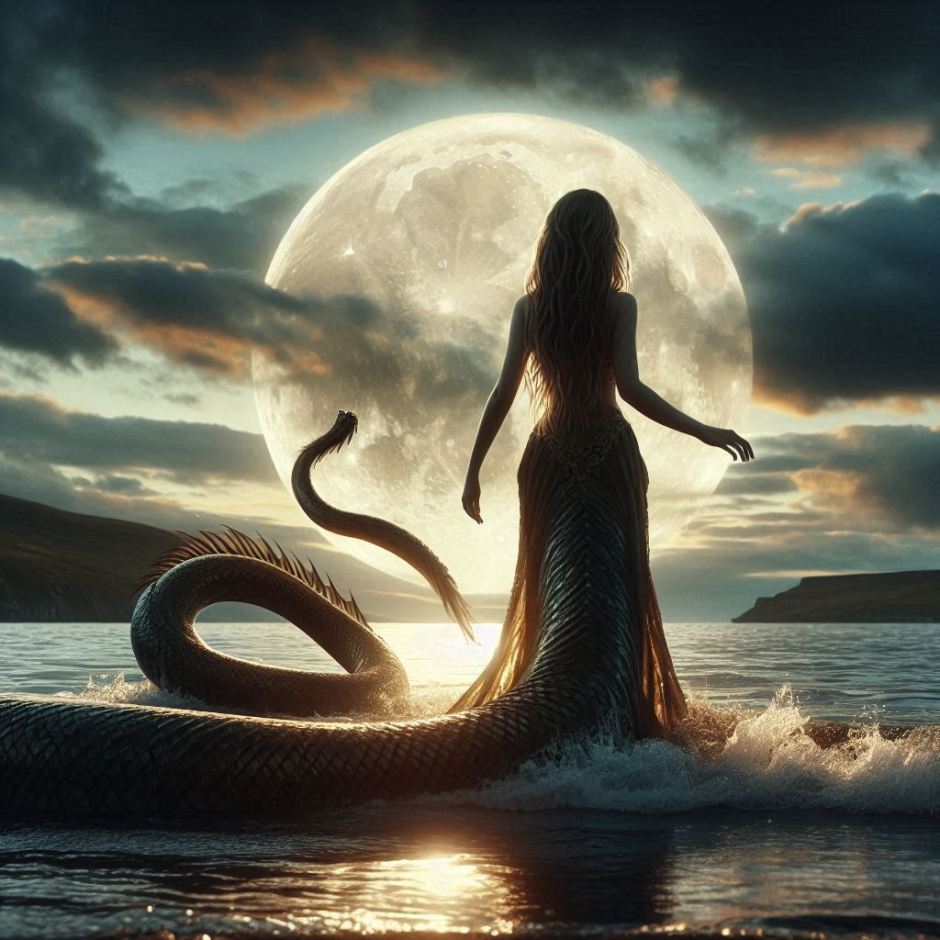
I turned. The speaker wasn’t the old lady, this woman had a fresh young voice. I stared at the girl who stood beside me, she was naked and her skin was pearly perfection. She giggled at my confusion and her emerald, green eyes sparkled. They were the old lady’s eyes. Then she stepped towards the water, shedding her skin as she went, before finally as a serpent she entered the cold North Sea and slithered away through the moon-soaked waves.
Hitch Hiker was written for a workshop and there was a limit of a thousand words, I crept over by three I believe. Writing short stories can often lead to abrupt endings. For me I enjoyed this ending, but I do appreciate that it could be considered unsatisfactory.
The story was inspired by Emily Dickinson’s poem, I started Early – Took my Dog. Which if you haven’t read you are in for a treat when you do.
The following story I wrote a while back. I wasn’t happy with it but I needed something to submit and it was the best I could do with the time I had.
Marriage and Elephants
On a grey winters day at the age of twelve I became a true believer in magic. My friend Joan and I were walking round a frozen pond. Both of us were lovelorn and we were spurring each other on to higher states of emotional misery.
Joan had just been chucked by Tait. He had ended their one-week relationship in the middle of the dining hall in front of everyone! The humiliation. To make matters worse by the end of the day, he had been going steady with Sue Hamilton. Joan was so aggrieved you could feel the hurt rolling off her. My part in this scorned lovers walk was my tendency towards melancholia and my unrequited passion for Terry which was a pleasing scab to pick at. Again, and again and again. Oh Terry, he truly was beautiful.
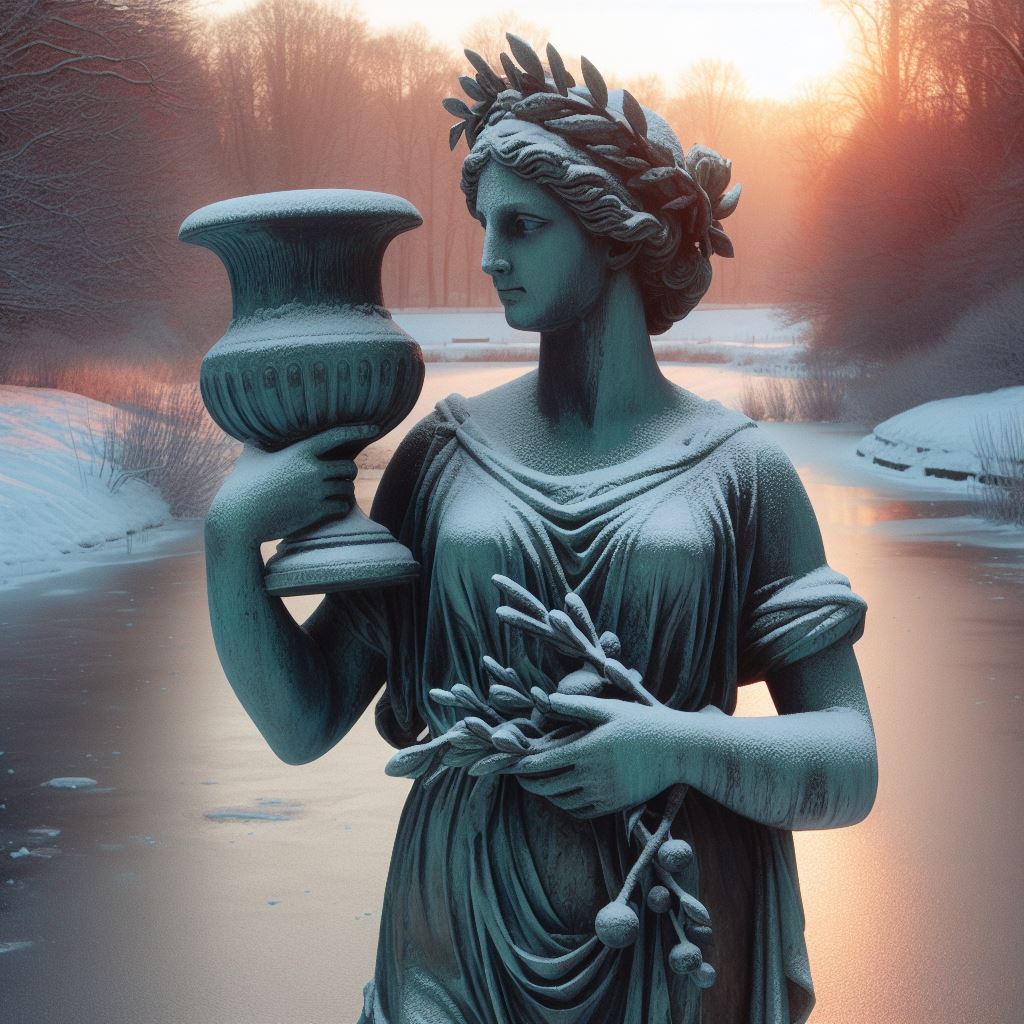
Deep in the throes of my angsty pain I picked up a stone and began tossing it in the air. Joan shot me a sideways glance, I am butter fingered and the stone I was throwing skyward could very easily have gone astray, she widened the distance between us. I smiled at her, then pointed at the mouldering statue in the middle of the pond.
‘If I can get this stone in the jar the lady’s holding, Terry will ask me to marry him tomorrow!’
Joan laughed and bent to pick up a stone of her own. ‘It’s an urn not a jar,’ she corrected. ‘If I can get my stone in the urn, Tait and Sue will be squished by an elephant!’
We giggled and launched our missiles. Much to our surprise they both hit, we hooted with amusement and went on our way, thinking no more of the stones, or the urn in the scantily clad statues arms.
The next morning I was late to school. Tardiness was considered a serious offence, so I was sent to the head for a dressing down. On the way to her office I became aware of raised voices and the echo of many feet upon the hard tiled floor of the corridor. I rounded the corner and was waylaid by a crowd of excited people. Terry was at their centre, he was pale, his eyes were wide and vacant. He didn’t look right, something was off. He saw me and pushed through the crowd jostling people out of his way. He dropped to one knee and proffered an open ring box. I stared down at him, blinking in surprise and trying to stop the creeping sneer which threatened to tweak my lips as I looked at the ring nestled in the box. It was gaudy and resembled the one I had pulled from a cracker last Christmas.
‘Marry me, Amanda!’
I burst out laughing. He looked ridiculous and the ring – yuck! In that moment, my young love for him was cured. But my laughter provoked him. His face contorted, he stood abruptly the ring box clattering to the ground and he launched himself at me, fastening his hands round my neck. He was strong. I clawed at his hands and face, but I couldn’t push him off. I stumbled and fell with Terry still upon me, pushing me downwards and onto the hard tiled floor, where I struck my head and slipped into blackness.
I woke in a busy and bright hospital ward. My mum was sitting by my bed, peering down at me with a flushed and worried expression on her face. I sat up gingerly and saw that Joan was also there. She gave me a meaningful look as my mum flustered and adjusted my pillows.
‘Can I have some water please?’ I croaked.
‘Of course, darling,’ mum said. She clucked at the empty water jug, grabbed it and bustled off.
Joan reached into her pocket and pulled out a folded-up piece of paper, she leant forward and passed it to me. It was a poster for Chipperfield’s Circus, emblazoned with a huge elephant.
‘No,’ I protested. But an icy niggle of fear tickled my stomach and I touched a hand to my throat where Terry had laced his fingers round my neck. He hadn’t looked like himself, there had been that odd, confused expression on his face. His proposal, before that day Terry hadn’t so much as looked at me. Something had been at work, could it have been the statue and the stones? Had we conjured a sort of magic that day? But an elephant. That was too much, no way was one going to escape the circus, they’re trained animals, not rampaging beasts. ‘No!’ I croaked again trying to infuse certainty into the word.
Joan wasn’t calmed by my attempt to soothe her. Her eyes rolled, and I realised just how close to hysterics she was. But at that moment my mum arrived with a nurse, ending our conversation. Mum glanced at us strangely, clearly aware she had interrupted something, but she said nothing. The nurse decided I’d had enough exertion so she hustled Joan away from the bed, telling her I needed rest. We shared a pained expression as Joan paused at the wards entrance. There was nothing we could do though, the stones had been cast, we could only wait and see what came next.
The following day I was allowed home. My neck was stiff and laced with deep blue and purple bruises, I had a dull constant headache, but otherwise physically I was fine. Mum came up to the ward to get me while dad waited outside smoking in the car reading his newspaper as he hated hospitals. He rolled the window down and wafted the paper to clear the smoke as mum helped me into the backseat.
‘How are you pickle?’ He asked as he passed the paper to me in the back seat and started the engine.
‘Fine. Bit of a headache, but fine otherwise.’ I replied which physically speaking was true. However my stomach was churning and my mind was racing. I was desperate to speak to Joan, to find out if anything had happened. It was Thursday so she would already be at school, I would have to wait until she got home and called. We needed to come up with some sort of plan in order to deal with the elephant situation.
Dad started the engine and we drove homewards. For a while I looked out the window, but the world hurrying past turned my head and sent me spinning so I picked up the paper dad had handed to me. I scanned the front page of the paper and my heart stopped.
Elephant escapes from Circus, two Parsons Green Secondary school students killed in freak accident.
I would like to say Joan and I learned our lesson, that Tait and Sue’s deaths meant we never again visited the pond, with the statue of the lady clutching her urn. It would be nice if we had only thrown stones into the urn when we had really important wishes, good wishes, not selfish ones. But that wouldn’t be true, we were twelve-year-olds who had just come into incredible power.
If I am to be honest I didn’t like much about this story, but I needed something to hand in! So here are five things I would change if I were to rewrite it.
One – The Title
I actually like the title, its one of the few things I don’t dislike here! But it gives away too much. I have never been good at titles and they are so important. A great title should be short and sweet, it should spark a potential readers interest and it needs to stand out.
Two – Character Limitations
I had decided from the outset of this story that my characters needed to be young, and this limited what I could do. The wishes made by Amanda and Joan had to be the sort of things love-sick twelve-year-olds might desire. They were low-stake wishes, well, until Tait and Sue were trampled to death by the elephant. Now, an older teenager might have made much darker wishes, and that could have taken the story in a whole different direction.
Three – Character Development
I had little word space to develop the characters. Short of telling you how old Amanda is and that she has a deep unrequited love for Terry what else do you really know about her? There isn’t much going on with her that might draw a reader in and there is certainly nothing to make you root for her. I don’t even touch on the background characters, they are one dimensional. Consider Terry – what was it like to suddenly be magically highjacked? What happened when the spell broke? These are things that would have been interesting to develop.
Four – Show don’t tell
I do a fair amount of telling in this story right from the off (remember the title?). I state that Amanda is lovelorn which is lazy – I could have attempted to describe her emotions, to show how she felt, but I didn’t do the leg work because I was worried about the word count and I needed to move the story forward.
It is always better to show. Identify the most important and impactful details of the story and paint them in your readers mind, do this with vivid descriptions of actions, thoughts, feelings and dialogue. This helps to create strong emotional connections with the reader as you draw them into your story.
Five – Building Suspense
The circus advert and the newspaper headline were just plain lazy, I didn’t take time to build up much if any suspense. I handed the story’s climax to the reader in a very dull way, it was sloppy and poor writing.
Further Thoughts
With a greater word count I would have liked to consider the potential moral dilemmas of the wishes Amanda and Joan made. What other wishes did they go on to make? These two young girls had just been handed the ultimate power, there is a lot of room here to do some very creative writing.
I doubt very much I will return to this story, but I do think there was potential here. Who knows maybe one day I will come back to it.
It is important to reflect upon your work. Self critiquing doesn’t mean beating yourself up its about approaching your work honestly and objectively with the goal of making it the best it can be. We learn every time we write, even if it doesn’t feel like we are!
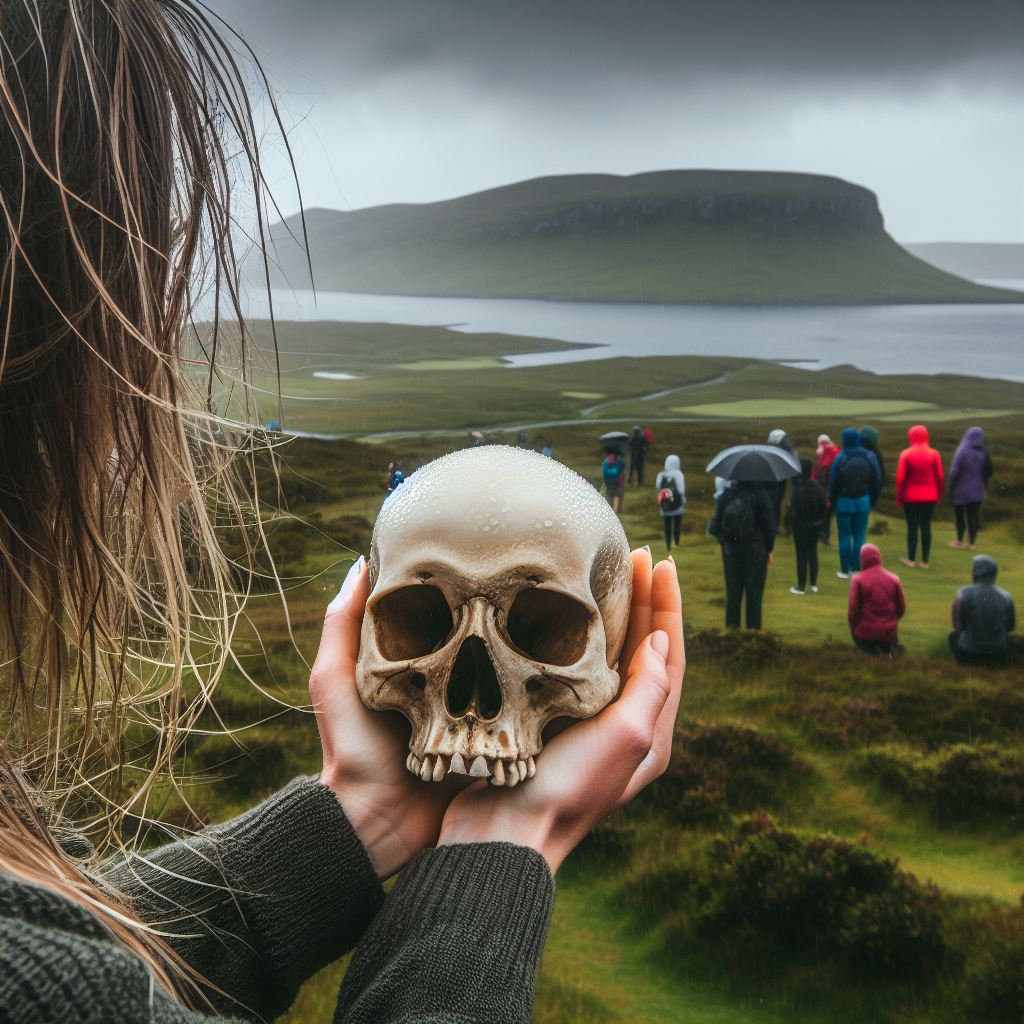
The skull was the colour of a tea stain. Elsa cupped it, in the palm of her hands and peered into the sunken eye orbits which leered unseeingly back at her. Behind her Hattie giggled, ‘She has better teeth than I do!’
Elsa couldn’t help but agree, the five-thousand-year-old skull had surprisingly good teeth. No stains, very little wear and a complete set to boot. And it wasn’t just the teeth, the rest of the skull was very well preserved.
‘She isn’t using them now, maybe you could borrow them,’ she replied as she passed the skull to the teenage boy standing next to her who was clearly a little too excited to be handling such precious remains.
Their tour guide had overheard their conversation. ‘Yes, we believe this individual was someone of high social status, which is why her teeth are so strikingly pristine.’
‘I thought the Neolithic diet meant that most people had poor teeth. Something to do with how they ground their grains,’ Elsa replied trying to sound casual and not to curious about the teeth. She knew this to be a fact, she was after all an archaeologist, but she didn’t want to make their tour guide feel uncomfortable – he was clearly doing his best.
He frowned at her and there was a cool glint in his eyes as he reassessed her from under his wild eyebrows.
‘Well, we believe that several of the individuals buried here come from the upper echelons of society. As we have a fair few skeletons in near pristine condition. Their bones tell us that they did no hard labour and that they enjoyed a good diet.’
Elsa wanted to push him on this. The Tomb of the Seals was a remote and desolate place and five thousand years ago it would have been much the same. Unfavourable farming conditions, poor climate and wild weather stirred up by the surrounding North Sea. Most people here would have lived hard and short lives. Indeed, that was still the case, their tour guide, a local farmer who had uncovered the tomb was evidence of that. He was roughly worn and stunted as if perpetually shrinking from a strong wind.
‘How many bodies did you say there were?’ asked the teenage lad. His voice quivered as he spoke, and Elsa rolled her eyes at the emotion in his voice. He was clutching the skull tightly in one hand whilst running the fingers of the other up and down the nasal bone, like he was petting a dog.
‘During initial excavations we uncovered three hundred and twenty-four individuals. They were interred here over a period of eight hundred years. After Storm Quint we found various other remains, though not the cairn they came from. It was swept out to sea, but the bones, they found their way back to shore.’ Their guide nodded at the skull with the fine set of pearly whites. ‘She was among those. We only have her skull; it was found by a dog walker last summer.’
The tour ended with their guides wife bringing them cups of instant coffee and stale custard creams. As the other visitors milled around the car park, Elsa, under the pretence of needing to relieve herself snuck away. She wanted another look at the skeletons, her professional interest had been piqued. Something just wasn’t right.
She slipped into the old stone byer from which their guide had brought out the boxed remains. It reeked, the smell was so pungent she half expected to trip over a cow or a pig. This wasn’t a sterile environment suitable for storing human remains.
At the back of the byer, several heat lamps hung over some large stone troughs. A strange clicking sound, like thousands of tiny teeth or feet scuttling emanated from the troughs. Covering her nose, she approached, her nerves tingled, her skin crept, every instinct told Elsa to flee, but she didn’t. Instead, she peered into the nearest trough.
Thousands of shiny beetles scuttled and scurried, rived and swarmed under the lamps. What were they? She leant closer, staring at them, her stomach twisting in revulsion. She gagged and cheap instant coffee surged up her throat, which she swallowed down. The mass of insects separated for a second, like peeling skin, revealing the puckered and ruined face of the teenage boy who had asked about the skeletons. They were making quick work of his flesh, stripping it from his bones, his eyes were already gone, and his nose was just gristle.
Behind her the byer door opened. She spun round and there framed upon the threshold stood the tour guide. He smiled at her sadly.
‘Shouldn’t be putting our noses where they don’t belong,’ he sighed. Then he closed the door and turned the key in the latch locking them in the gloom together.
Apologies in advance … this post got long, you might need snacks.
I’m dyslexic(why is that word so difficult to spell?). I like being dyslexic. Now, in my ripe old age, having lived with dyslexia for four decades, I view it as a superpower – but recognising my dyslexia as a superpower is a new thing.
I slipped under the radar with my dyslexia until I was eight, copying other peoples work, being really quiet and not drawing attention to myself. But I remember feeling frustrated and stupid. Why couldn’t I do the things that my classmates seemed to find so easy. Along came a new teacher and she spotted that my work was a bit off, for example I would write upside down in a workbook, as I didn’t know which was the right way up if there weren’t pictures to show me, she also noticed the copying. After this I was assessed, and my superpower was discovered.
With the right guidance and teaching methods I learned to write! Though spelling to this day remains an issue, letters muddle themselves, I can look at something I’ve written and because I know what word I meant to use or spell my brain see’s the correct one, when what is sitting on the paper is another word entirely.
With proper instruction and support I learned to read. This shocked my teacher and my parents. The first book I read at the age of eight was The Horse and His Boy, and to my never-ending delight the second was The Hobbit. This was the start of a lifelong love of fantasy and science fiction, I fell willingly down the rabbit hole of these genres.
For people with dyslexia who are nervous about reading – find something you love and go with it. You don’t have to read books which only make it onto the Booker Prize lists, you can read graphic novels, fan fiction whatever it is, if you enjoy it, don’t be ashamed.
My original copy of The Horse and his Boy bought at a school fair and one of many copies of The Hobbit that I own – this one came backpacking round Borneo with me.
I was lucky to be diagnosed with dyslexia when I was young, but my confidence had been knocked. I struggle with self doubt, I don’t feel my work has any worth, and I can be very sensitive if people point out mistakes in my work (especially if its a spelling mistake).
My experience in the 80s following my diagnosis was of support and patience. My mum was a huge factor in this. She was determined I could do well in school and perhaps university. Mum wasn’t diagnosed with dyslexia until she was well into her forties, so a little late. Academically she was crushed, being expelled from school for being stupid. Though she did go to college and worked in advertising, and later administration she never got to go to university which had been a goal of hers. Thankfully things have changed a lot since the fifties.
For anyone looking for support there are many groups and associations now which educate, discuss and offer support for people with dyslexia or those with family members with the superpower. Schools, colleges and university’s offer a huge range of support, recognising that not one dyslexia fits all.
I thoroughly recommend The British Dyslexia Association its a great place to start.
For me since leaving education I have found my fellow dyslexics to be the greatest of cheerleaders. A surprising number of my friends happen to also be blessed with this superpower.
Dyslexia and Writing
When it comes to writing stories, my dyslexia brings mixed factors to the page.
Some of the most creative people I know are dyslexic and I hope I can count myself among their number.
When it comes to reading, watching films or tv shows I’m often way ahead, piecing together the plot, as I find it easy to see the bigger picture. (I am not so sure this happens with my writing though, I often get lost in my plots or my stories runaway, taking themselves in directions I never intended.)
And whilst I might not be the editor of choice for spelling and grammar, I am very good at looking through peoples work and picking out areas that need tweaking.
Things that others can do quickly take me longer, earlier I said I was a good reader, but it takes me a long time to read and follow instructions. I have to go over my work a billion times and even then, mistakes creep through the gaps – I don’t see the spelling mistakes or notice the missing words.
I listen to all my written work, this helps me spot dropped words, misspelt words or indeed random words which have for some reason inserted themselves into my work, but it’s time-consuming. When I was at university, I was given extra time in my exams, this wasn’t a way for me to cheat, it just levelled the playing field. I once tried to explain how long it can take me to write even a seven-hundred-word story to someone, and she helpfully suggested I shouldn’t let myself get distracted so easily.
One of the things I find hardest is when people are critical of my errors. Now, don’t get me wrong of course you shouldn’t have spelling mistakes in a finished story. But I have often been really disheartened by how people approach such feedback.
For example … During a writing course we had to post our ongoing work to an online forum. This wasn’t our finished work, this part of the course was casual and unassessed, so I didn’t apply my usual levels of combing my work. My fellow students were very quick to point out my dyslexic errors and it became disheartening. One student said they struggled to read my posts as they couldn’t get past the spelling mistakes. In the end I stopped using the boards as the content of my work wasn’t judged on the story, the plot development or character arcs it was just being picked apart when I missed a word or misspelt one. I didn’t want to have to tell them about my dyslexia, I didn’t want them thinking I was making excuses, so silence was easier.
I have learned from this – ask people to read what you have written, not correct it. You can get to the corrections once you’ve finished, when you spend endless hours editing your story and wondering why you thought any of this would be fun in the first place.
As I said I listen to all my work, it helps me pick out mistakes. I use spellcheck like its oxygen. I have people I trust who I send my work to, people who won’t cover it in cruel, disheartening red ink. Don’t be afraid to make use of all the wonderful tools that are out there, there’s great software and I know people who use browser programs like Grammarly – I intend to explore this in the future.
If you aren’t dyslexic, you’ll probably never really understand how much of a hurdle it can be, just as I can’t imagine what its like to navigate the world without dyslexia. Isn’t it wonderful how different we all are.
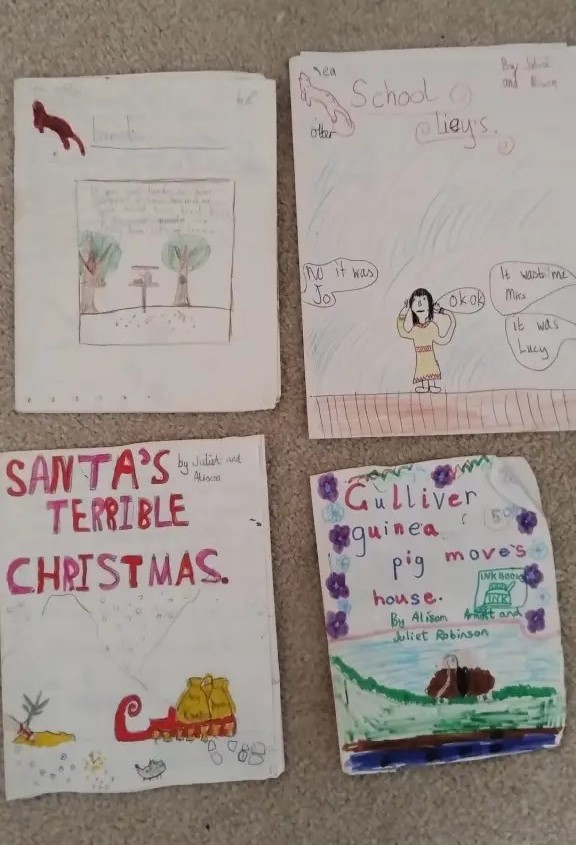
I always wanted to write. When I was little my friend Ali, and I had our own ‘publishing house’ which operated under several names including Otter Books, Sea Otter Books and Ink Books. We produced many works, often about a guinea pig called Gulliver. But I didnt have the confidence to peruse this, indeed one teacher told me I couldn’t be a writer because of my dyslexia. So, I focused on other things – art, philosophy and archaeology, and it wasn’t until years later that I came back to attempting to piece stories together. I might not be knocking the ball out of the park, but I am finally trying to do something I always wanted to.
Some of the surviving master pieces from Ali and I’s work.
So I thoroughly encourage people with or without dyslexia to pursue your creative passions. Don’t listen to people like that teacher who told me I couldn’t write because I am dyslexic. Embrace your creativity, whatever form it takes – there is so much fun to be had immersing yourself in the process of creation. And who knows maybe you will be the next Virginia Woolf or Brandon Sanderson. Or like me, you might just enjoy writing stories for the sake of it.
If you made it this far thank you for sticking with me!!
Though it probably isn’t obvious the following short story was inspired by Jack Schaefer’s book Shane. It was written for a workshop, the requirements being it had to include the quote …
“I leave you, to go the road we all must go. The road I would choose, if only I could, is the other.”
Which comes from Murasaki Shikibu’s, The Tale of Genji https://www.goodreads.com/book/show/7042.The_Tale_of_Genji a book I admit I haven’t read. The piece also had to be under 800 words. I chopped the quote up and played with it to make it better fit the story I wanted to tell. I had planned to return to this story, but as of yet I haven’t managed to do anything further with it.
Saquin Point
We came late to Saquin Point. Not a bad thing, for if we had been early or indeed on time, I wouldn’t be here to reflect upon what we found. The fire must have died before we passed over the range that separated the town from the Shifting Plains. So, we saw no tell-tale plume of smoke. It was around midday, so likewise we didn’t note an absence of lights. From our vantage point, the town was just a smudge on the horizon.
The first hint of anything untoward came as we passed an outer lying farm, it was mechanised so it wasn’t unusual not to see a soul, but it was odd that the large machines which tended the crops stood idle. Solomon who was taking point radioed the convoy.
‘Eyes right guys,’ there was a tightness to his usually relaxed drawl.
I glanced at the field and spotted what he was referring to, in large black letters someone had scribed on the side of a disabled piece of machinery.
The Gods love Chaos
We debated who the artist might have been as we continued down the road. I suspected it wasn’t the handy work of bored teenagers, but as things were it didn’t really give me cause for concern. Solomon and Nessa, however, were both spooked by the graffiti.
A mob of barking dogs greeted us at the edge of town. We stopped, puzzled by the pack and they distracted us, preventing us from properly taking in our surroundings. I didn’t note the lack of vehicles, I didn’t consider the absence of people or the silence. It was Maya who woke us up to the oddity of the situation, she tossed a half-eaten apple at the closest dog and pulled the pistol she wore on her hip.
I thought she was going to shoot the dog and snapped at her to leave the thing alone. She threw me a withering look.
‘Catch up Bryan.’
I finally took in the ghost town, the silence, and the faint smell of smoke. We left Nessa and Burke to watch the convoy and proceeded on foot, slinking from building to building, guns in our hands. We can handle ourselves; you don’t travel the highways with valuable cargo if you can’t, but still I felt uneasy and I kept thinking back to the message in the field.
As we approached the town centre, signs of violence started to appear. Bullet holes splashed along a wall, burnt buildings, looted stores, an overturned electric wagon and dried blood on the pavement.
The remains of a huge bonfire stained the town square, where once a baobab tree brought all the way from earth had grown. More words had been painted here, encircling the ashes.
The road I would choose, if only I could, is the other
We searched what was left of the pyre. I did so with my heart in my mouth, expecting to find charred remains, but nobody had been burnt in the flames. Thoroughly unnerved we stood in a clump as I checked in with the convoy, but only static answered my hail. Ashen faced, Maya started to talk, but she was cut off by the blaring of a horn, to be precise the airhorn from Solomon’s rig. Its shrill scream came from the opposite side of town, not from the Shifting Plains Road, where we had left the convoy.
Now we moved quickly, rushing through the streets, the horn crying constantly. At the edge of town, we found more graffiti, this time on the side of the school.
I leave you, to go the road we all must go
The horn reduced to a faded ringing in my ears, as I studied the words – did I want to understand what the scribe was saying? A loud retching sound drew me back. It was Maya emptying her guts over her worn boots. Beyond her Solomon was running, pounding down the middle of the road. In the distance, I could see his rig, it sat blocking the highway. I was about to follow when my brain caught up and I properly took in my surrounds. The poles that flanked the road, and which initially I had dismissed as being related to some construction project – the things that hung upon them, not things, people. The people of Saquin Point, they lined the road that led out of town, their throats slit, their eyes gouged out, their hands and feet hacked off.
I started to run, chasing Solomon down the road, refusing to look at the grim and silent honour guard, as I rushed past them. I caught up with Solomon moments after he silence the horn. He tumbled from the vehicle cab, his face a mask. ‘No Nessa, no Burke,’ he choked.
In blood on the side of his truck someone had carefully written,
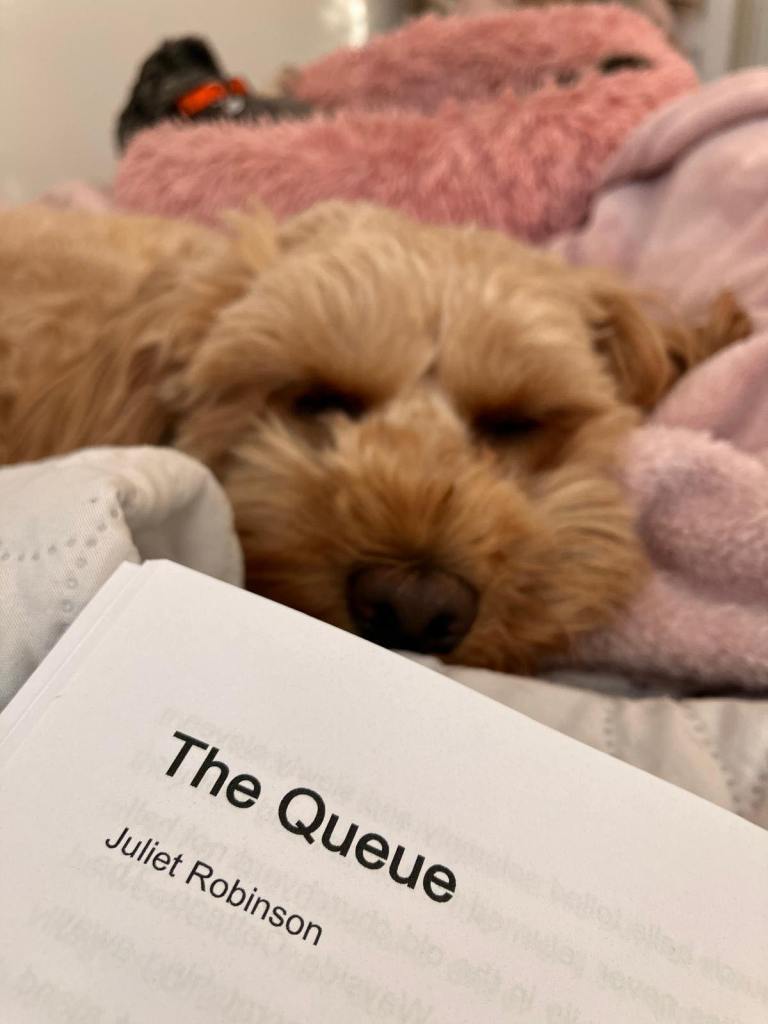
When someone sends you a picture of a cute dog and it takes you a moment to realise what’s in the foreground!
The Queue is in the short story collection Janet Armstrong, Shabs Rajan and I put together. I’m touched when people reach out to say they have bought the book and I am delighted when they say they like it. It surprises me when people enjoy something I have written.
Short story collections are a wonderful oddity, especially when they include work from several writers as the stories are so varied, they take you everywhere, each writer has a different style and way of thinking. There is something refreshing in diving from one world to another in single book.
We didn’t have a theme when we started putting Wayside together, but we did notice that water often featured in the pieces so that became the loose thread that connected our stories. I stress the loose part! And our writing styles vary wildly, but we enjoy working together and I love Janet and Shabs stories.
Shamelessly sharing a link to Janet, Shabs and I’s short story collection
Excerpt from The Queue …
‘Donald?’
‘What?’ I shook my head; my vision was clouded, and I had a sense of disconnect. I looked around; I wasn’t in the hospital car park.
Seeing my confusion, the speaker gently placed her hand on my shoulder.
‘It’s OK Donald. You had an accident, but it’s ok now.’
‘What?’ I stammered. I must have knocked my head. I looked at the speaker, who glowed with the flush of health that the young enjoy. She smiled kindly at me, and her mouth was filled with perfect, white teeth, the kind that paid for an orthodontist’s retirement.
‘You had an accident,’ she repeated. Her voice was melodious. ‘But it’s OK now, you don’t have to worry.’ She smiled again, a generous smile that was all confidence. ‘But I do need you to join the queue over there.’
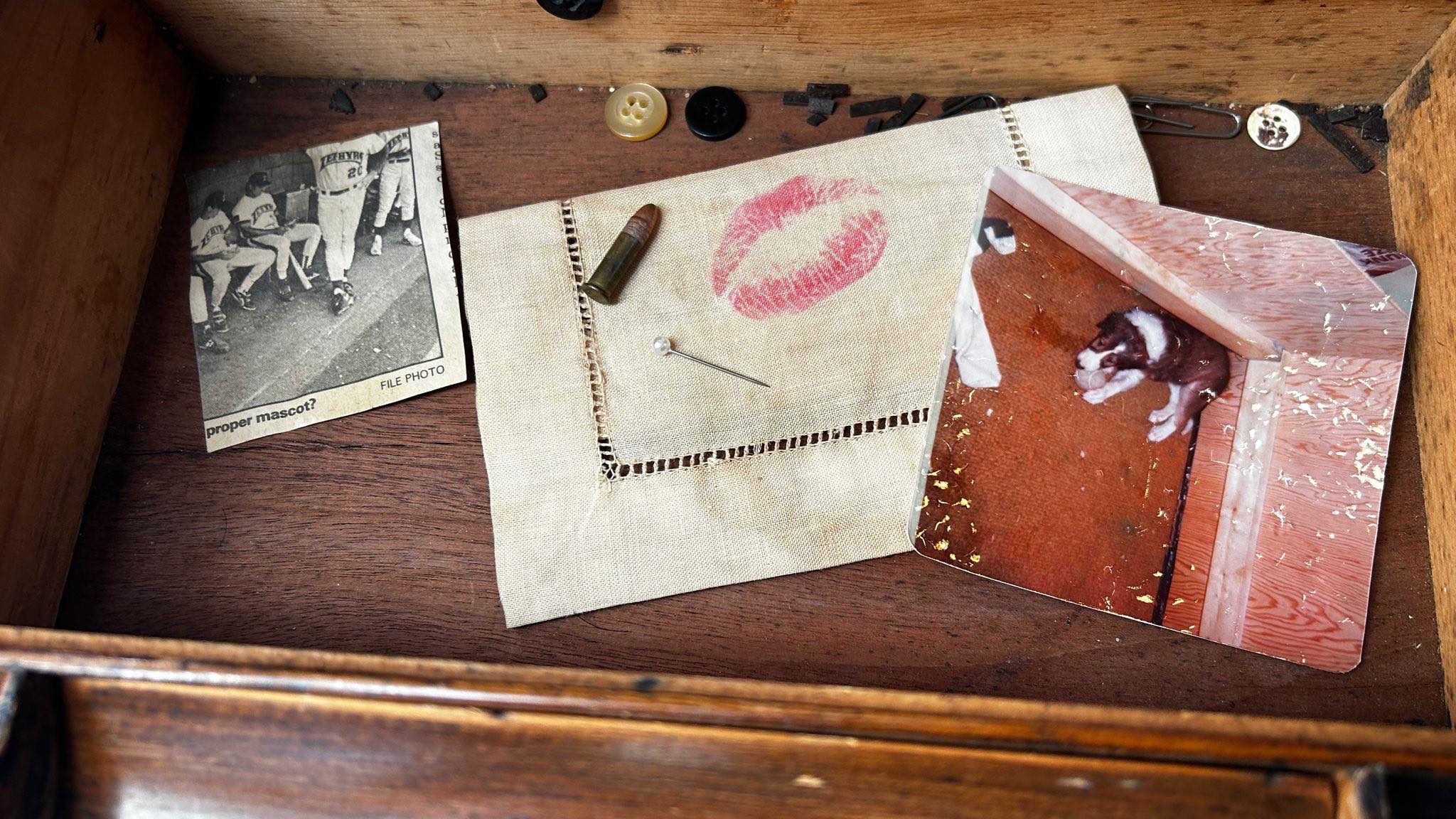
The above picture I took in The Antique Gallery of Houston, a place I highly recommend visiting if you ever get the chance. You can lose yourself for hours in the hundreds of antiques stalls there, there’s just so much to see and take in.
As I meandered through the stalls I came across a writing box. It was well worn and sadly a little overpriced for me, but its contents were wonderful. I took a picture of them, these snippets of someone’s life as they told a story, I felt like I could almost see the outline of the life these items had once been a part of. I hope to piece my own tale together from this picture as there was something so vivid about the contents of that writing box. What a great writing prompt – perhaps one someone else can make use of.
Sometimes its easy to pull a story out of thin air, but not always. Prompts help, I seek them out whilst all the time. They can be anything – a conversation overheard on the bus, a feather boa found abandoned on the street in the early hours of a Sunday morning, the sound of a pigeon taking flight under a bridge the flap of its wings echoing off damp stone or indeed in amongst the contents of a vintage writing box.














 A Year of Time