Under the Apple Tree

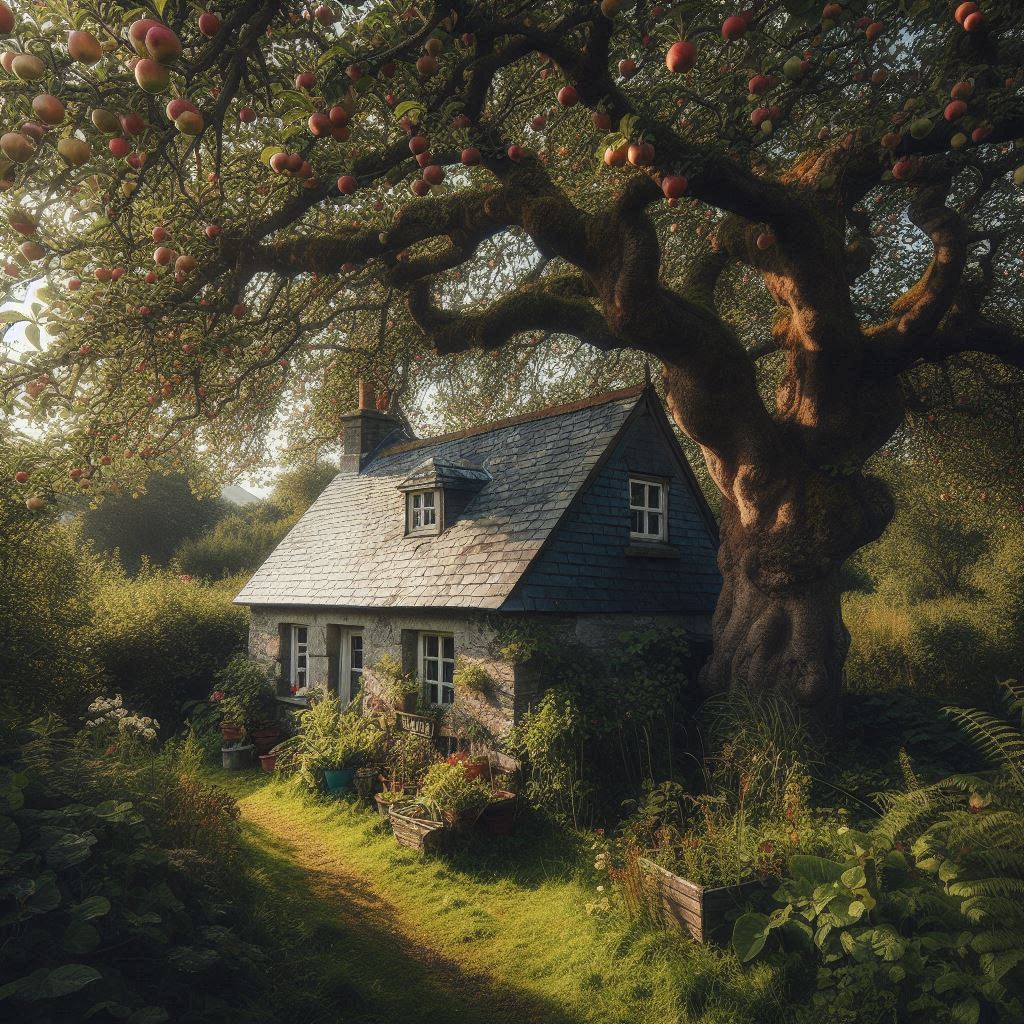
Image. “ramshackle cottage under a large apple tree,” image generated by Microsoft Bing Image Creator, June 17, 2024

Let me tell you about my mother. This morning when making coffee, the percolator boiled over and the smell of burnt coffee, the toasting bread, and the jam was like a conjuring. I wasn’t in my own home, in a rush, half-dressed and wondering why I hadn’t gone to bed earlier, and worrying about the school run, or work, or how I was to walk the dog and still have time to make lunch. I was young again, maybe five, though I could have been any other age between five and leaving home and I was in another kitchen.

My mother’s kitchen, with its low oak ceiling, stained from years of cooking, with the small window which was always covered in pots of parsley, chives, basil, rosemary and coriander all wilted and straining for the light. With the too much stuff piled around the counters, books, opened letters, chopping boards, half-drunk cups of coffee, the toaster that had never worked – sometimes burning the bread sometimes returning it with a mild tan but it was such a pretty colour that we kept it, the postcards peeling away from cupboard doors and the notes, little nippets of a thought, or a message from someone saying we needed milk.

In the house under the tree time was a funny thing, it was endless, all stretched out, and slow, not like the present where all it seems to do is hurtle along racing towards what I don’t know or perhaps I do know and I don’t like to think on it. Time is a trickster just like the devil supposedly is, or was, or isn’t depending on your beliefs.

My mother fell on the wrong side of time, or the devil if you would believe her mother who knew much of such matters and had solely given herself to the one god and his son, but it was my mother that the smells brought through time, or perhaps it was me who was cast back in time, either way not her mother.

My mother was late to be born, nearly a month, not the September baby she was meant to be but an October one. October the tenth month of the year, though it to is out of place or time, since originally it was the eighth month of the year, hence its name – ôctō. October, an autumn month full of fat trees, branches hanging with fruit, like the cooking apple tree which half swallowed our house and dropped swollen apples upon the roof when the wind was up, which it normally was and we half thought the ceiling would come down upon us, but the slate was strong and backed with oak so it never did.

My mother was too early for her own wedding and had time to think it over and leave, because it was the right thing to do, but for her mother this was the end of the familial bond, for she left my mother that day, even as my mother took me with her, because I was there, just a small seed of a person growing in the cup of her womb.

My mother knew there would be other men, kinder, gentler, meaner, richer, uglier, wiser and all the things that any person can be, and there were, for my sister came along and then my brother but he wasn’t meant for the world yet, so he left and perhaps might come back another time and we will know him if he does. But no man ever stayed in the house with the too full kitchen and I think maybe my brother knew this was not a space for men, or maybe it might be in another time, but it wasn’t then.

So it was just me, my sister and our mother. Our mother whose heart tried to break, not from the ache of love, but from disease and when we were only little she nearly left us, but she didn’t, they did things in hospital and she came back. But I remember her not being there and other women coming and looking after us and they were like my mother in that they were kind, gentle and soft and they spoke in low voices until my mother came back and rested in bed. While she took rest we watched all the tv in the house under the apple tree, and the other women took us to school, brushed our hair, washed our clothes and cooked food that wasn’t ever quite right.

And then one morning my mother was back in the kitchen with the hazy green light from all the plants throttling the window, burning the coffee, shouting at the toaster, spreading the jam, stuffing the lunch boxes, feeding the dog and hustling me and my sister out the door to school.

But she was on borrowed time, or out of her time, for it kept on trying to take her, and it became like a game, she would go to hospital, the women would come and then my mother would return and for a while things would be as they were meant to be, but then back to the hospital she would go, before home again, and we came to depend on her return. It was like a game, a tug of war between time, my mother’s broken heart, the hospital and us, and our life in the house under the apple tree. She always came back to us, a little less herself, a little hollower and more fragile, but home again.

And this went on for a number of years. We became complacent, it was expected that she would always get better. So when time finally took her and didn’t send her back a promise was broken.

© Juliet Robinson 2024, all rights reserved.

Mind Burble

This piece was an attempt at telling a story as a stream of consciousness. I really enjoyed writing it, the deliberate repetitions of ‘my mother’ and ‘under the apple tree’ felt right given the flow of the story. When I had a friend read the piece out loud to me I felt they sounded particularly effective.

The story is vaguely based on life experience – the mothers health issues and the giant apple tree in particular. My mother passed away three years ago and one of the things I have found helpful for my grief is infusing her, my memories of her and stories she told me into my writing. I play with the truth of things, but often I don’t need to, my mother had an interesting life and she was quite a character.

I enjoyed drawing on the symbolism associated with apples in this story. In Norse mythology, the goddess Idunn guards apples that grant the gods immortality. This links the apple to everlasting life and the fight against death which felt right given the mothers battle with heart disease. I also drew a vague link between the idea of time being a trickster, my mention of the devil, and the fiercely religious grandmother with apples and the garden of Eden – this was stretching it a wee bit!

Thank you for reading!

Pandoras Box

Doctors, nurses, and specialists all become familiar

I can crush my feelings and fears

I can scream silently in the shower

I can smile while inside me continents smash apart

I sense myself becoming something other

My insides seem bigger than the shell of my body

© Juliet Robinson 2024, all rights reserved

Mind Burble

This is an excerpt from a longer piece which I wrote about my son and his congenital heart disease. I hope to do something with the complete piece in the future. It is the hardest thing I have ever written and certainly the most personal. I found that as I wrote about his journey and what we went through there were things I couldn’t say without breaking into poetic prose, so throughout the story, there are sections like the above part.

Writing about personal grief is a new thing to me. Yes, I spend a lot of time crying when I write about my son or my mother, but I feel lighter, perhaps not always better, but unburdened. It is helpful.

My hope is that my story Pandoras Box will help raise awareness of congenital heart disease. Congenital heart disease is one of the most common types of birth defect, affecting up to 9 in every 1,000 babies born in the UK. During our time in Great Ormond Street we met many other wonderful children who like my son had been born with congenital heart conditions. Their strength and bravery, and that of their families was both inspiring and humbling. Heart Warrior Children are amazing.

Today was my sons bi-annual check up at the hospital and he did amazingly. His heart is functioning brilliantly and we don’t need to go back for another two years unless things change, but touch my wooden head hopefully they wont. I am so proud of him.

Congenital Heart Disease – Bing Image Creator


Rackwick Bay, Orkney

Rackwick Bay – Juliet Robinson © 2019

My grandmothers family are from the Orkney Islands. If you haven’t been – go!! There is something magical about Orkney and its not just because I am an archaeology geek – there is something in the air.

Orkney is one of my most favourite places and I have been writing about it, in particular about the island of Hoy.

Lately I have been writing about Hoy, its landscape and the feeling I have when I am there, these things are being woven into my writing. So far the island, acts as the backdrop for a few pieces I have written and I have several more stories planned which are set there.

I exaggerate aspects of Hoy in these stories, but it is the inspiration. And the nature and geography of the island has definitely helped shaped these stories.

The Bothy at Rackwick Bay – Juliet Robinson © 2022

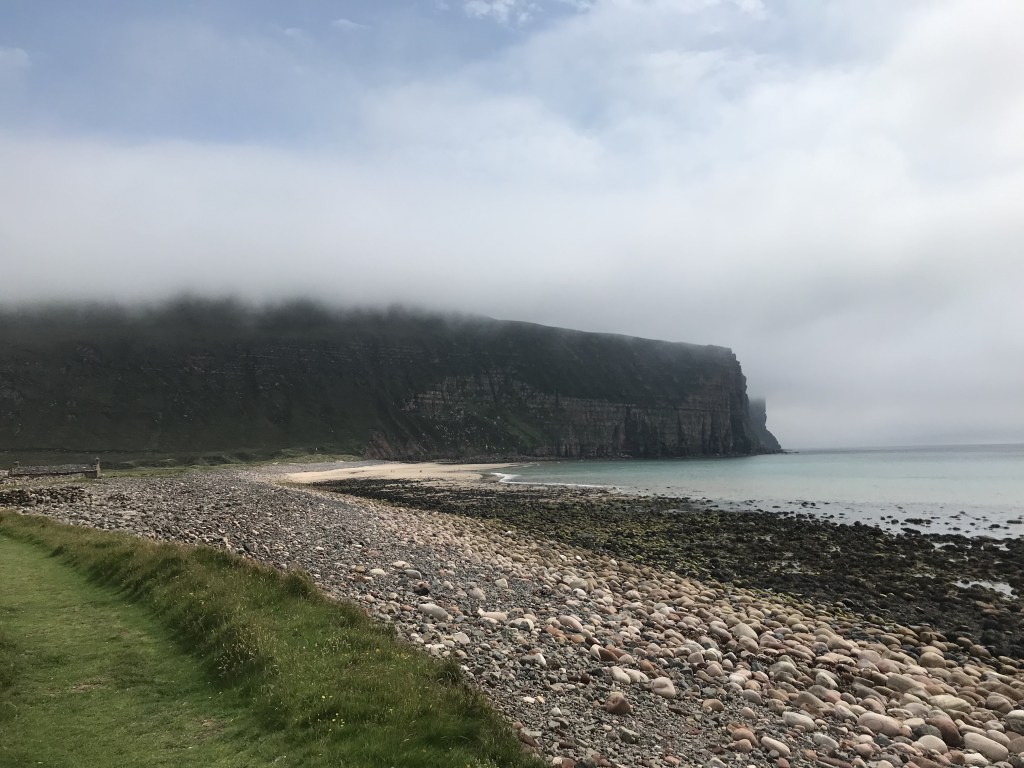
And I mean look at it? How could such a place not inspire? Rackwick Bay is dramatic, there is a stark contrast between the soaring red sandstone cliffs, the soft green grass, the pristine beach ringed with beautiful coloured stones, the endless sky and the ocean.

Rackwick beach stones – Juliet Robinson © 2022

There is an otherworldly nature to Rackwick Bay, it seems a place apart from time.

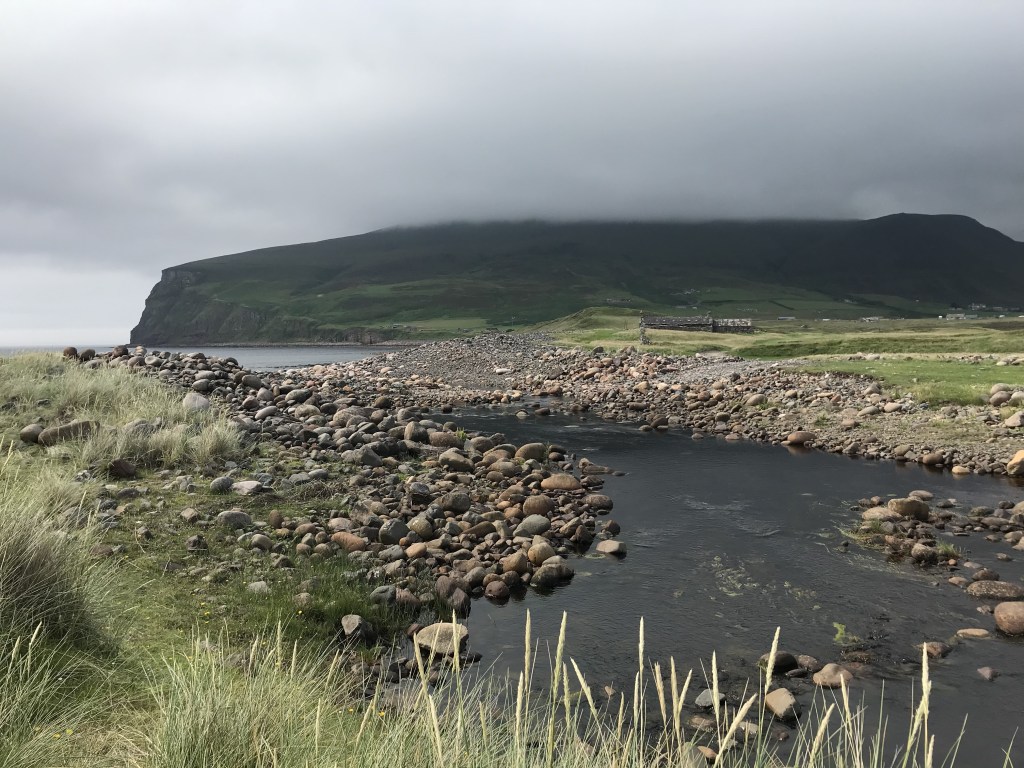
Rackwick Bay the burn – Juliet Robinson © 2019

For me there is a sense of connection, a link to my family. My grandmother used to come to Rackwick Bay to camp, my mother did and now I do when I can. The layering of my families history feels heavy in Orkney, but for some reason here in Rackwick Bay the layers feel a little thinner, like I could reach out and touch the past.

A family camping trip to Rackwick Bay, the building in the back is the Bothy which is open to all – predates my time picture taken by mother when she would have been in her late teens

Landscapes naturally inspire the art world, touching painters, poets, writers, comedians and dancers. I love when I read a book which has a deep sense of connection to the place where the story is set.

The Old Man of Hoy – Juliet Robinson © 2022

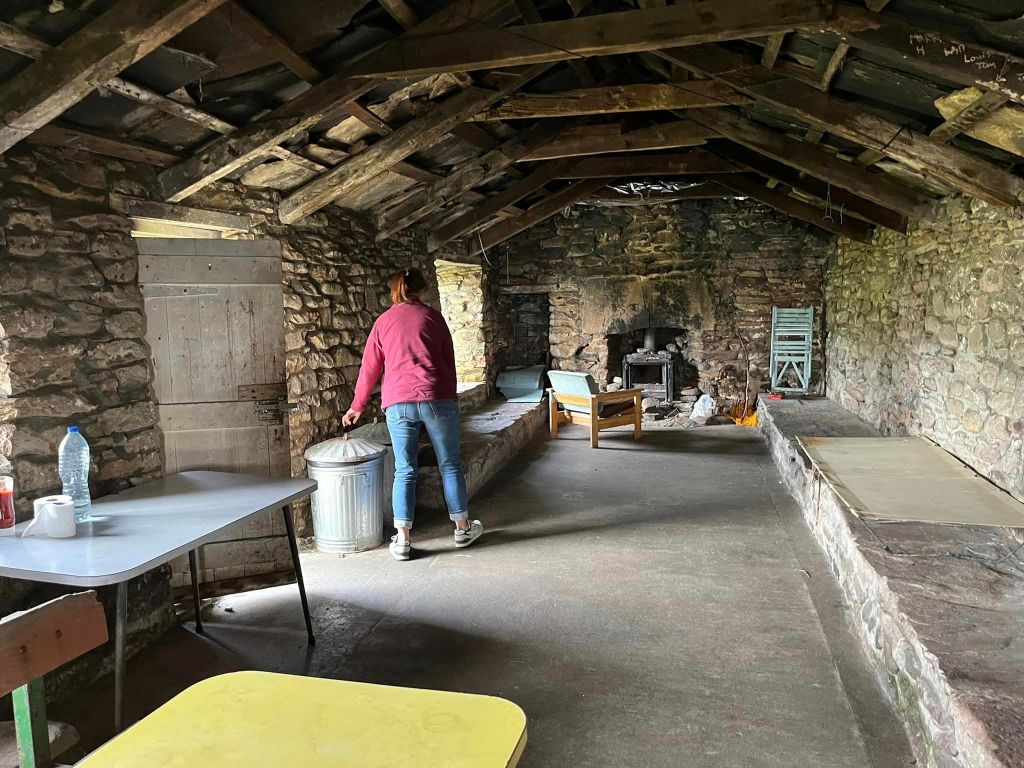
On our last trip to the island, in 2022 my sister and I spent a couple of nights camping in Rackwick Bay. The Bothy was pretty quiet, other than ourselves the only other campers were two women, both travelling alone. We went our separate ways during the day, but at night we gathered by the fire, shared wine, food and we talked and talked and talked. It was special to be able to share that time with those women, to hear their stories, to get to know a small part of who they were and what brought them to the island.
For me after the isolation of covid, the loss of my mother and several hard years this was a truly magical experience – just being able to connect to others and share. I think I healed more in those couple of days than I can explain.

Inside the Bothy – Juliet Robinson © 2022

So yes it was probably inevitable that I would begin writing about Hoy and the women we met that weekend will be featuring in a story that I have planned. Though I suspect they may not recognise themselves if they were to come across the story!
This morning I felt a sense of urgency, a need to return to Orkney, it’s been two years, which feels far too long. The best I can do for now however is write about the islands and look at photos I have taken on trips there over the years.

Actually smiling in a picture, its because I am on Hoy! – Juliet Robinson © 2022

And one last photo … because Rackwick Bay really is stunning.

Rackwick Bay – Juliet Robinson © 2022

Ok I lied .. here’s another

Thea dog in our tent, apparently guarding some pasta – Juliet Robinson © 2022

Hollows

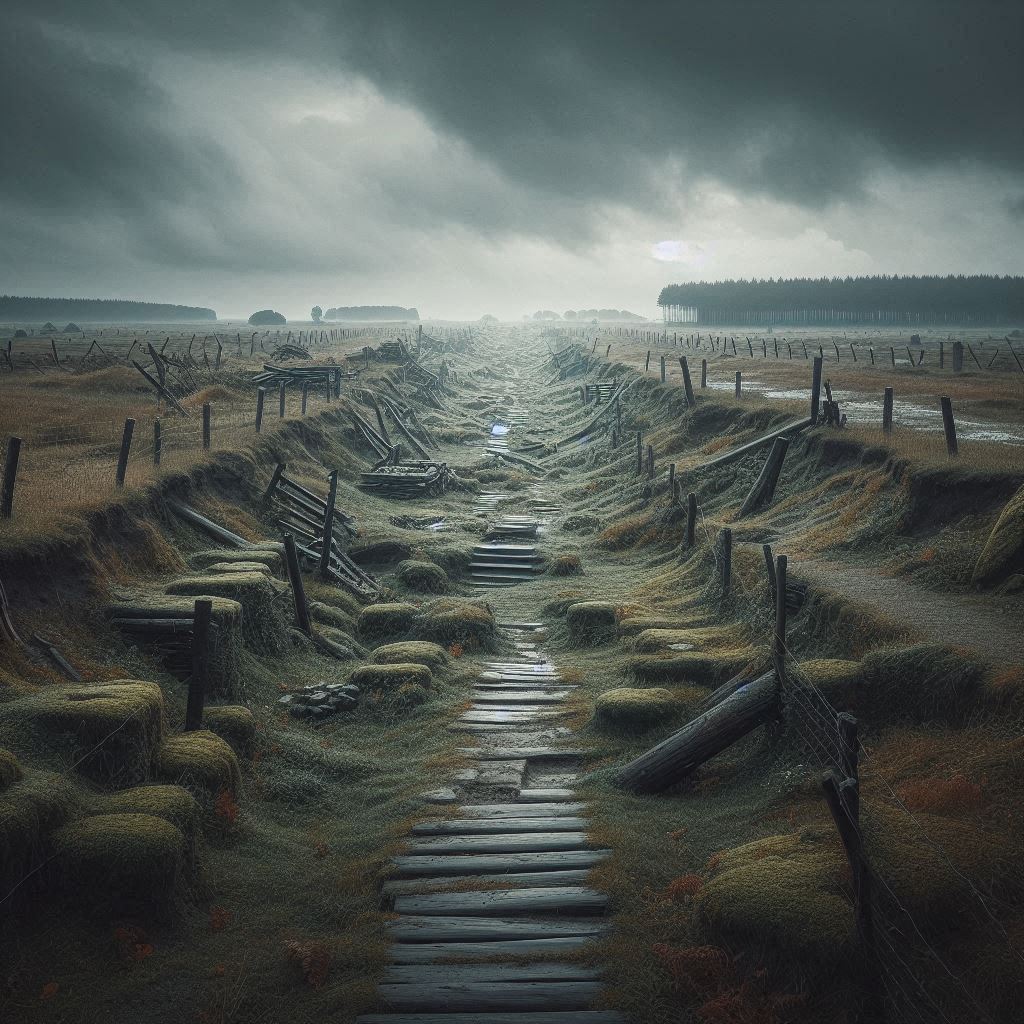
Image. “post war landscape,” image generated by Microsoft Bing Image Creator, June 6, 2024

A gloaming light was building, not a single cloud smudged the gradually lightening sky, it was empty, hollow and vast. No birds flew in this void, none drifted on the wing, above the torn-up ground.

Tam’s tiredness hurt, it’d kept him awake. Not a moment’s rest, not a moment’s
escape. But the night had passed, taking its inky black with it and now dawn
was here. It had started as a low burst of light on the horizon. So bright, it had hurt his
eyes, like the flares before an attack. Then the creeping light had advanced laying claim to
the land, an army on the march. Though this army didn’t bleed or break or cry for its
mother.

Maybe it wasn’t the tiredness that hurt. Maybe it was the hole in his side, where
shrapnel had hurried through him. Maybe it was the twisted and broken leg, with
the foot that faced entirely the wrong way, as if it had decided enough was enough
and it was going home, with or without Tam. Pain has a colour Tam realised, and
it wasn’t red. He had imagined it might be, but it was brown and burrowing, and
it sought out the deeper places which were yellow and orange, warm like autumn
leaves or cut and dried hay.

Silence, it stretched all the way up to the hollow sky. Not a sound. Where had
this quiet come from. The world isn’t a silent place. Its all noise, birds, wind,
leaves rustling, the far-off hum of a tractor working its way across a field, people talking,
footsteps ringing on cobbles, the caw of a crow. Not silence, the world isn’t
silent. But beneath this empty sky sound was missing. M.I.A

Tam had a pencil, he had paper – Eilidh’s letter. He could write on the reverse, send
her words home with his, tangled together like lovers in the sheets. Funny how
hard it was to get the pencil and letter from his pocket. He drifted, losing himself in
the silence, which seemed to be fading at the edges, blurring, though that could have been
him he supposed. And then there was the finding of words, for here and now they
wouldn’t come, his mind was a fog. He slept, drifting with the red and orange
colours. When he woke he took his numb fingers and forced them to scribe words
upon the soft paper. Paper that had been white and crisp, but to reach Tam it
had passed through many hands, and then he had constantly been picking at the
letter, reading it over and over, hearing Eilidh’s voice as he read. Just her
words, her voice and him.

The starkness of the light was wearing out. A gradual fading, a leeching of
substance. The horizon was drawing in, though the sky continued onwards, upwards and
forever. There was noise, a gentle murmur, slowly filling the vacuum, but distant, far
away, somewhere else.

What do you say to someone who knows every part of you when these might be your last words? He couldn’t bring himself to fill this letter with goodbyes.

‘Eilidh,
you wouldn’t believe the skies here. Unbroken, no hills bite into them, they
start
from the flats of the fields and soar upwards. Its rich land, fenland, divided and controlled by canals and ditches. Crops grow tall here, animal’s fat. Not like home, where the sheep cling to the hillsides in feral weather, and the peat water washes brown down to the ocean. I don’t know if I like this land. It isn’t home. But the greater part of not liking it is that you aren’t here. You aren’t under the same sky, you’re beneath another. And I can see you there. I know you there and I know myself there…’

Tam stopped writing.

The noise was deepening. Voices, not the crack of
gunfire, not the screaming of incoming shells. He couldn’t make out the words or the language, no way to know if the approaching talkers were friend or foe. He could cry out, call for help. Perhaps it would come, or perhaps the faces that would peer down at him in his crater wouldn’t be friends. He was beyond war, he was no threat now, his body was a twisted mess, but would they deliver mercy and if so what sort? A bullet to put the man out of his misery or a stretcher to see if he could be put back together again.

‘Eilidh, I know who I am when I am under the same sky as you. I miss that. I miss you. I miss us.’

A dirt covered face appeared at the edge of Tam’s hole. Tired eyes considered
him. Voices, words, all of it blurring at the edges.
The sky was vast and open.
Tam held out the letter.

© Juliet Robinson 2024, all rights reserved.


Perfection or Nothing!

A couple of years ago I did a course through The National Centre for Writing. It was a treat to myself after years of no creative output and an attempt to kick start my writing habit again.

Our tutor was the wonderful Yan Ge, who has written some absolutely excellent books – Strange Beasts of China being my favourite. Yan was enthusiastic, inspiring and kind. She really encouraged us to enjoy what we worked on.

She told us a story about a ceramics teacher which went like this ….

A pottery teacher decided upon a unique grading method for her class. She split the students into two groups. For the first group, the entire year’s grade would hinge on crafting a single, flawless piece of pottery.

The second group faced a different challenge: quantity over quality. Their grade would be based solely on the amount of pottery they produced throughout the year.

At the end of the year, the teacher reviewed the results. As expected, the first group delivered impressive, well-crafted pieces. They had, after all, dedicated the entire year to perfecting just one creation.

The second group stacked their work in huge, towering piles for grading. The earlier pieces, at the bottom of the pile reflected hurried attempts at churning out work. But, as the teacher progressed up the pile, things began to change. The pottery in the middle of the stacks, which represented the mid-point of the year, showed a noticeable improvement in quality. The students themselves were baffled when questioned about this shift. They insisted they hadn’t changed their focus – quantity had remained their sole objective. This trend continued on up the stack, the pieces of pottery becoming finer and finer until the teacher reached the top of the pile and there sat a near perfect piece.

So the students in the second group, had not only produced a vast amount of work they had also unknowingly honed their skills as they created.

This is my poor retelling of the story, I couldn’t remember where this tale Yan had told us came from, as I hadn’t made a note of it. But …. last week I received an unexpected parcel, a very kind gift from a friend – Art & Fear, Observations on the Perils (and Rewards) of Artmaking – by David Bayles & Ted Orland.

How amazing is this cover!

I started flicking through the book and there on page twenty-nine was the story about the ceramics teacher! So I finally knew where the story came from and if you read Art & Fear you will see that David Bayles and Ted Orland tell the story of the ceramics class in a far more eloquent manner than I did.

This story struck a chord with me as I am someone who is paralysed by the pursuit of perfection. I want to write, but I fear not creating something perfect, so often I don’t write, I don’t create, I just make excuses not to put words on paper. I was inspired by this story, it helped free me from my crippling self doubt, it allowed me to see writing as something that is always developing and improving. It certainly isn’t something that will improve if we don’t practice it! I wont ever write the perfect story, but that is ok, all art is a form of growth.

So to steal from Dory of Finding Nemo fame – ‘Just keep writing, just keep writing.’

I haven’t yet read all of Art & Fear, as I have a three book rule while reading which I try to stick to and I currently busy with Sub Rosa by Jennifer Burke, Frank O’Hara ‘Why I Am Not a Painter’ and other poems and Peter Duck by Arthur Ransome.

My current reading pile. I try to stick to a three book rule, otherwise I find I don’t fully immerse myself in the books.

But I can’t wait to read Art & Fear, I suspect it will inspire me to be less fearful of the creative process. I wonder how other creative people over come the obstacle of perfectionism and self doubt?

Hitch Hiker

Dog and I started early. Dog is my crapped-out car’s name when she is behaving. Last month when she failed her MOT, she was the Bitch. But mostly she is a reliable companion who chugs along, panting like an old and faithful Labrador.

It’s a long drive, but one I have done a hundred times. By the time we hit the highlands I had eaten my body weight in snacks and the passenger seat was buried under wrappers, half eaten apples and a bottle of Lucozade I hadn’t been able to open, its lid was apparently cemented on. The drizzle that had been blanketing the hills had turned into torrential rain, the possible beginnings of a second biblical flood.

I rounded a corner, regretting that I hadn’t slowed down, and spotted a figure in my path. I spun the wheel to avoid them, skidded across the road and hit the soft verge which slowed us before we bumped into a fence. It was the gentlest crash going, almost a non-crash, soft as it was.

All the same for a moment the world stopped. The only sound was the rain hammering down on Dog’s roof. I stared at the wipers as they struggled to clear the falling water which cloaked the windscreen like a veil. Then someone tapped at my window and I jolted, rocking in my seat. I had been far away, absorbed by the sheeting rain. Returned by the rapping I was dragged back into the moment and the reality of what had just happened. I had nearly hit someone on the road.

I turned to see an ancient woman peering in at me. She was weathered and it seemed quite possible that she was crumbling under the weight of her years. Her eyes were bright, emerald-green, serpent-like and her concerned face calmed me.

I wound the window down.

I meant to ask her if she was ok, after all I had nearly just killed her. Instead, she offered me relief.

‘You’re alright wee one.’

Her voice crackled like the embers of a fire, warm and reassuring. I nodded, surprised by the fact that yes, I was all right. Relief flooded me, I hadn’t done any harm, this woman, presumably had been the figure in the road and she was fine. So fine, here she was telling me I was all right.

I offered her a lift, hoping she wouldn’t mention that I had nearly run her down. She accepted and, when I started to clear the debris from the passenger seat, she told me not to bother, she would be happy in the back. She clambered in, bringing with her a fair amount of rain and settled in. I took a moment, just to breathe, letting my heart race slow, I was fine, Dog was fine and we hadn’t killed the old woman.

Once sure I was steady enough to drive, I popped Dog into reverse. For a moment she churned mud, but then thankfully she managed to pull free and we were back on the road. During our first mile I was worried I had done the car some damage, but she went well, and the rain was washing the mud from her as we went. Except for my fellow traveller there would be nothing to show for my spin out.

I asked the woman where she was headed and it turned out her destination was also the ferry crossing. I wondered about that. We still had a good fifty miles to go, so I asked if she had been waiting on a bus, though I hadn’t ever seen one out this way.

‘A bus or something,’ she replied.

Her answer caused me to frown as I wondered if perhaps, she been in the middle of the road on purpose, hoping to force a passing car to stop. It would have been easier and certainly safer to stand at the roadside and wave a lift down. But I didn’t like to mention this as I had very nearly struck her with Dog, best not to remind her of that.

I turned the heating up, thinking she would be grateful for the warmth and a chance to dry off. Dog’s windows quickly started to fog and the old lady gave off a peculiar scent as she dried. It reminded me of autumn walks, kicked up moulding leaves and cold frosted nights.

After a while, a grumbling snore echoed from the back of the car. Apparently, my passenger wasn’t going to offer conversation. Not wanting to drive in silence I tried the radio, but it didn’t work. Static hissed from the speakers, though I was sure I heard a voice mixed in there, it was soft and accented. Something about this tickled at the edges of a memory, but I was unable to tie it down.

The remainder of the drive was slow, and thankfully uneventful. Winding roads, tractors and a herd of sheep, no other near misses, or bumped fences. We reached the crossing and I pulled Dog up not far from the slip road. I wanted to stretch my legs and take a piss. I stood stiffly and took a moment to enjoy the view. The rain had finally stopped, and though it was only early evening a heavy moon hung in the sky, its silver light dancing on the calm sea. Behind me the car door opened and closed. The old lady was finally awake. Footsteps approached and she paused beside me.

‘Its beautiful at this time of year,’ she sighed.

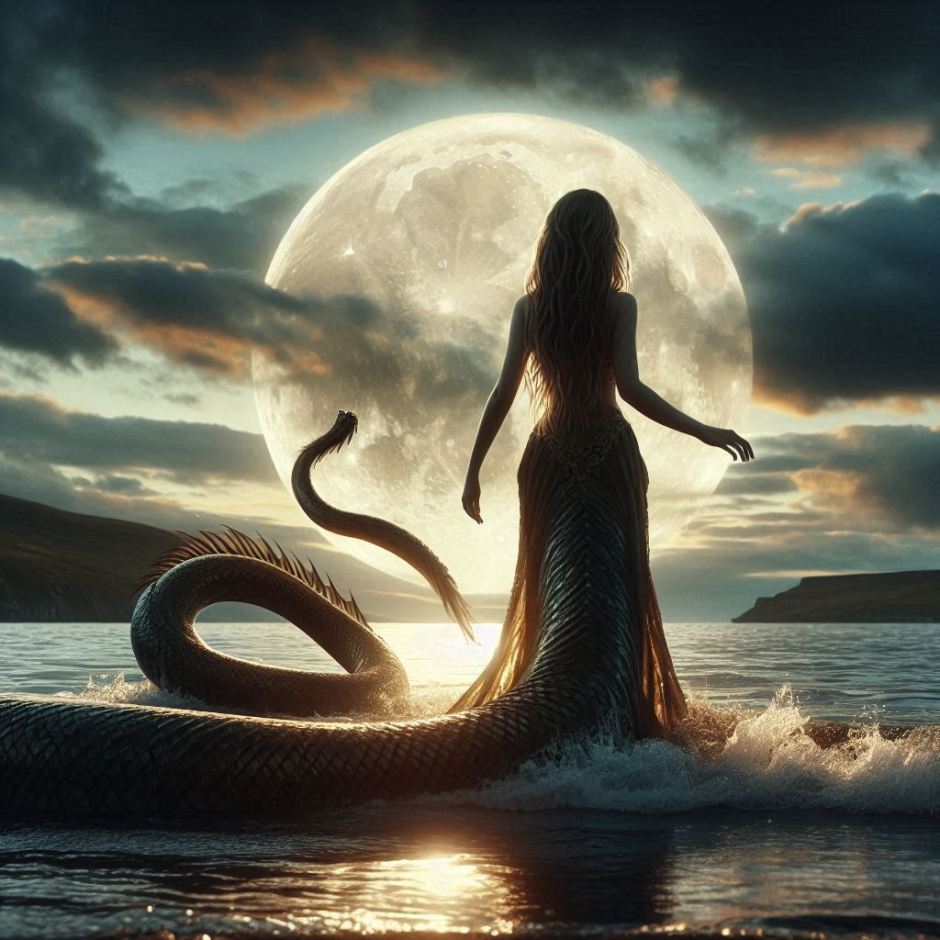
I turned. The speaker wasn’t the old lady, this woman had a fresh young voice. I stared at the girl who stood beside me, she was naked and her skin was pearly perfection. She giggled at my confusion and her emerald, green eyes sparkled. They were the old lady’s eyes. Then she stepped towards the water, shedding her skin as she went, before finally as a serpent she entered the cold North Sea and slithered away through the moon-soaked waves.

© Juliet Robinson 2023, all rights reserved.

Mind Burble

Hitch Hiker was written for a workshop and there was a limit of a thousand words, I crept over by three I believe. Writing short stories can often lead to abrupt endings. For me I enjoyed this ending, but I do appreciate that it could be considered unsatisfactory.

The story was inspired by Emily Dickinson’s poem, I started Early – Took my Dog. Which if you haven’t read you are in for a treat when you do.

https://www.poetryfoundation.org/poems/50976/i-started-early-took-my-dog-656